Preventing Bullying of Students with ASD

Did you know that October is National Bullying Prevention Month? In an effort to raise awareness around issues of bullying for students with autism, we’re honored to feature this article on preventing bullying of students with ASD by Lori Ernsperger, PhD, BCBA-D, Executive Director of Behavioral Training Resource Center, on some tips and information for parents on protecting their children from disability-based harassment in school. To learn more about ASAT, please visit their website at www.asatonline.org. You can also sign up for ASAT’s free newsletter, Science in Autism Treatment, and like them on Facebook!


We have a nine-year old daughter with ASD who started 3rd grade in a new school. She is coming home every day very upset due to other students calling her names and isolating her from social activities. We wanted her to attend the neighborhood school but how can we protect her from bullying?

Answered by Lori Ernsperger, PhD, BCBA-D

Unfortunately, bullying and disability-based harassment is a common issue for individuals with ASD. As parents, you have a right to insure that the school provides a multitiered framework of protections for your daughter to receive a free appropriate public education (FAPE) in the least restrictive environment and free from disability-based harassment. Start with educating yourself on the current legal requirements and best practices for preventing bullying in schools.


Recognize
Recognizing the startling prevalence rates of bullying for students with ASD is the first step in developing a comprehensive bullying and disability-based harassment program for your daughter. According to the Interactive Autism Network (IAN, 2012), 63% of students with ASD were bullied in schools. An additional report from the Massachusetts Advocates for Children (Ability Path, 2011) surveyed 400 parents of children with ASD and found that nearly 88% reported their child had been bullied in school. According to Dr. Kowalski, a professor at Clemson University, “because of difficulty with social interactions and the inability to read social cues, children with ASD have higher rates of peer rejection and higher frequencies of verbal and physical attacks” (Ability Path, 2011).

In addition to recognizing the prevalence of bullying of students with ASD in schools, parents must also recognize the complexities and various forms of bullying. Bullying of students with ASD not only includes direct contact or physical assault but as with your daughter’s experience, it can take milder, more indirect forms such as repeated mild teasing, subtle insults, social exclusion, and the spreading of rumors about other students. All adults must recognize that laughter at another person’s expense is a form of bullying and should be immediately addressed.

Finally, recognizing the legal safeguards that protect your daughter is critical in preventing bullying. Bullying and/or disability-based harassment may result in the violation of federal laws including:

  1. Section 504 of the Rehabilitation Act of 1973 (PL 93-112)
  2. Title II of the Americans with Disabilities Act of 2008 (PL 110-325)
  3. The Individuals with Disabilities Education Improvement Act (IDEA) of 2004 (PL 108-446)

The Office of Civil Rights (OCR), along with the Office of Special Education and Rehabilitative Services (OSERS), have written guidance letters to all schools to clarify that educational institutions are held legally accountable to provide an educational environment that ensures equal educational opportunities for all students, free of a hostile environment. Any parent can access and print these Dear Colleague Letters and distribute them to school personnel working with their child.

  • US Department of Education/Office of Civil Rights (October 2014)
  • US Department of Education/Office of Special Education and Rehabilitative Services (August 2013)
  • US Department of Education/Office of Civil Rights (October 2010)
  • US Department of Education (July 2000)
Continue reading →

Pick of the Week: 20% Off Executive Functioning Tools

Happy last Tuesday of October! This week only, save 20% on your purchase of select executive functioning tools by using promo code EXECFUN20 at checkout!

These products are great for problem solving and ideal for individual and classroom settings.

Kenworthy cover

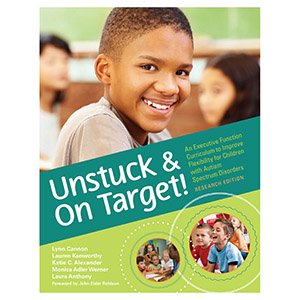
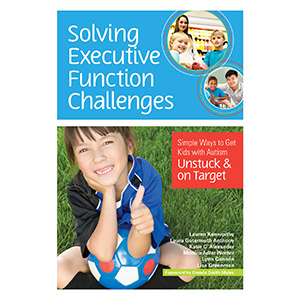
DRB_129_Unstuck_and_On_Target_COVERPictured are two of our featured curriculum books, Unstuck & On Target! and Solving Executive Function Challenges.

Unstuck & On Target gives clear instructions, materials lists, modifications for each lesson, and intervention tips to reinforce lessons throughout the school day for students with cognitive ability and language skills 8-11. Helps educators and service providers teach these executive function skills to high-functioning students with autism.
Solving Executive Function Challenges is a practical resource for parents, teachers, and therapists helps high-functioning students with autism improve on these critical skills. With this guide, teachers and caretakers learn strategies to teach EF skills, including setting and achieving goals and being flexible, as well as ideas for accommodations and actions to address common problems, such as keeping positive, avoiding overload, and coping.

A Guide To The SupervisorABA

We’re so excited to present SupervisorABA, one of my favorite new resources available to both supervisors and individuals pursuing Board Certification in Behavior Analysis. I was very excited to have the opportunity to ask its creators, Dana Reinecke and Cheryl Davis, about their process in creating it and how it can help improve training of behavior analysts. Dana is a BCBA-D working New York, and Cheryl is a BCBA working in Massachusetts.

A Guide To The SupervisorABA

NOTE: The article refers frequently to BCBAs. A BCBA is a Board Certified Behavior Analyst. You can learn more about that by referring to this previous post or visit www.bacb.com.


Sam: What inspired you to create this resource?

Dana and Cheryl: Our mission is to help supervisors “build better BCBAs” by providing effective supervision with task-oriented activities that align with the current BACB task list. We both have a desire to help behavior analysts to be as effective as possible, and have encountered BCBAs who do not seem to have all of the necessary skills.  Supervision is the place to make sure that these skills are well-developed, but it can be tricky to manage time and get all of the skill areas covered within the course of supervision.  We wanted to help supervisors to structure supervision so that they can cover each and every task list item over the course of supervision.  As such, our mission is to assist BCBA candidates and their supervisors in the development of behavior analytic skills through applied experiences and contact with the research literature. Creating better behavior analysts will ensure quality services are provided to all members of society.


Sam: Can you summarize the services provided by SupervisorABA?

Dana and Cheryl: In a nutshell, we have developed 2-5 activities for each item on the task list.   These activities vary and include applied activities with clients, video-based activities, reading and discussing journal articles, and downloadable worksheets.  We wanted to offer choices within each activity so that supervisors can tailor the content to what the supervisee would most benefit from. We have also included reading lists for each content area, and other resources like a YouTube channel for video content.  Subscribers are able to access all of the activities, reading lists, and resources through an interactive website that generates a downloadable, printable supervision form based on the BACB supervision form, that can be used to document supervision activities.  The website also keeps track of which task list items have been completed and shows a percentage of completion for each content area.


Sam: You mentioned your YouTube channel with videos for training purposes. Why did you feel that was important, and how do you go about selecting videos?

Dana and Cheryl: We think it’s important because it adds diversity to supervision.  The videos can enhance the supervisee’s ability to apply task list mastery to scenarios different than those they encounter daily in their practice.  We enjoy spending time finding videos we think will be useful to supervision so supervisors do not need to spend time trying to find their own videos – making supervision time more efficient!  At this time, videos are curated from what is publicly available on YouTube.  Some of them were made to explain and demonstrate behavioral concepts, but some are just really interesting naturally-occurring examples of principles that supervisees can view, discuss, or use to practice data collection and analysis.  We’ll be updating the YouTube channel regularly.  Subscription to the channel is free and open to anyone, and playlists are organized according to task-list item so it’s easy to find what you might need.


Sam: One of the things I love about SupervisorABA is how I can easily customize it to meet the individual needs of the people I supervise. Your service is dedicated to helping provide effective supervision. How is the customization important to your mission?

Dana and Cheryl: This was especially important to us as the supervisees’ experience settings vary greatly.  On the one hand, it’s important to make sure that supervision matches the supervisee’s needs in her or his current setting, but we wanted to make sure that supervision covered areas outside of the fieldwork experience so future BCBAs would have a breadth of knowledge on how behavior analytic skills can be applied across setting, clients and the like!


Sam: The website is quite easy to use. What was the process for designing it to help meet the needs of users?

Dana and Cheryl: We really wanted a user friendly website that was easy to navigate and did not require time on the supervisor’s part to learn the process.  Using our background in online teaching, we teamed up with a great web design company that helped us make an easy to navigate system.  We have received great feedback from customers on ways to enhance the website and already have some upgrades in progress, such as adding multiple activities to one form!


Sam: Is there anything else you’d like to add? 

We hope that people use our product to enhance supervision.  As stated before, our goal is to help supervisors build better behavior analysts by making supervision more productive while ensuring each item on the task list is covered in a meaningful way.  We really want to help people provide quality services provided to anyone in need of behavior analytic services!

You can take a peek at SupervisorABA yourself at or follow them on Facebook. 


WRITTEN BY SAM BLANCO, MSED, BCBA

Sam is an ABA provider for students ages 3-15 in NYC. Working in education for twelve years with students with Autism Spectrum Disorders and other developmental delays, Sam utilizes strategies for achieving a multitude of academic, behavior, and social goals. Sam is currently a PhD candidate in Applied Behavior Analysis at Endicott College. She is also a lecturer in the ABA program at The Sage Colleges.

Pick of the Week: 20% Off Reading Comprehension Tools!

Reading comprehension is important for children of all ages, but especially young learners, as they learn to develop and process words and text. 

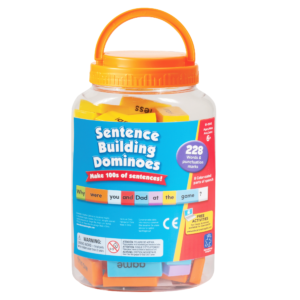
Pictured to the right is our featured product, the Sentence Building Dominoes, a game you can build a variety of sentences with. With 228 color-coded dominoes, featuring 8 parts of speech — nouns, pronouns, verbs, dominoesadjectives, adverbs, conjunctions, prepositions and punctuation marks — the possibilities are endless! Dominoes come packed in a handy storage bucket.
Be sure to check out the rest of our products on sale this week. 

Save 20% on your purchase of select Reading Comprehension Tools by entering the Promo Code READ20 at checkout!  

Building Variability Into The Routine

Several years ago, I was working with a 6-year-old boy we’ll call Terrence. Terrence was diagnosed with autism. He was a very playful child who was generally good-tempered, enjoyed playing with trains and watching TV, and posed few difficult behavior issues for his parents…until the day there was construction on their walk from the grocery store to their apartment and they decided to take a different route home. What happened next is what most people would call a full-blown meltdown: Terrence dropped to the ground, screaming and crying, and refused to move.


Many of the parents I work with have a similar story when it comes to their child with autism and an unexpected change in the routine. The change varies: the favorite flavor of fruit snacks is out of stock at the store or the babysitter greeted the child at the bus instead of the parent or they grew out of the coat they wore the past two winters… In fact, it can be difficult to anticipate exactly what specific routine may be a trigger for your learner. This is precisely why building variability into the routine can be helpful.

Here are a few things to consider:

  • First, think about the routines that are the most likely to be interrupted. Make a list of these so you can begin thinking about how to address those issues.
  • Second, work with your team (whether that means family or practitioners that work with your learner) to select 2-3 routines to focus on first.
  • Discuss how those routines would most likely be interrupted. For instance, a favorite TV show may be interrupted during election season or you may have a family function when the TV show is aired. In teaching your learner to be flexible with changes in routine, you will contrive changes that are likely to occur to give your learner quality practice.
  • Plan to vary the routine. Essentially, you are setting up the change in routine, but you will be prepared in advance to help your learner behave appropriately. (You’re much more likely to experience some success in this scenario than you would be if a change in routine occurs unexpectedly and/or last minute.)
  • Give your learner a vocabulary for what is happening. I teach many of my students the term “flexible.” I might say, “I appreciate how you’re being flexible right now” or “Sometimes when plans change we have to be flexible. This means…”
  • Reinforce appropriate behaviors related to flexibility! You want to be clear when they’ve made an appropriate, flexible response. In the planning phase, you can discuss what appropriate reinforcers might be for the routines you are targeting.

If you build in variations in routine and teach your learner some strategies for being flexible, you and your learner are much more likely to be successful in navigating unexpected changes.

WRITTEN BY SAM BLANCO, MSED, BCBA

Sam is an ABA provider for students ages 3-15 in NYC. Working in education for twelve years with students with Autism Spectrum Disorders and other developmental delays, Sam utilizes strategies for achieving a multitude of academic, behavior, and social goals. Sam is currently a PhD candidate in Applied Behavior Analysis at Endicott College. She is also a lecturer in the ABA program at The Sage Colleges.

Pick of the Week: 20% Off Social Skills Games!

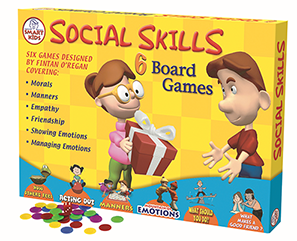
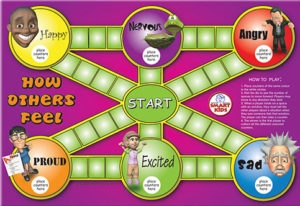
DRG_083_Social_Skills_Set_of_6_Board_Games DRG_083_Social_Skills_Set_of_6_Board_Games_2 DRG_083_Social_Skills_Set_of_6_Board_Games_3

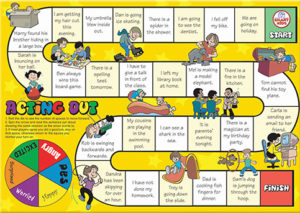
Social skills are important for any developing child as they teach and reinforce important skills children need as they interact with their peers, family members and community helpers. Be sure to check out our featured game, a value set of six visually stimulating board games targets good social skills and behavior.

The six games included in the set cover Morals, Manners, Empathy, Showing Emotions, Friendship, and Managing Emotions. Each game supports the development of social and emotional skills and the consolidation of those already learned.

This set of board games provides a comprehensive approach to promoting the social and emotional skills that underpin effective learning, positive behavior, regular attendance, staff effectiveness, and the emotional health and well-being of students.

This week only, you can save 20% on your purchase of select Social Skills Games by entering the Promo Code SOCGAME20 at checkout! 

How To Prepare To Reinforce Appropriate Behavior

Often when we’re working with children with autism there are two areas we focus on: communication and play. However, due to the nature of your day or a specific activity, you may unintentionally punish spontaneous communication or play. So before we learn how to prepare to reinforce appropriate behavior, let’s consider a couple of examples:


Julie is a teacher in a first grade classroom with six children with autism. One of her students is Marcos, who rarely uses spontaneous language. While Julie is running the morning meeting, Marcos suddenly interrupts and says “I like elephants.” Julie says, “It’s quiet time, right now, Marcos.”

David is a teacher in a fourth grade inclusion classroom. Jaylene is a student with autism who rarely initiates interactions. He is speaking with another teacher when Jaylene approaches with a puppet, hands it to David, and says “puppet.” David tells her, “In just a minute, Jaylene.”

 In both of these instances, the teacher has not done anything wrong. In fact, we have all done this from time to time in the midst of busy days in which we’re managing multiple tasks. But there’s an argument to be made here that both Marcos and Jaylene missed opportunities for reinforcement of the behaviors we most want them to exhibit.

One thing that can help is to prioritize your goals. If the primary goal for Marcos is to use spontaneous language, then when we start out we want to provide a continuous rate of reinforcement. This means that it will sometimes interrupt other tasks, but if it is the biggest priority, that’s okay! The long term gains of reinforcing Marcos’s spontaneous language likely outweigh the frustration of an interrupted lesson.

The second thing that can help is communicating the priorities to other adults and staff. If David lets other teachers and administrators know that Jaylene’s foremost goal is to initiate interactions related to play, then a brief interruption in a conversation should not be an issue. Again, the long term gains of reinforcing Jaylene’s initiation of play likely outweigh any issues around an interrupted conversation.

Finally, try to plan ahead. Think about instances in which the child is most likely to engage in the targeted behaviors and talk with staff about how to ensure reinforcement takes place. The last thing we want to do is to unintentionally punish the desired behaviors.

WRITTEN BY SAM BLANCO, MSED, BCBA

Sam is an ABA provider for students ages 3-15 in NYC. Working in education for twelve years with students with Autism Spectrum Disorders and other developmental delays, Sam utilizes strategies for achieving a multitude of academic, behavior, and social goals. Sam is currently a PhD candidate in Applied Behavior Analysis at Endicott College. She is also a lecturer in the ABA program at The Sage Colleges.

Pick of the Week: 20% Off Audible Time Timers!

Setting a routine can be a challenge — a visual timer can make all the difference when executing day to day activities and getting back in the groove!

DRT_443_3_inch_Audible_Time_Timer

Audible Time Timers  

Ideal for timed activities or getting ready, our favorite Time Timers are perfect for individual use or classroom settings.

Recommended by Autism and ADHD experts, the Time Timer is entirely intuitive to use. A graphic clock face gives the child a visual understanding of time elapsing. When the colored portion of the clock face elapses, time is up! There is also an optional audible component that you can turn on so that the timer beeps when time is up. It runs on battery-operated quartz movement and can be free standing or hung on a wall.

This week only, you can save 20% on your purchase of the 3-inch, 8-inch, and/or 12-inch Audible Time Timers by entering the Promo Code TIMER20 at checkout!