During the summer break, parents and providers of children with autism may seek guidance on effective strategies to keep them engaged and occupied during this time. Fortunately, Applied Behavior Analysis (ABA) research provides valuable insights and evidence-based interventions to ensure a fulfilling and enjoyable summer experience for children on the autism spectrum. Let’s explore some research-backed strategies and resources aimed at keeping children engaged and occupied during the summer months.
1. Implement Structured Schedules
Children with autism benefit from predictable routines, which can reduce anxiety and promote a sense of stability (Smith et al., 2018). Establish a visual schedule that outlines the daily activities and transitions, incorporating both familiar routines and new summer-specific activities. Visual schedules, such as picture-based schedules, can effectively help children understand and anticipate their daily routines. If you are in need of some resources, you can find visual schedules here: https://difflearn.com/collections/schedule-sale
2. Engage in Sensory Play
Sensory play activities can offer opportunities for exploration, self-regulation, and sensory integration for children with autism. Research has shown that sensory-based interventions can lead to improvements in attention, social interaction, and adaptive behavior (Schilling et al., 2003). Consider incorporating sensory-rich activities, such as playing with water, sand, or textured materials, to provide engaging and stimulating experiences for your child. If you are interested in some supplies to encourage sensory play, you can find materials here: https://difflearn.com/collections/sensory-supports
3. Explore Nature and Outdoor Activities
Outdoor activities can provide numerous benefits for children with autism, including sensory experiences, physical exercise, and social interaction opportunities (Fisher et al., 2011). Take advantage of the summer weather and engage in activities such as visiting parks, going on nature walks, or participating in outdoor sports. These experiences can foster exploration, imagination, and a connection with the natural world.
4. Promote Social Interactions
Social skills development is a crucial aspect of a child’s overall development. Encourage social interactions by organizing playdates with peers who understand and support your child’s unique needs. In addition, community-based programs and summer camps specifically designed for children with autism offer structured environments that facilitate socialization and skill-building (Vernon et al., 2014). Such programs often provide opportunities for positive peer interactions and the development of social skills. You can check out these social skills games and activities as well: https://difflearn.com/collections/social-skills-games
5. Utilize Technology and Educational Resources
Technology can serve as a valuable tool to support engagement and learning for children with autism. Educational apps and websites designed for children with autism offer interactive and individualized activities that can enhance communication, academic skills, and independence (Ramdoss et al., 2011). Carefully select age-appropriate and evidence-based resources to ensure their effectiveness in promoting skill development.
6. Incorporate Special Interests
Children with autism often have unique and intense interests. These special interests can be leveraged to foster engagement and motivation during the summer break. Encourage activities related to your child’s interests, such as reading books, engaging in crafts, or participating in outings aligned with their passions (Solomon et al., 2008). By incorporating their special interests into summer activities, you can create meaningful and enjoyable experiences that support their overall development.
With the support of evidence-based strategies, parents and providers can ensure that children with autism have an engaging and fulfilling summer break. By implementing structured schedules, incorporating sensory play, exploring nature, promoting social interactions, utilizing technology and educational resources, and embracing special interests, you can create a summer filled with enriching experiences for your child. Remember, each child is unique, so adapt these strategies to meet their individual needs and preferences. By doing so, you can make this summer a time of growth, fun, and lifelong memories for your child with autism.
References
Smith, T., Klorman, R., & Mruzek, D. W. (2018). Predicting summer learning gains for students with autism spectrum disorder. Journal of Autism and Developmental Disorders, 48(6), 1930-1942.
Schilling, D. L., Schwartz, I. S., & Sandall, S. R. (2003). Children with autism in inclusive preschool settings: Can teaching assistants effectively implement behavioral interventions? Journal of Autism and Developmental Disorders, 33(5), 559-571.
Fisher, A. G., Bundy, A. C., & Murray, E. A. (2011). Sensory integration: Theory and practice (2nd ed.). F. A. Davis Company.
Vernon, T. W., Miller, A. R., Ko, J. A., & Pugliese, C. E. (2014). Recreation programs for children with autism: Impact on families. Therapeutic Recreation Journal, 48(4), 271-288.
Ramdoss, S., Lang, R., Mulloy, A., Franco, J. H., O’Reilly, M., Didden, R., … & Lancioni, G. (2011). Use of computer-based interventions to teach communication skills to individuals with autism spectrum disorders: A systematic review. Journal of Behavioral Education, 20(1), 55-76.
Solomon, M., Ono, M., Timmer, S., & Goodlin-Jones, B. L. (2008). The effectiveness of parent-child interaction therapy for families of children on the autism spectrum. Journal of Autism and Developmental Disorders, 38(9), 1767-1776.
About the Author
Nicole Gorden, M.S., BCBA, LBA has over 14 years of experience implementing Applied Behavior Analysis principles with the Autism Population. She currently works for Comprehensive Behavior Supports in Brooklyn, NY.
This month’s ASAT feature comes to us from Kate McKenna, MEd, MSEd, MS, BCBA,and Executive Director David Celiberti, PhD, BCBA-D,Association for Science in Autism Treatment. To learn more about ASAT, please visit their website at www.asatonline.org. You can also sign up for ASAT’s free newsletter, Science in Autism Treatment, and like them on Facebook!
This is Part 1 of the Description of the Treatment Team series.
Individuals with autism often receive services from multi-disciplinary teams. Treatment teams work in partnership with the individual and their family. The members of a team, and their specialties, may depend on the individual’s current level of functioning, the nature of the needs and concerns, the age of the individual at the onset of intervention, and the type of school or community setting where services are provided. The composition of the treatment team may also change as the individual ages. Below we provide a brief description of the roles of those likely to be members of a treatment team. For more information see Ramirez and Pantelides (2019). Please note that these members are listed alphabetically.
Board Certified Behavior Analysts (BCBAs)
Board Certified Behavior Analysts work with families and other team members on a wide range of activities related to improving language, social communication, play, academic, and daily living skills. BCBAs will also work to teach functional communication and other replacement skills with the goal of reducing challenging behavior that negatively impacts the individual’s ability to learn in the least restrictive environment. BCBAs will, if necessary, conduct behavioral assessments related to, for example, language and social skills or challenging behavior. They then provide interpretations of the results of such assessments to families and team members. Many BCBAs also hold licenses or certifications in other disciplines, such as special education, speech-language pathology, or psychology. For more information about what to expect from a quality program designed by a BCBA, click here.
Depending on the state and the services mandated in the Individualized Education Plan (IEP), a Board Certified Assistant Behavior Analyst (BCaBA) or a Registered Behavior Technician (RBT) may be the person working with the individual. BCaBAs and RBTs receive training at institutions accredited by the Behavior Analyst Certification Board (BACB) and work under the supervision of a BCBA. If they are providing services to the individual, they may attend and contribute to team meetings. Before team meetings, it would be important to work on communication systems with the BCBA concerning whom to talk with about what, as some of your questions and concerns should be addressed directly with the BCBA.
Early Intervention Providers
Early intervention providers seek to address the needs of children suspected of disabilities from birth to three years of age. In some states, early intervention is defined as birth to five years of age. Children in this age group must meet eligibility criteria, which differ from state to state, in order to qualify for services. Priorities in early intervention often include addressing deficits in cognitive, language, motor, social, play, and self-care skills. Focus in these areas seeks to reduce the gap between the child’s skills and those of their typically developing agemates and to prepare the child for public school. Early intervention providers deliver an array of services to both the child and the family, and these should be clearly delineated on a child’s Individualized Family Service Plan (IFSP).
General Education Teachers
General education teachers work with students in preschool, elementary, and secondary schools. They provide services to large groups of students, although class sizes range from school to school. Given the federal mandate that children participate to the fullest extent possible in the least restrictive settings, children with autism and related disorders often have considerable contact with general education teachers. This may involve an all-day placement or parts of the day spent in activities with same-aged neurotypical classmates. Since general education teachers have tremendous experience with typically developing children and the vast array of learning potentials, their input and perspectives on age-appropriate skills can be invaluable. In some states, the presence of a general education teacher at IEP meetings is required. In that role, they provide information about the grade level curriculum, prerequisite skills necessary for access to that curriculum, and the level of functioning typical of students at that age and grade. If the child receives shadowing support from a paraprofessional, the general education teachers will work closely with those individuals within their respective classrooms.
Occupational Therapists (OTs)
Occupational therapists (OT) providing early intervention (birth to age 3) may focus on gestures and actions critical for interacting effectively with the environment. This can involve functional and symbolic play with toys, coloring, stickers, play dough, and toy musical instruments. As children age and the focus shifts to preparation for school, goals related to fine motor skills such as handwriting, cutting, and the effective and efficient use of manipulatives may be targeted. Across the lifespan, occupational therapists work on daily living skills such as dressing and hygiene, as well as skills necessary for employment, leisure skill development, navigating the community, and living as independently as possible. For more detailed information about occupational therapy, click here.
Paraprofessionals
The goal of paraprofessional teaching staff is to support the efforts of teachers. Their involvement varies widely with respect to both the amount and nature of their contact with students. For example, paraprofessionals may be involved in one-to-one teaching, small group instruction, or shadowing and supporting the child with autism in a general education classroom. Paraprofessionals working in a classroom are typically supervised by a special education teacher. Despite the limits of their role, it is often the case that a paraprofessional may spend the most time with the student during the school day, compared with the other team members. Thus, their input at team meetings may provide important information about the student’s response to services, although they may not always be present at these meetings.
Physical Therapists (PTs)
Physical therapists (PT) are concerned with establishing, improving, or restoring physical function of large muscles in gross motor activities such as navigating stairs, riding a bike, safe use of park equipment, and muscle movements necessary to engage in age-appropriate physical games and activities. PTs use therapeutic exercises to improve posture, locomotion, strength, endurance, balance, coordination, joint mobility, and range of movement and flexibility. The goal of physical therapy is the development and improvement of gross motor and basic movement skills.
Psychological Providers
Depending on the setting in which services are provided, clinical psychologists, school psychologists, or family counselors, may be included as ongoing team members. Parent training, participation in social skill groups, or behavior therapy can be included in mandated services on a student’s IEP. In some cases, the involvement of these providers may be restricted to conducting evaluations and making recommendations as part of the diagnostic process.
Social Workers
In some states, a social worker who specializes in autism may be part of the treatment team. The training that social workers receive in counseling, problem-solving, and monitoring the well-being of individuals and families, allows them to bring a wider perspective to the work of the treatment team. Social workers support individuals and families in a variety of ways, including aiding in filling out and filing paperwork to obtain additional services, serving as a clearinghouse of information on support services available in the state or community, acting as an advocate in dealing with local and state government agencies, and providing individual or group counseling. In some cases, a social worker may serve as the case manager.
Special Education Teachers
Special education teachers focus on meeting the unique educational needs of children with identified disabilities such as autism. They provide an array of services that can be delineated on a student’s Individualized Education Plan (IEP). Special education teachers work with students with autism in a variety of settings, including inclusive co-taught classrooms (ICT), self-contained classrooms, or in resource rooms. Placement typically depends on the extent of the student’s needs for modifications and support. In ICT rooms, special education teachers work closely with general education teachers in adapting and supporting the general education experience to make it more meaningful for the child with autism. In addition, the special education teacher typically supervises the efforts of paraprofessionals.
Special Education Itinerant Teachers (SEITs)
A special education itinerant teacher (SEIT) is a special educator who provides one-on-one educational support to students. The exact role of SEITs, the settings in which services are provided, and the ages of students served varies from state to state. In some states, SEITs work exclusively with children ages three to five, either in the home or in a preschool/daycare, spending all or part of the school day providing scaffolding and support to facilitate the student’s access to the curriculum and social interactions with peers. In others, teachers travel to different schools and work with students in elementary, middle, and high school. As members of the treatment team, SEITs provide updates on student progress, report on assessments they conduct, and suggest strategies to maximize student performance. If a student meets criteria, a SEIT provides a bridge from home to school if the student is unable to attend school in-person due, for example, to a prolonged illness.
Speech and Language Pathologists (SLPs)
Speech and language pathologists (SLP) are involved in the treatment of communication, language, and speech impairments. In addition, some speech and language therapists are educated in the treatment of swallowing and feeding disorders. SLPs respond to a variety of goals related to the muscle control necessary for speech production, articulation, prosody, vocabulary development, receptive and expressive language skills, conversation skills, and social pragmatics. When working with individuals who struggle significantly with spoken communication, speech pathologists are also involved in the selection and implementation of augmentative communication systems (see description on website).
The Importance of Science-Based Treatment
Science and evidence-based strategies and techniques should be the core of a treatment plan. It is important to note that providers may vary widely with respect to their commitment to scientifically validated treatments for autism. Some providers rely exclusively on scientifically validated treatments, others emphasize such treatments but may not restrict their practice to them (i.e., they may also use procedures that remain untested and lack scientific evidence), and still others appear to be providing services without consideration of scientific support for the methods they use.
Furthermore, some providers collect data to objectively assess whether their interventions are leading to positive outcomes, whereas other providers do not use data and rely exclusively on subjective impressions to assess progress. These differences exist across all disciplines, so consumers should assume their right to ask questions about how progress will be measured.
Finally, keep in mind that a license or certification is no guarantee that an individual: 1) possesses adequate, or even any, experience working with individuals with autism; 2) uses scientifically validated methods when providing their services; and 3) relies on data to guide their assessment of progress and decision making, and 4) brings a strong sense of collaboration and compassion to the team.
For more information about science-based autism treatments or being a savvy consumer, click here.
Reference:
Ramirez, H., & Pantelides, M. (2019). Clinical corner: What does it mean to become an advocate for my child on multi-disciplinary teams? Science in Autism Treatment, 16(12).
Kate McKenna, MEd, MSEd, MS, BCBA, LBA, received a Masters in Child Study from the Eliot-Pearson Department of Child Study at Tufts University, a Masters in Special Education from Pace University, and a Masters in ABA from Hunter College. In addition to New York state certifications in general and special education from Birth to Grade 2 and Grades 1-6, she holds a New York State Annotated Certification in Severe/Multiple Disabilities. Kate is currently completing a Masters degree in Children’s Literature at Eastern Michigan University. She was an extern at the Association for Science in Autism Treatment before joining the Board of Directors in 2020.
David Celiberti, PhD, BCBA-D, is the Executive Director of ASAT and Past-President, a role he served from 2006 to 2012. He is the Editor of ASAT’s monthly publication, Science in Autism Treatment. He received his PhD in clinical psychology from Rutgers University in 1993 and his certification in behavior analysis in 2000. Dr. Celiberti has served on a number of advisory boards and special interest groups in the field of autism, applied behavior analysis (ABA), and early childhood education. He works in private practice and provides consultation to public and private schools and agencies in underserved areas. He has authored several articles in professional journals and presents frequently at regional, national, and international conferences. In prior positions, Dr. Celiberti taught courses related to ABA at both undergraduate and graduate levels, supervised individuals pursuing BCBA certifications, and conducted research in the areas of ABA, family intervention, and autism.
As teachers and clinicians dedicated to supporting children with autism, it’s important to recognize that prioritizing self-care is not only essential for our own well-being but also for the quality of care we provide. The summer months offer a valuable opportunity to focus on nurturing self-care practices and promoting wellness. In this blog post, we will discuss the significance of self-care, examine the benefits it offers to professionals in the field, and provide guidance on how to prioritize self-care during the summer break.
Understanding the Importance of Self-Care
Self-care is not selfish; it is a crucial aspect of maintaining overall health and well-being. It involves intentionally engaging in activities and practices that rejuvenate, nourish, and support our physical, emotional, and mental needs. Prioritizing self-care enables us to bring our best selves to our work and positively impact the lives of the children we support.
Recognizing the Challenges
Working in the field of autism can be rewarding but also demanding and emotionally taxing. As teachers and clinicians, we often invest our time and energy in meeting the needs of others, sometimes neglecting our own well-being. The summer break provides an opportunity to shift the focus back to ourselves and recharge.
Setting Boundaries
One essential aspect of self-care is setting boundaries. Use the summer break as a time to establish clear boundaries between work and personal life. Allocate specific times for work-related tasks and dedicate the rest of your time to personal interests, hobbies, and relaxation. Communicate your boundaries effectively with colleagues, supervisors, and families, ensuring they understand and respect your need for downtime (e.g. – put up that away message and do not check your emails on vacation!).
Engaging in Relaxation and Stress Reduction
Summer offers an ideal time to engage in relaxation techniques and stress reduction activities. Explore practices such as meditation, deep breathing exercises, yoga, or mindfulness. Dedicate time each day to engage in activities that promote relaxation and help alleviate stress. This can include reading, taking walks in nature, practicing hobbies, or spending quality time with loved ones.
Nurturing Personal Interests
Use the summer break to reconnect with your personal interests and passions. Engaging in activities that bring you joy and fulfillment outside of work is vital for your overall well-being. Pursue hobbies, explore new interests, or enroll in a class or workshop that allows you to develop new skills or indulge in your favorite pastimes.
Connecting with Peers
Building a network of supportive colleagues and peers can significantly contribute to your well-being. Reach out to other professionals in the field, attend conferences or workshops, and engage in discussions or online forums. Sharing experiences, seeking advice, and collaborating with like-minded individuals can provide a sense of support and camaraderie.
Reflecting and Growing
Summer break offers an opportunity for self-reflection and professional growth. Take time to reflect on your experiences, identify areas for improvement, and set goals for the upcoming year. Consider attending professional development workshops or engaging in online courses to expand your knowledge and skills in working with children with autism.
Seeking Support
It’s crucial to recognize that self-care doesn’t mean facing challenges alone. Seek support when needed. Connect with mentors, supervisors, or therapists who can provide guidance and assistance. Remember that seeking help is a sign of strength and a commitment to your well-being.
Prioritizing Physical Health
Maintaining physical health is an integral part of self-care. Use the summer months to establish healthy habits such as regular exercise, balanced nutrition, and sufficient sleep. Engage in activities that promote physical well-being, such as swimming, hiking, cycling, or participating in recreational sports.
Prioritizing self-care as a teacher or clinician supporting children with autism is not only beneficial for your own well-being, but also for the quality of care you provide. Use this summer as an opportunity to set boundaries, engage in relaxation and stress reduction techniques, nurture personal interests, connect with peers, reflect on professional growth, seek support when needed, and prioritize your physical health. By investing in self-care, you will rejuvenate yourself, enhance your ability to support children with autism, and find greater fulfillment in your role. Remember, self-care is not a luxury; it is a necessity for professional longevity and personal satisfaction.
About the Author
Nicole Gorden, M.S., BCBA, LBA has over 14 years of experience implementing Applied Behavior Analysis principles with the Autism Population. She currently works for Comprehensive Behavior Supports in Brooklyn, NY.
Written by Noah Edis, Reposted with permission from Dr. Anton Shcherbakov, BCBA, Co-founder of ThinkPsych
Did you know that around 97% of American adolescents play video games at least once a week, and approximately half play daily? That’s almost every single teen in the country.
It’s no secret that kids (and adults alike) enjoy playing, and this love of gaming has become a driving force behind the concept of gamification in education.
Educators find that students become more engaged, motivated, and ultimately more successful when they incorporate game elements into their teaching.
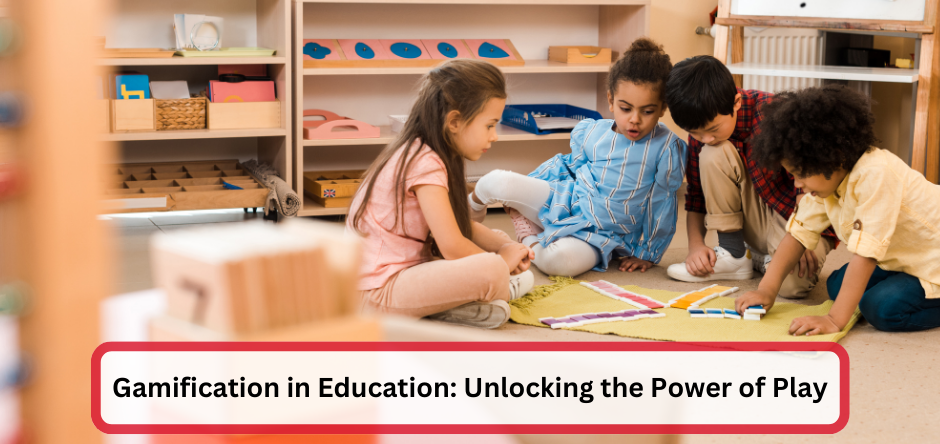
In this article, let’s explore the power of gamification in education and how it can unlock the full potential of play to enhance learning outcomes. Whether you’re a teacher, a parent, or just interested in the future of education, you won’t want to miss this deep dive.
What is Gamification in Education?
Without a doubt, playing games is enjoyable. This not-so-secret discovery has led teachers to incorporate games for education, also known as “gamification.”
Gamification in education is a teaching strategy that uses game-like elements and mechanics in the learning process.
This can help make learning more interactive and engaging, leading to better interpersonal communication, academic performance, and long-term knowledge retention. For example, children’s listening skills can be improved through role-playing and audio-related narrative activities while still being a relevant learning experience.
The theory around gamification in education suggests that students learn more effectively when having fun – also known as joyful education. This is further reinforced when they have specific goals, targets, and rewards to strive towards, all within an enjoyable framework.
Given the addictive nature of video games that appeal to both kids and adults, it’s no surprise that similar levels of engagement can be achieved by incorporating game-like elements into educational content.
How Does Gamification Differ from Game-Based Learning?
While game-based learning and gamification involve game elements in education, they differ in some fundamental ways.
Game-based learning involves using actual games as the primary mode of instruction. In this approach, students play games explicitly designed to teach a particular concept or skill.
Most of these games are purchased commercially and played in class, such as board games or video games for computers or consoles.
Gamification, on the other hand, involves incorporating game elements into the learning process. For example, an online learning platform may use badges or point systems to reward students for completing tasks or achieving specific learning objectives.
The goal of gamification is to make the learning experience more engaging and interactive while motivating students to stay on task and continue learning.
Examples of Gamification
Are you tired of seeing your students zone out during class, struggling to stay focused and engaged? Educators know that keeping kids motivated and interested in learning is a challenge. That’s where gamification comes in, and these strategies aim to motivate learners and make learning more enjoyable and interactive.
Here are some examples of game-like elements to include in your learning.
Badges: Students can earn digital badges for completing tasks or achieving specific learning goals. This can be a fun way to build self-confidence and recognize student achievements.
Points and Leaderboards: Students can earn points for completing tasks or answering questions correctly. Leaderboards can display the scores of the top-performing students, providing a competitive element to the learning process.
Quests or Missions: Teachers can create quests or missions that students must complete to progress through their lessons. These can be a series of challenges or tasks that students must meet to earn rewards.
Role-playing: Teachers can incorporate role-playing activities into the classroom to engage students and make learning fun. For example, students can take on different roles and work together to solve problems or complete tasks.
Gamified Assessments: Teachers can create quizzes and tests incorporating game elements, such as points, levels, or rewards. This can make tests more engaging and less intimidating for students.
Gamification can be a powerful tool for educators to motivate and engage students in the classroom. Including game elements in your lessons can make them a more interactive and rewarding learning experience that encourages students to take ownership of their learning.
Best Practices to Implement Gamification in the Classroom
Implementing any new kid learning style means planning ahead and adapting to their unique needs – gamification is no different. There’s no surefire way to do it, but these best practices should help.
Here are some tips on how to use gamification successfully in the classroom.
Define clear learning objectives: Before incorporating game elements into your lesson plan, define clear learning objectives that align with your curriculum. This will ensure that the game elements support and enhance the learning process rather than distract from it.
Start small:Begin by introducing simple game elements, such as point systems or badges, and gradually build up to more complex activities. By doing this, students can get used to this learning style and understand how it relates to their learning.
Provide feedback: Feedback is an essential component of gamification. Ensure students receive meaningful feedback on their progress and performance and use this information to guide their learning.
Adapt to student interests: To maximize engagement, tailor your game elements to your students’ interests and preferences. Learning will be more effective this way.
Balance competition and collaboration:While competition can be a motivator, balance it with opportunities for collaboration and teamwork. This will promote a positive classroom environment and encourage students to support one another.
Gamified learning environments can be engaging, motivating, and effective when implemented successfully.
Wrapping Up
Gamification can potentially transform how we approach education by making learning more engaging, interactive, and effective.
By incorporating game elements into the classroom, educators can tap into the motivational power of games and create a fun, immersive learning experience for students.
Check out our ThinkPsych blog for more expert-backed advice and guides.
With expertise in social and emotional learning, our company also offers products that support any teaching style to help children develop emotionally healthy behaviors, such as language learning, social emotional learning, and social skills. Focus on your child’s emotional health by checking out these resources as well.
Sources:
Teens, Video Games and Civics: https://www.pewresearch.org/internet/2008/09/16/teens-video-games-and-civics/
The Neuroscience of Joyful Education: https://www.researchgate.net/publication/239587483_The_Neuroscience_of_Joyful_Education
About The Author
Noah Edis is a freelance writer and systems engineer with an interest in behavioral psychology. When he’s not working on his latest project, you can find him playing competitive dodgeball.
About ThinkPsych and Dr. Anton Shcherbakov
ThinkPsych is a company committed to making fun and evidence-based toys for social emotional learning. Co-founder Dr. Anton Shcherbakov is a licensed psychologist and board certified behavior analyst. He has co-authored peer-reviewed research on topics that include depression and suicide prevention. He is also a nationally recognized expert and frequent presenter at national conferences on the treatment of anxiety, ADHD, autism spectrum, OCD, and related conditions. He previously taught at the Rutgers Graduate School of Applied and Professional Psychology. In addition to his work at ThinkPsych, he provides psychotherapy to children, adolescents, and adults at The Center for Emotional Health of Greater Philadelphia. In his free time, he enjoys traveling with his family, cooking meals with too many ingredients, and watching the latest Netflix documentary series.