
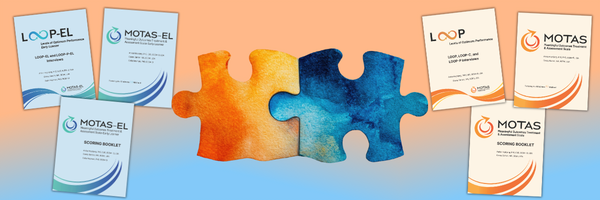
Using the MOTAS and MOTAS-EL with Insurance Companies

By Anika Hoybjerg, PhD, EdS, BCBA-D, LBA and Casey Barron, BCBA, LBA

We’ve previously shared a blog about how to work with insurance companies and advocate for medical necessity in ABA. Here, let’s take a closer look at how you can work with insurance companies when using our newest assessment, the MOTAS and the MOTAS-EL.

For many clinicians working in Applied Behavior Analysis, submitting treatment plans and reporting client progress is a large part of the job. Navigating insurance requirements and aligning goals with the criteria set by payors can be a daunting task. With the Meaningful Outcomes Treatment and Assessment Scale (MOTAS) and the Meaningful Outcomes Treatment and Assessment Scale – Early Learner (MOTAS-EL) being newer assessments, many practitioners are asking about the approval of utilizing these assessments in submitting treatment plans to insurance companies. Up to this point, the MOTAS has been submitted to several insurance companies and treatment plans have been approved.

While we cannot guarantee that insurance will accept a particular assessment, several different strategies have been used to gain approval, including understanding medical necessity, providing justification for treatment, aligning goals with the DSM-5 criteria for autism, and pairing the MOTAS with other ABA assessments.

Understanding “Medical Necessity” and Core Characteristics

In many cases, insurance companies approve treatment plans based on whether they are deemed “medically necessary” and if the goals selected relate to the core deficits of autism, as described in the Diagnostic and Statistical Manual of Mental Disorders (DSM-5). The MOTAS and MOTAS-EL were intentionally designed to align with these core characteristics, making them excellent tools for establishing medical necessity in treatment plans. The entirety of the DSM-5 criteria for Autism Spectrum Disorder (ASD) has been printed, with special permission from the American Psychiatric Association (APA), in the MOTAS and MOTAS-EL. This allows practitioners to be familiar with the characteristics of autism and align treatment goals to address the needs of their clients.

Pairing MOTAS with Other ABA Assessments

Because the MOTAS is still gaining recognition, pairing it with assessments used in ABA practice and already accepted by insurance companies may be a practical strategy. Some commonly approved assessments include:

  • VB-MAPP (Verbal Behavior Milestones Assessment and Placement Program)
  • ABLLS-R (Assessment of Basic Language and Learning Skills-Revised)
  • AFLS (Assessment of Functional Living Skills)
  • EFL (Essentials for Living)
  • Vineland Adaptive Behavior Scales
  • PEAK Relational Training System

A clinician may complete one of these more commonly recognized assessments, and select 1-3 domains from the MOTAS/MOTAS-EL to supplement these goals, and only score the applicable domains and subdomains. Alternatively, the clinician may find the MOTAS/MOTAS-EL goals are more appropriate for their learner and complete several MOTAS/MOTAS-EL domains and largely feature MOTAS/MOTAS-EL goals in their treatment plan, but also complete an assessment grid for a more commonly recognized assessment. These techniques have been successful when submitting to payors.

Payors may also request a rationale or justification for using the MOTAS/MOTAS-EL as the skills assessment. Highlighting features of the MOTAS/MOTAS-EL that align with medical necessity and the core characteristics will help individuals unfamiliar with the assessments learn how they can be useful. Some of these features include skill domains relevant to the core characteristics of autism (including social behavior, perspective taking, relationships, transitions, and communication), scoring that tracks progress across multiple environments to evaluate for generalization and maintenance, and an accompanying interview for caregivers to help guide treatment and ensure they are part of treatment from the onset of services and continually throughout.

By incorporating the MOTAS alongside one or more of these assessments used in ABA, practitioners can highlight how the MOTAS addresses gaps in traditional assessments, particularly in Self-Awareness, Relationships, Perspective Taking, and Flexibility—areas that are crucial for meaningful skill acquisition and which directly address core characteristics of autism in ways that are medically necessary.

Writing a Strong Treatment Plan Using the MOTAS/MOTAS-EL for Insurance Approval

Here is a summary of things to consider when writing a treatment plan using the MOTAS/MOTAS-EL when submitting to an insurance company.

  1. Identify the Core Deficits: Use the MOTAS/MOTAS-EL to link goals directly to the DSM-5 criteria for ASD. Clearly state how each goal addresses deficits in social communication (expressive and receptive communication, social communication and interactions) , restrictive and repetitive behaviors (including rigidity in routines), or adaptive functioning.
  2. Include Results for Selected Domains: Present MOTAS/MOTAS-EL results and if necessary, do them alongside other assessments that the insurance company will recognize to strengthen the case for medical necessity.
  3. Describe Functional Impact: Demonstrate how the proposed interventions will decrease interfering behaviors and improve daily living, social participation, and overall independence.
  4. Use Objective Data: Since the MOTAS/MOTAS-EL both feature a consistent 0-5 rating scale, this data-driven approach can illustrate progress and justify continued treatment.
  5. Align Goals with Insurance Terminology: Use language that directly ties the need for treatment to medical necessity, emphasizing how therapy will address impairments that limit functioning in home, school, or community settings.

Further Reading

Learn more about the MOTAS:

About the Authors

Anika Hoybjerg, PhD, EdS, BCBA-D, LBA
Dr. Hoybjerg is the CEO, founder, and owner of Autism & Behavioral Intervention (ABI) (a clinic-based ABA center in Draper, UT), ABA Education Center, and Integrity Billing. In addition to founding and leading these companies, Anika has worked in public schools and in private sectors with children and families for over 20 years. Anika is a Doctoral level Board Certified Behavior Analyst (BCBA-D) and a Licensed School Psychologist. Anika has a Bachelor’s degree in Human Development, a Master’s Degree in Curriculum and Instruction with an Emphasis in Autism, a Master’s degree in Human Exceptionality, an Ed.S in School Psychology, and a Ph.D. in Applied Behavior Analysis. Anika is currently pursuing a Master’s degree in Neuroscience and Trauma. Anika has presented at regional, national, and international conferences on a variety of topics relating to kindness in ABA services, autism, collaboration, and assessments.

Casey Barron, BCBA, LBA
Casey is a practicing Board Certified Behavior Analyst in Salt Lake City, Utah. She has been working in ABA since early 2015, spending several years first working as an RBT then as a BCBA in academic, home, and clinical settings. In addition to her work as a practicing BCBA, Casey works as the clinical director of an ABA center that has supported hundreds of children and where she oversees and trains staff members and future BCBAs. Since becoming a BCBA, Casey has presented at regional and international conferences on case studies from her own clinical practice.

Celia Heyman, PhD, BCBA-D
Dr. Celia Heyman is a lead consultant at FTF Behavioral Consulting where she consults with schools and clinics on the implementation of the Practical Functional Assessment and Skill-Based Treatment. Celia is also a core faculty at Capella University’s graduate Applied Behavior Analysis program. Celia was a guest editor on the special issue covering compassion for the Behavior Analysis in Practice.  Celia currently serves on the Development Committee of the B.F. Skinner Foundation and is the Student Activities Chairperson for the World Behavior Analysis Day Alliance. She has presented in national and international conferences on topics addressing interfering behaviors, emerging learning instruction, and supervision. 

Posted in ABA

Working with Insurance Companies: How to Advocate for Medical Necessity in ABA

By Ashleigh Evans, MS, BCBA

In the early 2000s, advocacy efforts pushed forward a medical model of ABA. This model gained momentum as states began passing autism insurance mandates. In 2014, the Centers for Medicare & Medicaid Services (CMS) published a bulletin clarifying that Medicaid programs must provide autism services under the Early and Periodic Screening, Diagnostic, and Treatment (EPSDT) program. This set in motion plans across all 50 states for Medicaid programs to provide ABA and other services to Medicaid recipients. As of today, every US state also has insurance mandates requiring ABA therapy coverage, fully integrating ABA into the healthcare system.

The shift to a medical model of Applied Behavior Analysis (ABA) has brought benefits to the field, including increased access to care. However, with it also came increased treatment plan scrutiny from payors. Most payors now require BCBAs to demonstrate that a client meets medical necessity to authorize services. Let’s explore the concept of medical necessity and consider how clinicians can advocate for their learners.

What is Medical Necessity in ABA?

Medical necessity is a concept used within the healthcare field. It refers to treatment that is necessary to diagnose, treat, cure, or alleviate symptoms of a particular condition. When we look at medical necessity in ABA, we have to consider whether the therapy modality and specific individualized goals will realistically help relieve the symptoms of autism that are interfering with the learner’s quality of life.

Each payor has different medical necessity criteria. Generally speaking, to determine medical necessity, funders consider the type of care, frequency and duration, location where care will be provided, whether the treatment is research-backed, and whether it would be considered effective for the individual patient.

How to Demonstrate Medical Necessity

Behavior analysts are responsible for advocating for their clients–this includes advocating for medical necessity to enable their learners to receive medically necessary care. Here are some recommendations for navigating this requirement.

1.    Understand the payor’s medical necessity criterion.
First, make sure you understand each payor’s criteria for medical necessity. Most major insurance providers publish medical necessity guidelines online under their Behavioral Health or Medical Policies. You can also access medical necessity criteria in your provider manual. If you can’t locate medical necessity criteria, reach out to your provider rep for guidance.

  1. Ensure up-to-date diagnostic assessments.

    One component of medical necessity is typically a recent autism diagnosis. Most payors require comprehensive diagnostic evaluations every 3-5 years to verify the individual’s diagnosis. Keep an eye on the dates of diagnostic assessments and inform your clients when they’ll need a reassessment soon. Many providers have lengthy waitlists, so try to be proactive in urging families to get these scheduled.

    Tip: If your client is due for a reauthorization but is overdue for a diagnostic re-evaluation, encourage the family to at least get it scheduled before you submit the authorization request. Many funders will recognize that diagnosticians have schedules that book out for months or even years, so the client may not be able to access a re-evaluation by the required date, but they at least want to see that it’s scheduled.

  2. Conduct insurance-approved assessments at least every 6 months.

    Make sure you have an updated and accurate assessment on file. Certain payors only accept specific assessment tools, so be sure to verify which assessments are accepted by the funder.
  1. Add a rationale for each goal.

    In your treatment plan, add a justification for each treatment goal. This justification should tie back to the diagnostic criteria of autism spectrum disorder (ASD). In other words, specifically, how will targeting the goal alleviate the symptoms of ASD? Per the DSM-5, diagnostic criteria for autism include:

A. Persistent deficits in social communication and social interaction across multiple contexts, as manifested by the following, currently or by history (examples are illustrative, not exhaustive, see text):

  1. Deficits in social-emotional reciprocity, ranging, for example, from abnormal social approach and failure of normal back-and-forth conversation; to reduced sharing of interests, emotions, or affect; to failure to initiate or respond to social interactions.

  2. Deficits in nonverbal communicative behaviors used for social interaction, ranging, for example, from poorly integrated verbal and nonverbal communication; to abnormalities in eye contact and body language or deficits in understanding and use of gestures; to a total lack of facial expressions and nonverbal communication.

  3. Deficits in developing, maintaining, and understanding relationships, ranging, for example, from difficulties adjusting behavior to suit various social contexts; to difficulties in sharing imaginative play or in making friends; to absence of interest in peers.

B. Restricted, repetitive patterns of behavior, interests, or activities, as manifested by at least two of the following, currently or by history (examples are illustrative, not exhaustive; see text):

  1. Stereotyped or repetitive motor movements, use of objects, or speech (e.g., simple motor stereotypies, lining up toys or flipping objects, echolalia, idiosyncratic phrases).

  2. Insistence on sameness, inflexible adherence to routines, or ritualized patterns or verbal nonverbal behavior (e.g., extreme distress at small changes, difficulties with transitions, rigid thinking patterns, greeting rituals, need to take same route or eat food every day).

  3. Highly restricted, fixated interests that are abnormal in intensity or focus (e.g, strong attachment to or preoccupation with unusual objects, excessively circumscribed or perseverative interest).

  4. Hyper- or hyporeactivity to sensory input or unusual interests in sensory aspects of the environment (e.g., apparent indifference to pain/temperature, adverse response to specific sounds or textures, excessive smelling or touching of objects, visual fascination with lights or movement).

Here’s an example of a justification statement for an ABA treatment goal:

Goal: Client will independently mand for preferred items in 80% of opportunities, across 10 consecutive sessions, by 10/09/2025.

Rationale: To remediate the deficits in social communication that limit the client’s ability to get their needs and wants met.

5. Make sure the hours you’re requesting match the learner’s needs.

Lastly, ensure the hours of ABA you are requesting match the learner’s needs. If the individual has minimal needs or if you aren’t effective in communicating the full scale of their needs within the treatment plan, the funder may deem that services at the requested level are not medically necessary. Consider the whole picture of the learner’s abilities, needs, other services, and school supports to determine clinical need.

Main Takeaways

Behavior analysts are responsible for advocating for their clients’ best interests. While navigating the complexities of insurance and Medicaid can be challenging, it can be done effectively. Take time to understand each payor’s criteria and create a comprehensive treatment plan that directly addresses the funder’s requirements for demonstrating medical necessity.

About the Author

Ashleigh Evans, MS, BCBA, is a Board Certified Behavior Analyst. She has been practicing in the behavior analysis field for over 13 years and opened her own independent practice in early 2022. Her experience has been vast across different age groups, diagnoses, and needs. She is passionate about improving the field through education, reformative action, and better supervisory practices, leading her to create content and resources for families and ABA professionals which can be found on her website, www.abaresourcecenter.com

Posted in ABA

The Benefits of Tablet Learning and Discrete Trial Training for Students with Autism

By Patrick Faga, MS, Creator of the FirstWork App

Tablets have become common tools in education, but their impact in special education, especially within the framework of Applied Behavior Analysis (ABA), deserves special attention. For many students—particularly those with autism—tablets can offer lightning-fast feedback that is both immediate and consistent. When someone taps a tablet, it registers the input in as little as 1 to 10 milliseconds, faster than the human eye can detect. That kind of speed, paired with the tablet’s reliable response, can make a world of difference for learners who depend on quick reinforcement to build new skills.

A Brief Recap of DTT/DTI

Discrete Trial Training (DTT), also known as Discrete Trial Instruction (DTI), is a highly structured teaching method often used in ABA therapy. It typically involves three main steps: a clear, concise instruction or question (the “discriminative stimulus”), the learner’s response, and an immediate consequence—either positive reinforcement for correct answers or gentle correction for errors. Because it focuses on repeated practice and immediate feedback, DTT has been particularly effective for children with autism and other developmental disabilities. However, the success of DTT hinges on providing quick and predictable responses to each learner action.

Why Faster, More Consistent Feedback Matters

Research published in the Journal of Applied Behavior Analysis highlights the importance of minimizing the delay between a learner’s action and the educator’s response. The less time between response and consequence, the more robust the learning connection becomes. Yet in busy classrooms or therapy sessions, even well-trained professionals can experience natural variations in how quickly or consistently they deliver feedback. Human factors—like fatigue, changes in tone of voice, or distractions—can cause slight delays that might interrupt the smooth flow of reinforcement.

Tablets bypass many of these challenges. The moment a learner taps the screen, an on-screen prompt or sound can tell them right away if they’re correct or if they should try again. That instantaneous feedback helps learners form stronger associations between their response and the outcome, reinforcing correct behavior and guiding error correction more effectively.

Benefits for Learners with Autism

Many individuals with autism thrive on consistency and predictability. Knowing exactly what will happen when they touch the screen can reduce anxiety, encourage engagement, and help them persist with challenging tasks. A tablet’s consistent, automated feedback is less likely to vary because of human mood or environment, making it an invaluable tool for reinforcing positive behaviors or prompting self-correction. Over time, learners often show increased independence and confidence when they can anticipate the same quick response every time.

Generalization Through Digital Presentation

Another major advantage of digital DTT/DTI is the built-in capacity to present multiple examples or “exemplars” of a single concept. Generalization—being able to apply a skill across different settings, stimuli, or people—is a critical goal in ABA and special education. When using a tablet, it’s easy to display various images or sounds in rapid succession, exposing learners to different contexts without having to gather real-life objects or shuffle through physical flashcards. This variety helps learners transfer what they’ve mastered to the broader world, ensuring the skill doesn’t remain “locked” in a single context.

Keeping it Simple for Teachers and Therapists

Of course, the human element remains essential. Educators and therapists are still the guiding force, shaping each learner’s progress and providing the warmth, understanding, and personal connection no device can replicate. However, certain digital platforms strive to make it easier for professionals to leverage tablets in DTT/DTI. One such example is FirstWork, which offers a wide range of images and straightforward data-tracking features, streamlining session prep and progress monitoring. By automating some of the rote tasks—like collecting response times and instantly providing feedback—tools like FirstWork allow educators to focus on what really matters: helping learners succeed.

In short, tablets represent a powerful ally in delivering more immediate, consistent feedback in DTT/DTI programs. Their speed, reliability, and versatility in presenting varied content help learners, including those with autism, stay engaged and acquire skills that transfer smoothly into everyday life. When paired with thoughtful strategies and a caring educator, tablet-based DTT can turn each tap of the screen into a stepping stone toward independence and growth.

References

American Psychiatric Association. (2013). Diagnostic and Statistical Manual of Mental Disorders (5th ed.).

Criterion B2 for Autism Spectrum Disorder lists “insistence on sameness, inflexible adherence to routines, or ritualized patterns of verbal or non-verbal behavior”—underscoring a clinical preference for predictable, consistent environments.

Goris, J., Brass, M., Cambier, C., Delplanque, J., Wiersema, J. R., & Braem, S. (2020). The relation between preference for predictability and autistic traits. Autism Research, 13(7), 1144-1154.PubMed

This empirical study found that higher autistic-trait scores correlate with stronger preferences for predictable music, images, and reward schedules, providing experimental evidence for a drive toward predictability.

    About the Author

    Patrick Faga, MS, is a behavior scientist and technologist. Patrick obtained his masters in Behavior and Decision science from the University of Pennsylvania. He has experience as an ABA technician, working directly with learners on the spectrum. Patrick’s passion is applying science based principles into technology systems to create new avenues for learning and skill development. 

    Posted in ABA