
Building Partnerships

Written By: Dana Reinecke, PhD, BCBA-D

Two people examine some graphs together.  They discuss the trends and variability in one graph, and troubleshoot ways to improve the pattern so that the child engages in a higher rate of mands (requests for desired items), with the expectation that this will reduce distress and improve independence and participation in family and school activities.  A child scoots by (literally, on a scooter), through the kitchen, giggling while another child jogs behind, also giggling.  The two adults stop to watch the kids for a moment, and exchange a smile and then return to their discussion.

Would it be surprising to know that one of the adults is a BCBA?  Probably not. The graphs and discussion kind of give it away.  Who is the other adult?  An RBT?  A consulting BCBA?  A trainee who is engaging in some unrestricted supervision activities?  Any of these make sense, but in this scenario, the other adult is the parent of both children, one of whom is receiving ABA services to increase manding.

This scene is a common one for BCBAs working with children, who regularly and comfortably consult with a parent or caregiver of each client regarding many components of programming (for the purposes of this article, the term “caregiver” will be used to include parents and anyone else who may take on the roles described here).  These components include type and results of assessment; goal selection; choice and definitions of behavior targeted for increase or decrease; strategies used for effecting behavior change; and as described above, data analysis and outcomes.  Ideally, there is also the opportunity to share celebrations of accomplishments, discuss the impact of treatment on the whole family, and address any other areas that may overlap with the BCBA’s role in the family.  This regular sharing of information can be approached as a partnership, entered into by people who care about the child, in the best interests of that child.

Partnership is a two-way street, requiring both the professional and the caregiver to prioritize and facilitate the relationship.  Depending on the funding source, there may be a third party impacting time and availability of resources for this relationship.  Even with limited formal “hours” for working with caregivers, however, the development of a partnership is a necessary and rewarding piece of any effective behavioral programming.  As in any partnership, negotiations must occur to arrive at the ideal situation for both parties.  Let’s take a look at some areas of consideration.

  • Scheduling is an obvious important piece of the partnership.  The caregiver and the behavior analyst should establish a mutually agreeable, regular time for connection, with clear boundaries that will help to maintain professionalism and manage both parties’ expectations.  Caregivers might not be able to connect during their work day, and BCBAs might have families of their own to spend time with after hours. Working together to identify times when caregivers are able to speak with the behavior analyst without work or other family demands helps to reduce missed opportunities to work effectively together.  Similarly, the professional party should be clear about when they are and are not available, so that caregivers can plan accordingly to be available and ready with questions and points for discussion.
  • In addition to when to meet, the place for meetings might be negotiable.  If telehealth (video or phone conferencing) is possible given the funding structure, this may add a layer of flexibility that can be beneficial to both caregiver and provider.  If telehealth is not available, it might be appropriate to think creatively about where meetings happen.  For example, the caregiver might welcome the opportunity to meet outside the home, so that they can freely discuss concerns without their child hearing.  Alternatively, if the professional can meet in the home, that might allow for better participation of more members of the family. 
  • Means of communication is another important area to consider.  HIPAA-compliant email or texting services may be more efficient and helpful for some caregivers, or may present a burden for those who are not as comfortable with technology.  Both parties may be comfortable with phone calls, but there should be some guidelines around when phone calls might not be answered or if it is preferable to schedule phone calls at mutually agreeable times rather than “cold calling.”
  • The areas around which partnership occurs should also be a topic of discussion, especially at the beginning of the working relationship.  The caregiver rightly should expect the BCBA to be the “expert,” but only in the area of behavior analysis.  The caregiver is actually the expert in their child, so they should expect to have a big role at every stage of assessment and intervention.  The professional’s role is to provide guidance and advice, based on their prior experience, education, and the published best practices in the field.  It is up to the caregiver, however, to provide sufficient information, guidance, and input to the professional so that programming is tailored to best meet the needs of the child and the family.  It is also often up to the caregiver to carry out interventions and provide generalization opportunities to complement formal sessions.

With mutual respect, partnership occurs easily and naturally.  One way to facilitate partnership is to approach each other with curiosity and humility.  The caregiver should assume that the behavior analyst has valuable information to offer, and the behavior analyst should assume the same about the caregiver.  Another important way to build partnership is to communicate openly and honestly.  If the behavior analyst proposes goals or interventions that are not comfortable or possible for the family, the caregiver should freely express their reservations.  The behavior analyst needs to make space for this feedback, and be receptive to it.  The caregiver should also be receptive to the behavior analyst, and assume that recommendations are based on best practices and in the best interest of the child and family.  Finally, even the best partnership needs to be nurtured.  Providers and caregivers should create opportunities to check in with each other about their relationship, and to make adjustments as needed regarding expectations and needs.

The provider and the caregiver will be much more helpful to the child they both care about together, than apart.  The little kid scooting around his house is lucky to have a team of people working together to help him live happily, safely, and independently, and the team is lucky to have each other in this important work.


About The Author

Dana Reinecke, Ph.D., BCBA-D is a doctoral level Board-Certified Behavior Analyst (BCBA-D) and a New York State Licensed Behavior Analyst (LBA).   Dana is a Core Faculty member in the Applied Behavior Analysis department at Capella University.  She is also co-owner of SupervisorABA, an online platform for BACB supervision curriculum, forms, and hours tracking.  Dana provides training and consultation to school districts, private schools, agencies, and families for individuals with disabilities. She has published her research in peer-reviewed journals, written chapters in published books, and co-edited books on ABA and autism.  Current areas of research include use of technology to support students with and without disabilities, self-management training of college students with disabilities, and online teaching strategies for effective college and graduate education.  Dana is actively involved in the New York State Association for Behavior Analysis (NYSABA).
Posted in ABA

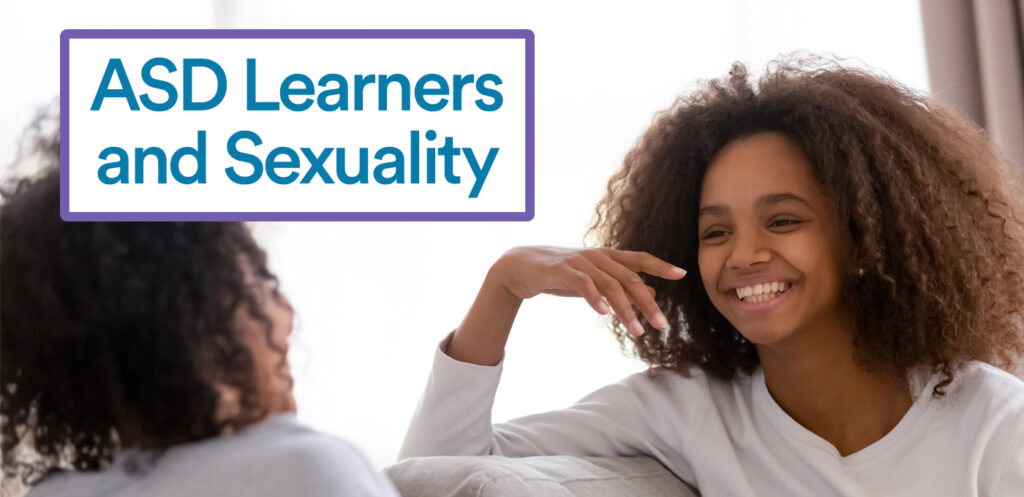
ASD Learners and Sexuality


By: Randy Horowitz, M.S. Ed., S.A.S. and Joanne Capuano Sgambati, Ph.D., BCBA-D, LBA

Sexuality is part of normal human development for every man, woman and child. It is a basic need and an integral part of life. Sexuality is not just physical maturity and sexual intercourse; it is diverse and personal. It’s about relationships, intimacy, and thoughts and feelings about other people. Individuals with ASD follow the same physiological sexual development and interests as their typically developing peers; About 75% of individuals on the spectrum desire and engage in some form of sexual behavior. (A comparable percentage to the neuro-typical population). Behaviors range from masturbation to intercourse and many steps along the way. Individuals with ASD have the same sexual interests, needs, and rights as anyone else, they just may not have the same ways to express themselves and share their feelings.

So what else is unique about individuals with ASD in relation to sex education?

  • Poor social competence and limited peer relationships lead to few opportunities to obtain sexual information, have sexual relationships, and fulfill their desire to have a healthy romantic and sexual life.
  • Cognitive differences (difficulty with inferencing, perspective taking, and theory of mind) can impact their understanding, generalization, and application of sexual information.
  • Language and communication challenges as well as social skills deficits can get in the way of initiating and maintaining relationships.
  • Societal barriers which interfere with learning necessary sexual information that can prevent intimate relationships from taking place. 

It is a natural instinct for parents and teachers to want to protect their children; however, by avoiding speaking about sexuality and sex education, they may be suggesting that sexuality is unimportant or shameful and they may be leaving their children even more vulnerable to frustration, problematic behaviors, social isolation, anxiety, depression, low self-esteem and even victimization.

So, how can we best educate learners with ASD about sexuality?

Start early: Children with ASD may have a hard time with change and take longer to learn concepts. Start very early; and present positively in a calm and clear manner:

  • Body part ID
  • Using appropriate words and language to identify genitals.
  • Private vs. public (e.g., places, behaviors, hygiene, and eventually conversations and on-line activities etc.)

Remember what is cute as a child (like hugging teachers), may be inappropriate in middle school. So, teach appropriate social boundaries early on. Do not wait until puberty to discuss body changes as it can be alarming to teens with ASD who resist change (pubic hair, private time for masturbation, shaving, bras, maxi pads, etc.).

Use appropriate teaching strategies: You can teach sexuality skills the same way you teach other skills to those with ASD. Some ideas are use of visuals, schedules, task analysis, functional communication training, and video modeling. Remember that sexual behavior is still behavior and adheres to the laws of applied behavior analysis. If there is a behavior to increase, decrease, or maintain it is important to know the function of that behavior in order to modify it.

Remember while teaching make sure you are aware of issues regarding consent, legalities in your state, wishes of the parents, policies of your agencies and how your intervention will look to others.

Teach independence: It is natural for parents to want to protect their child with ASD but to avoid sex education and relationship development may actually make the individual vulnerable to dependency. Teach independence on skills that are transferable to sex education:

  • personal hygiene
  • dressing
  • toileting
  • use of a cell phone
  • who and how to call in an emergency

Don’t do anything for them that they can do for themselves. This will help the child be less dependent on others for “help” and able to make their own decisions.

Teach safety skills: . Children with ASD are typically taught compliance, They may not know how to self-advocate and say “No” because they have been rewarded for compliance and listening to people who are “in charge”.

  • Teach them to say “NO” when asked to do something they do not want to do (i.e. “No thank you, I do not want a hug”).
  • Teach them that “Your body belongs to you” and rules for touching (appropriate vs inappropriate touches). They need to know they have rights over their bodies and how to “report” any inappropriate sexual behaviors or abuse.

Teach the obvious: Most children learn from a variety of sources: family, peers, TV, movies, internet etc. Those on the spectrum may not pick up on all this information. They may need things spelled out for them in a concrete literal fashion. “You cannot date women younger than 18”. Avoid or explain confusing language. “A “hook-up” is slang for meeting someone for sex and not a relationship.”

Teach about relationships: Explain the variety of relationships that people have (friendship vs love vs intimacy) and (close family and friends vs professionals, acquaintances, and strangers). Help them be social, learn social communication skills, and make friendships. Best friendships form from common interests (e.g., video games, “Anime”, trains etc.). The internet can help you find special interest groups and meet ups. There are also speed dating and singles groups for those with ASD.

Teach them about themselves: They need to develop self-esteem and a healthy self-concept. Understanding their diagnosis, strengths and weaknesses will help them be better advocates for themselves. Being a better self-advocate will also help protect their sexual well-being.


Randy Horowitz, M.S. Ed., S.A.S.

Randy has a Master of Science in Education from Queens College and a Certificate of School Administration and Supervision from the College of New Rochelle. Randy is currently a doctoral candidate in the educational leadership program at Concordia University. Randy started her career as a special education teacher in public school in Nassau County and then spent close to 30 years in senior leadership positions at nonprofit organizations serving children and adults with autism in NYC and Long Island. Randy has presented at local, national and international conferences on topics relating to educating individuals with autism. Her particular areas of interest include preparing and supporting individuals with autism for integration into community activities.

In addition to her many work responsibilities, Randy is also a seasoned runner and has participated in countless road races and marathons, including our Blazing Trails Run/Walk, raising well over $65,000 in the past 15 years to benefit the autism community.

Joanne Capuano Sgambati, Ph.D., BCBA-D, LBA

Dr. Sgambati serves as the Director of Psychological Services for Eden II’s Genesis Programs on LI.  She specializes in consulting, counseling, evaluations, and behavior management of individuals with autism spectrum disorder (ASD).  For the past 30 years, she has been dedicated to using positive behavior approaches, applied behavior analysis (ABA), for enhancing the lives of students in special education and adults on the autism spectrum.  Dr. Sgambati is an active participant in Eden II’s Genesis Outreach Department conducting live presentations and webinars on a variety of topics at organizations, conferences, schools, and universities. She also conducts training seminars for local schools and various parent organizations.  Dr. Sgambati specializes in ABA interventions for families of children and adults with special needs who demonstrate challenging behaviors. She is also the proud parent of two young adults on the Autism Spectrum.


Resources:

https://researchautism.org/sex-ed-guide/

https://www.autismspeaks.org/sites/default/files/2018-08/Puberty%20and%20Adolescence%20Resource.pdf

https://www.autismspeaks.org/recognizing-and-preventing-sexual-abuse

Ames, H. & Samowitz, P. (1995). Inclusionary standards for determining sexual consent for individuals with developmental disabilities. Mental Retardation, 4, 264-268.

Davies, C., Dubie, M. (2012). Intimate Relationships  & and Sexual Health: A Curriculum for Teaching Adolescents/Adults with High Functioning Autism Spectrum Disorders and Other Social Challenges.

Griffiths, D. (1999) Sexuality and developmental disabilities: Mythconceptions and facts. In I. Brown and M. Percy, (Eds.). Developmental Disabilities in Ontario (pp. 443-451). Toronto: Front Porch Publishing.

Griffiths, D.M., Richards, D. , Fedoroff, P., & Watson, S.L. (Eds.) 2002. Ethical dilemmas: Sexuality and developmental disabilities.  NADD Press: Kingston, NY

Hanault, I. (2006). Asperger’s Syndrome and Sexuality: from Adolescence through Adulthood. (information and lessons for students on the less cognitively impaired end of the spectrum)

McLaughlin, K., Topper, K., & Lindert, J. (2010). Sexuality Education for Adults with Developmental Disabilities, Second Edition. (structured group model) Schwier, K.M., & Hingsberger, D. (2000). Sexuality: Your sons and daughters with intellectual disabilities. Baltimore: Paul H. Brookes Publishing

By: Nicole Gorden, M.S., BCBA, LBA 

This blog post is part 2 of 2. Read part 1 HERE


Autism spectrum disorder occurs in individuals from many different cultures and backgrounds. Therefore, cultural competency and sensitivity is imperative for effective delivery of services. To work with autistic learners, is to respect that they are the product of many environments that have shaped them and will continue to shape them throughout their life.

As stated in the most updated ethical code from the BACB, behavior analysts are responsible for incorporating and addressing diversity in practice. For example, the BACB ethical code states that behavior analysts must practice within our scope of competence, maintain competence including cultural responsiveness and diversity. Specifically, providers must “evaluate their own biases and ability to address the needs of individuals with diverse needs/backgrounds” (Ethical Code, 2022, 1.07).

However, what are the practical implementations to culturally sensitive treatment? What does this actually look like in practice? As providers, we are obligated to offer exceptional service delivery with individualized treatment goals. Considering our learner’s cultural background and the impact of their community’s beliefs and attitudes is essential to effective treatment. The following will provide guidance on how providers can apply cultural sensitivity to their clinical decisions in treatment.

Priorities in Treatment Goals

Overlooking the cultural impact can also create conflict and disparity within the stakeholders’ involvement and commitment to treatment. In contrast, “when these values and expectations align with those of the family receiving the intervention, positive outcomes are likely, including high levels of participation and response to treatment” (Dubay, Watson, & Zhang, 2018). Thus, we must also consider how we prioritize goals for culturally sensitive treatment.

For instance, I recently worked on a sleep intervention to desensitize my client to sleeping in his own bed. When discussing the intervention, and more importantly, when to introduce the treatment goal, the cultural sleeping norms had a significant impact. In some urban and minority cultures, co-sleeping is common. Yet, if a provider may think it is significant for the client to start sleeping in their own bed by the age of six, but it is common in the culture to continue co-sleeping even until the child is ten, culturally sensitive conversations can play an important role.

In another example, Filipino cultures find it respectful for younger family members to “bless” elder members by bowing towards the hand of the elder family member and placing their forehead on their hand. Thus, although the provider may find it significant for the client to learn to wave to greet others, by prioritizing cultural norms, it may have a greater influence on the client receiving natural reinforcers by working on blessing their family members, first.

The contradiction between parents following therapy targets that will be supported by their community compared to the skills that might benefit their child in the long term may prove to be challenging and demanding on the family (Dubay, Watson, & Zhang, 2018). Thus, culturally sensitive treatment is prioritizing treatment goals with the best outcome and secures family commitment.

Interdisciplinary Collaboration

By creating culturally sensitive treatments, providers will build better relationships with stakeholders and in turn, reduce the social stress that may come from raising and teaching an autistic child within various cultures. This idea does not only apply to parents, but even extends to the interdisciplinary team that could be influenced by the learner’s culture.

Within Russian communities, it is common to eat soup for lunch. When I provided services in a primarily Russian daycare, I had to consider my client’s aversion to eating these traditional meals as well as the importance of this target behavior to the daycare providers. Rather than dismiss this potential goal, despite my own perspective on the client’s needs, I modified my treatment goals to effectively collaborate with the daycare providers. By understanding the cultural impact and importance of certain behaviors to any stakeholder, the provider can often address unmet needs, gain support for treatment, and keep open communication if other issues arise (Fong et. al, 2017). We must be culturally sensitive towards the beliefs and attitudes that are different than those in the US, and not assume that the learner’s culture does not affect how they or their community respond to treatment.

Educate Ourselves. Stay Cultured. It is not required to culturally match your clients to provide adequate care and treatment. However, providers should strive to acquire knowledge and skills related to cultural responsiveness and diversity. Although we may be the experts in our particular discipline, remember that the parents are the experts on your learner. Culturally sensitive providers should strive to learn about the cultural norms of their diverse clientele. Constant dialogue, keeping an open perspective, and asking questions about cultural norms can make all the difference.


About the Author: 

Nicole Gorden, M.S., BCBA, LBA has over 14 years of experience implementing Applied Behavior Analysis principles with the Autism Population. She currently works for Comprehensive Behavior Supports in Brooklyn, NY.


References:

Behavior Analyst Certification Board. (2020). Ethics code for behavior analysts. Littleton, CO: Author.

DuBay, M., Watson, L. R., & Zhang, W. (2018). In Search of Culturally Appropriate Autism Interventions: Perspectives of Latino Caregivers. Journal of autism and developmental disorders, 48(5), 1623–1639.

Fong, E. H., Catagnus, R. M., Brodhead, M. T., Quigley, S., & Field, S. (2016). Developing the Cultural Awareness Skills of Behavior Analysts. Behavior analysis in practice, 9(1), 84–94.

Fong, E. H., Ficklin, S., & Lee, H. Y. (2017). Increasing cultural understanding and diversity in applied behavior analysis. Behavior Analysis: Research and Practice, 17(2), 103-113.

Patton, S. (2017, April). Corporal punishment in black communities: Not an intrinsic cultural tradition but racial trauma. CYF News. http://www.apa.org/pi/families/resources/newsletter/2017/04/racial-trauma

Practical Applications to Culturally Sensitive Treatment – Part I

By: Nicole Gorden, M.S., BCBA, LBA 


Autism spectrum disorder occurs in individuals from many different cultures and backgrounds. Therefore, cultural competency and sensitivity is imperative for effective delivery of services. To work with autistic learners, is to respect that they are the product of many environments that have shaped them and will continue to shape them throughout their life.

As stated in the most updated ethical code from the BACB, behavior analysts are responsible for incorporating and addressing diversity in practice. For example, the BACB ethical code states that behavior analysts must practice within our scope of competence, maintain competence including cultural responsiveness and diversity. Specifically, providers must “evaluate their own biases and ability to address the needs of individuals with diverse needs/backgrounds” (Ethical Code, 2022, 1.07).

However, what are the practical implementations to culturally sensitive treatment? What does this actually look like in practice? As providers, we are obligated to offer exceptional service delivery with individualized treatment goals. Considering our learner’s cultural background and the impact of their community’s beliefs and attitudes is essential to effective treatment. The following will provide guidance on how providers can apply cultural sensitivity to their clinical decisions in treatment.

Awareness of Own Cultural Biases

Cultural awareness is the first step to providing culturally ethical treatment. Providers should concurrently and habitually engage in practices in which they remain aware of their own predetermined perceptions and acknowledge their own limitations to cultural competency. As mentioned in Fong et. al (2016), “cultural awareness may be important because behavioral patterns that are viewed as problematic in our own culture may be the norm in other cultures”. Due to limitations in diversity within most helping professions, a learner’s provider is often from a different cultural background.

Thus, it is essential to understand the traditions of that culture. As an example, physical punishment may be common practice in some black communities which has been perceived to be deeply rooted in racial trauma (Patton, 2017). It would be insensitive for a provider from a different cultural background to ignore that this practice is a cultural tradition, and thus blame or stigmatize black parents for their choices. Rather, “professionals can offer information about why the practice is harmful but have been told it is necessary, and offer healthier alternatives that produce better outcomes for children, families and communities” (Patton, 2017). Cultural sensitivity is facilitating the development of our programs by checking our own biases and how they may affect our choices in treatment.

Selection of Target Behaviors and Programmatic Materials

A few years ago, a client from Asian descent was transferred to me from another behavior analyst. When assessing the barriers to treatment, my client made minimal progress when asked to identify a fork. Believing that an object, rather than a picture might help, I asked the client’s parents for a fork. When obtaining the fork, the parents expressed that they do not use forks to eat. In their culture, hands and chopsticks are typical eating utensils. Thus, when considering cultural sensitivity, this includes selecting programmatic targets that are common in the client’s environment and the cultural norms.

The teaching materials should be as individualized as the treatment plan too. We should rely on diverse representation in the resources we use in treatment. Providers should use materials that represent the individual’s environment, which is typically a blend of many different ethnicities. When providing resources like visual schedules, do your cartoons or pictures represent the racial identity of your learner? If you are teaching body parts on a doll, do you provide toys that look like your learner? To be a culturally sensitive professional, one should give precedence to ethnic representation to allow the learner to feel validated and treat them with dignity.

The cultural assessment process should be used to inform treatment, specifically when designing the program for validity and selecting targets for skill acquisition (Fong et. al, 2016). When beginning a new lesson or treatment program, it is essential that providers select socially meaningful and significant target goals. However, in selecting these goals for treatment, professionals must consider the cultural norms and needs of the client.


About the Author: 

Nicole Gorden, M.S., BCBA, LBA has over 14 years of experience implementing Applied Behavior Analysis principles with the Autism Population. She currently works for Comprehensive Behavior Supports in Brooklyn, NY.


References:

Behavior Analyst Certification Board. (2020). Ethics code for behavior analysts. Littleton, CO: Author.

DuBay, M., Watson, L. R., & Zhang, W. (2018). In Search of Culturally Appropriate Autism Interventions: Perspectives of Latino Caregivers. Journal of autism and developmental disorders, 48(5), 1623–1639.

Fong, E. H., Catagnus, R. M., Brodhead, M. T., Quigley, S., & Field, S. (2016). Developing the Cultural Awareness Skills of Behavior Analysts. Behavior analysis in practice, 9(1), 84–94.

Fong, E. H., Ficklin, S., & Lee, H. Y. (2017). Increasing cultural understanding and diversity in applied behavior analysis. Behavior Analysis: Research and Practice, 17(2), 103-113.

Patton, S. (2017, April). Corporal punishment in black communities: Not an intrinsic cultural tradition but racial trauma. CYF News. http://www.apa.org/pi/families/resources/newsletter/2017/04/racial-trauma

Do You Want to be the Bringer of the Grins or the Bringer of the Power Struggles?

This week’s blog comes from Parenting with ABA by Leanne Page.

Do you know what one of my favorite parenting tools is?

You guessed positive reinforcement, didn’t you? Close- but today I’m going with HUMOR!

When things are tense- can we help ourselves and our kids to crack a smile to defuse the situation?

When my kids are in a bad mood, it’s easy for me to slip into traditional kneejerk parenting reactions. It’s easy to become overly firm and frustrated. This is when voices rise. Tempers rise. Power struggles begin. Who exactly is winning here? I’m not happy with my own behavior following a tense interaction let alone my kids’ behavior.

What if instead of getting firm we got silly? Can we salvage the situation, the morning, the day? I say HECK YES!Mornings can be hard for so many families- mine included. Getting up on time to get out the door by 7:30am for elementary school is not easy for my oldest. After a few rough days of trying all kinds of different things to just get my girl out of her funk, I hit the jackpot. Instead of being firm in the form of “You do it or I’ll help you do it” through the morning routine, I opted for humor. My girl was grunting and moaning and making all kinds of unpleasant noises instead of doing her morning routine. I asked our smart home thingie “Hey google, can you translate cave man talk?” and “What does (insert grunting noises here) mean in English?” I communicated back to my daughter in cave man grunting noises. She cracked a smile. I turned up the silly drama with noises and gestures to communicate to her what she needed to do next in her morning routine. And guess what! It worked! Not only did it work that day but as soon as I started pantomiming things or making silly noises the next day- a grin! Mornings got smoother for several weeks without me even needing to help her do her routine. Then one day, she had a hard time again. Instead of kneejerk over firm parenting tactics, I tried humor. And it worked like a charm!

When else have you heard me sharing about being silly? In getting our kids’ attention before giving an instruction. Try talking in a silly voice, singing, whispering, or rapping. Try silly faces and hand gestures to act out what you need them to do. Get their attention before giving an instruction but also get a smile as you are interacting with your kids!

Get that grin and helping your kids follow through is a million times easier!

And the best part of all- laughing together helps that highly desired true connection with your kids. Not only does it defuse a situation or help them follow instructions- it strengthens your relationship. It helps your kids to feel safe and secure with you- you are the bringer of the smiles, not the bringer of the threats of punishment or the bringer of rasied voices and power struggles.Next time you feel your own temperature rising because your child is not listening, pause. Try hard to use some humor. The first time or two it really is HARD because your instincts are to be firm and stand your ground no matter what. But breathe and consider the big picture. Do you want your kids to think of you as the bringer of the smiles or the power struggles. Be silly. Get the smiles. Then the instruction following is easier. Save the situation and also strengthen your relationship.

Embrace the silly!


Leanne Page, MEd, BCBA, is the author of Parenting with Science: Behavior Analysis Saves Mom’s Sanity. As a Behavior Analyst and a mom of two little girls, she wanted to share behavior analysis with a population who could really use it- parents!

Leanne’s writing can be found in Parenting with Science and Parenting with ABA as well as a few other sites. She is a monthly contributor to bSci21.com, guest host for the Dr. Kim Live show, and has contributed to other websites as well.

Leanne has worked with children with disabilities for over 10 years. She earned both her Bachelor’s and Master’s degrees from Texas A&M University. She also completed ABA coursework through the University of North Texas before earning her BCBA certification in 2011. Leanne has worked as a special educator of both elementary and high school self-contained, inclusion, general education, and resource settings.

Leanne also has managed a center providing ABA services to children in 1:1 and small group settings. She has extensive experience in school and teacher training, therapist training, parent training, and providing direct services to children and families in a center-based or in-home therapy setting.

Leanne is now located in Dallas, Texas and is available for: distance BCBA and BCaBA supervision, parent training, speaking opportunities, and consultation. She can be reached via Facebook or at Lpagebcba@gmail.com.