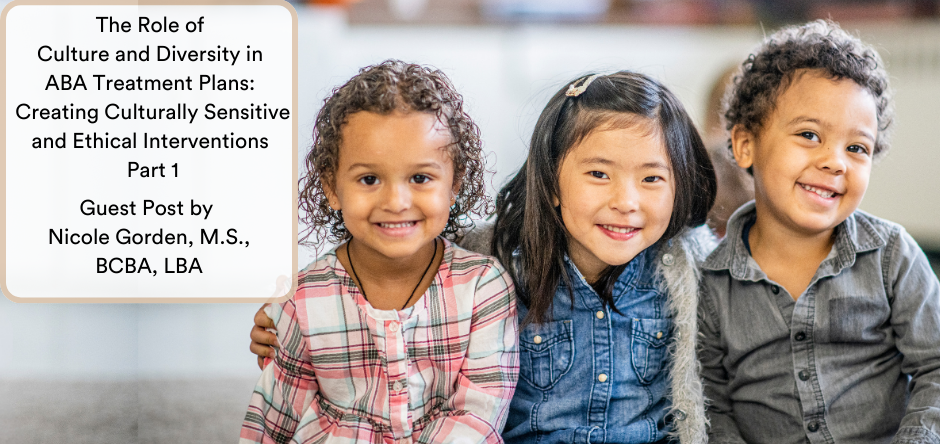
As a black behavior analyst, I have personally witnessed how culture and diversity profoundly impact the effectiveness of treatment for children with autism. It is crucial for us, as professionals, to recognize the role of culture and be conscious of our own biases when creating behavior change programs. We will explore the importance of cultural sensitivity in creating treatment plans and discuss how being attentive to diversity can lead to more ethical and effective interventions. Whether you are a parent, clinician, or teacher, understanding the influence of culture is essential for providing the best support for children with autism.
The Impact of Culture on ABA Treatment
Culture plays a significant role in shaping an individual’s beliefs, values, and behaviors. It influences how we communicate, perceive the world, and respond to interventions. Recognizing and respecting the cultural backgrounds of children with autism is vital in tailoring treatment plans that are both effective and ethical.
Cultural Bias and Behavior Change Programs
As professionals, it is essential for us to examine our own cultural biases. Our biases can inadvertently influence the goals we set and the strategies we employ in behavior change programs. By being aware of our biases, we can ensure that treatment plans are culturally sensitive and respect the unique needs and values of each individual.
For example, a provider working with a child from a collectivist culture may set a goal to increase the child’s independent decision-making skills during play activities. However, in the child’s cultural context, interdependence and collaboration are highly valued, and decision-making is often a shared process among family members. By overlooking this cultural aspect, the clinician’s bias towards individualism may unintentionally disregard the importance of cooperative decision-making, potentially limiting the cultural relevance and effectiveness of the treatment goal.
Cultural Sensitivity and Ethical Considerations
Behavior-change interventions must meet the culturally sensitive needs of the client to be considered ethical. Cultural sensitivity requires us to be attentive and respectful of the individual’s culture, considering how cultural contingencies can support their behaviors and aligning treatment recommendations with the values of their culture. It is crucial to foster an inclusive and culturally responsive environment to promote positive outcomes.
Consider a therapist working with a child from a culturally diverse background who exhibits challenging behaviors during mealtime. The BCBA recognizes that the family’s cultural practices include communal eating, eating with their hands, and the preparation of traditional foods. In this case, an ethically sound intervention would involve understanding and respecting the family’s cultural practices while addressing the challenging behavior. Instead of imposing rigid expectations of eating independently, forcing the child to eat with utensils, or conforming to other Western mealtime norms, the therapist would collaborate with the family to develop strategies that promote positive mealtime experiences while honoring their cultural traditions. This approach ensures that the behavior-change intervention is culturally sensitive and respectful, promoting the client’s well-being while maintaining the integrity of their cultural background.
Promoting Diversity in the Field
As highlighted by Dubay, Watson, and Zhang (2018), “The lack of racial, ethnic, and linguistic diversity in service providers is an issue facing many clinical fields.” Increasing diversity within the field is essential for ensuring culturally competent and effective treatment for individuals from diverse backgrounds. By promoting diversity, we can enhance our understanding of different cultures and provide more inclusive and tailored interventions.
The Importance of Culture in Achieving Socially Meaningful Goals
Recognizing the influence of culture in behavior analysis allows us to design interventions that are relevant, respectful, and aligned with the values of the individual and their community. This leads to interventions that are more meaningful, promote independence, and improve the quality of life for individuals with autism. In addition, it allows our clients to access naturally occurring reinforcement within their own environment which is critical for generalization and maintenance of skills.
Incorporating cultural sensitivity into treatment plans is crucial for creating effective and ethical interventions for children with autism. Recognizing the influence of culture, addressing our own biases, and promoting diversity within the field are key steps toward providing inclusive and meaningful support. By embracing cultural awareness, we can develop interventions that respect and value the unique cultural backgrounds of individuals, leading to better outcomes and enhancing the overall well-being of children with autism.
References
DuBay, M., Watson, L. R., & Zhang, W. (2018). In search of culturally appropriate autism interventions: Perspectives of Latino caregivers. Journal of autism and developmental disorders, 48, 1623-1639.
Fong, E. H., Catagnus, R. M., Brodhead, M. T., Quigley, S., & Field, S. (2016). Developing the cultural awareness skills of behavior analysts. Behavior analysis in practice, 9, 84-94.
About the Author
Nicole Gorden, M.S., BCBA, LBA has over 14 years of experience implementing Applied Behavior Analysis principles with the Autism Population. She currently works for Comprehensive Behavior Supports in Brooklyn, NY.
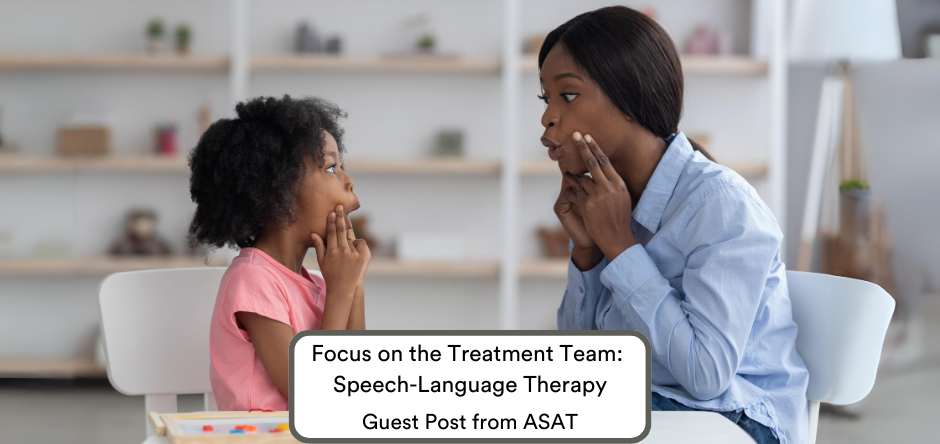
This month’s ASAT feature comes to us from Kate McKenna, MEd, MSEd, MS, BCBA,and Lindsay Bly, MS, CCC-SLP, Melmark. To learn more about ASAT, please visit their website at www.asatonline.org. You can also sign up for ASAT’s free newsletter, Science in Autism Treatment, and like them on Facebook!
The science of speech-language pathology in the United States had its roots in the study of elocution, what we now call articulation, for rhetoric debate, and theatre, which had risen to prominence in 18th century England. Several clinicians of the era (e.g., Potter) that were considered legitimate came from the profession of education, medicine, and elocution. With the publication of Speech and its defects. Considered physiologically, pathologically, historically, and remedially (Potter, 1882), the field expanded to include speech and language disorders. Potter provided a taxonomy of all speech disorders and a definition and suggested treatments for each. This publication then became the model for the field of speech-pathology in the early period in its history. Speech production continued to be the primary focus of the field in the United States as reflected by the establishment of the American Academy of Speech Correction, in 1925 at a meeting of the National Association of Teachers of Speech (NATS), held in New York City, whose members wanted to promote “scientific, organized work in the field of speech correction.” (https://www.asha.org/about/history/) The establishment of the Academy was the birth of American Speech-Language Hearing Association (ASHA).
As an organization the Academy has gone through several name changes and in 1978 took its current title of the American Speech-Language Hearing Association (ASHA). The organization that began with 25 charter members now represents over 228,000 speech-language pathologists. Based in Rockville, Maryland, ASHA is committed to a mission of empowering and supporting audiologists, speech-language pathologists, and speech, language, and hearing scientists.
As with the professions of physical and occupational therapy, injuries in the World Wars also spurred growth and diversification in the field of speech and language therapy. Soldiers returning from the battlefields had suffered brain injuries that resulted in aphasia, a language disorder that involves loss of the ability to understand or express speech and language. Consequently, during the 1940’s and ’50s, as brain studies, technological advances, and the development of standardized testing procedures gave rise to more useful receptive and expressive language assessments and treatment techniques, speech therapists began to expand their focus into the treatment of language disorders. The field of speech pathology became speech-language pathology during this time.
Although speech and language disorders can occur by themselves, they often exist together, which is why speech-language pathology is a combined field of study. During the 1960’s through the ’80’s, advances in linguistic studies further enhanced the speech-language pathologist’s understanding and ability to treat a variety of language delays and disorders in persons of any age. In the 21st century, speech-language pathologists have begun to research and treat the pragmatic use of language along with the other areas of communication disorders.
Today’s speech-language pathologist is a professional whose professional practice and expertise is in diagnosis, screening, assessment, and treatment of challenges and difficulties, in the areas of communication, including speech, language, cognition, voice, fluency, resonance and hearing, and swallowing in people of all ages. Moreover, SLPs practice within eight domains of speech-language pathology service delivery: collaboration; counseling; prevention and wellness; screening; assessment; treatment; modalities, technology, and instrumentation; and population and systems. In addition, SLPs engage in five domains of professional practice including: advocacy and outreach, supervision, education, research, and administration/leadership. A speech disorder is identified as when someone has a hard time producing speech sounds and misarticulations, has a voice problem, or stutters when speaking. A language disorder is when an individual experiences difficulties understanding and using language to communicate, sharing their thoughts and emotions, and engaging in conversation with others as a conversational partner.
Education
The education and training of speech-language pathologists is overseen by the Council on Academic Accreditation in Audiology and Speech-Language Pathology (CAA), which is an entity within the American Speech-Language-Hearing Association (ASHA). ASHA is the national professional, scientific, and credentialing association of speech-language pathologists and audiologists. According to ASHA, to practice as a speech-language pathologist (SLP), a masters, doctoral, or other recognized postbaccalaureate degree from a CAA accredited program is required along with completing 400 supervised clinical hours, with at least 25 hours spent in guided observation and at least 375 hours spent in direct client/patient contact, with 325 completed at the graduate level. Supervision is required in real time and never less than 25% of the student’s total contact with each client/patient. Aspiring speech-language therapists must also pass a Praxis Exam in Speech-Language Pathology and complete a clinical fellowship of at least 36 weeks and 1260 hours of full-time experience or its part-time equivalent. During the clinical fellowship applicants are rated by their mentor according to the Clinical Fellowship Skills Inventory (CFSI), which consists of 18 skill statements covering the areas of evaluation, treatment, management, and interaction. Mentees are judged on accuracy and consistency, which assesses the performance of a skill without error, consistently across cases, as well as independence and supervisory guidance, which measure both the level of independence and the ability to self-monitor skill level and request support as necessary. After being granted a Certificate of Clinical Competency (CCC) from ASHA, speech-language pathologists are required to complete 30 hours of professional development every three years. Other license requirements vary by state.
Speech-Language Pathology Assistants (SLPA) can become certified through three different educational pathways and must complete 100 hours of clinical field work under the supervision of an SLP. In addition, applicants take courses in ethics, universal safety precautions and complete the ASHA online SLPA education modules. As with SLPs, speech-language pathology assistants pass a certification exam and renew their certification every three years.
Standards of Practice and Guiding Documents
In their practice speech-language pathologists are guided by the ASHA Code of Ethics, which reflects the values and expectations for both research and clinical practice. The code is intended to provide a framework for ethical decision-making and professional conduct. Four Principles of Ethics form the philosophical base of the Code: 1) responsibility to persons served professionally and to research participants, 2) responsibility for one’s professional competence, 3) responsibility to the public, and 4) responsibility for professional relationships. The Scope of Practice in Speech-Language Pathology also governs the practice of speech-language pathologists. This document is a framework for practice and describes the domains of service delivery. The work of speech-language pathologists assistants is guided by similar documents, a Code of Conduct, and a Scope of Practice, that describe the limits of service delivery as they work under the supervision of SLPs. A goal of SLPs is to provide evidence-based treatment and interventions to clients. To this end, ASHA has created Evidence Maps, a searchable online tool designed to assist speech-language therapists in making evidence-based decisions in their practice.
Professional Organizations
The American Speech-Language Hearing Association (ASHA), is the professional and credentialing organization for audiologists, speech-language pathologists, scientists studying speech, language and hearing, and has 20 Special Interest Groups (SIG) that indicate the breadth and depth of study in the professions. Its mission is “Making effective communication, a human right, accessible and achievable for all.”
ASHA publishes five peer-reviewed journals. American Journal of Audiology (AJA) is an online only peer-reviewed journal that publishes research and other scholarly articles pertaining to clinical audiology methods and issues. American Journal of Speech-Language Pathology (AJSLP) is an international journal that publishes clinical research on diverse aspects of clinical practice in speech-language pathology, including screening, diagnosis, and treatment of communication and swallowing disorders. Articles in the Journal of Speech, Language, and Hearing Research (JSLHR) touch on speech, language, hearing, and related areas such as cognition, oral-motor function, and swallowing. Language, Speech, and Hearing Services in Schools (LSHSS) focuses on school age children and adolescents and audiological and communication disorders that impact full participation in the school setting. Perspectives of the ASHA Special Interest Groups, a bimonthly online peer-reviewed journal, publishes research related to the 20 SIGs. The ASHA Leader, which highlights the latest research and practice advances in communication sciences and disorders, is a bimonthly newsmagazine for and about audiologists, speech-language pathologists, and speech, language, and hearing scientists available to all ASHA members.
Scope of Practice
The SLP profession falls under the larger discipline of communication sciences and disorders, which also includes audiology. Speech-language pathology is focused on a range of human communication and swallowing disorders affecting people of all ages. The practice of speech-language pathology includes those who want to learn how to communicate more effectively, such as those who want to work on accent modification or improve their communication skills. It also includes the treatment of people with tracheostomies and ventilators and those who use Augmented and Alternative Communication such as manual signs, gestures, picture or letter communication boards, and speech generating devices.
Speech is a verbal form of communication that is comprised of articulation, how speech sounds are produced (e.g., manner, placement, and voicing), voice, the coordination of the breathing/respiratory apparatus and vocal cords to produce those sounds, and fluency, the rhythm of speech. Speech problems often occur because a person has difficulty producing sounds due to difficulties or incorrect movement or development of the lips, tongue, and mouth, and/or coordination of the speech motor and respiratory mechanism. Language consists of socially shared rules that govern what words mean, how new words are created, and how words are put together in sentences. It also includes what we call the pragmatics of language, the socially accepted rules for interacting in daily life. This includes non-verbal communication (eye contact, facial expressions, body language) as well as conversational skills such as turn taking, asking questions, appropriately maintaining conversations, and adjusting language and vocabulary based on the situation. Speech-language pathologists treat both receptive (difficulty understanding others) and expressive language disorders (difficulty communicating thoughts, ideas, and feelings).
Stuttering: Interruption in the flow of speaking characterized by specific types of disfluencies.
Cluttering: Characterized by a perceived rapid and/or irregular speech rate, atypical pauses, maze behaviors.
Speech Production Disorder:
Motor planning and execution disorders:
Childhood speech apraxia: Neurological childhood speech sound disorder resulting from neuromuscular difficulties, such as abnormal reflexes or abnormal tone.
Adult speech apraxia: Speech disorder caused by neuromuscular difficulties, such as abnormal reflexes or abnormal tone; usually because of stroke, traumatic brain injury, dementia, or other progressive neurological disorders.
Speech sound disorders:
Articulation: Errors (e.g., distortions and substitutions) in production of individual speech sound
Phonological: Predictable, rule-based errors (e.g., fronting, stopping, and final consonant deletion) that affect more than one sound.
Language Disorder:
Language disorder: A significant impairment in the acquisition and use of language across modalities due to deficits in comprehension and/or production across any of the five language domains (i.e., phonology, morphology, syntax, semantics, and pragmatics).
Written language disorder: A significant impairment in fluent word reading (i.e., reading decoding and sight word recognition), reading comprehension, written spelling, and/or written expression. Dyslexia – word reading disorder.
Areas of language include phonology, morphology, syntax, semantics, pragmatics (language use and social aspects of communication), prelinguistic communication (e.g., joint attention, intentionality, communicative signaling), paralinguistic communication (e.g., gestures, signs, body language), literacy (reading, writing, spelling)
Cognition:
Cognitive-Communication Disorders: Difficulties paying attention, planning, problem-solving, or organizing their thoughts. Many times, these disorders occur because of a traumatic brain injury, stroke, or dementia.
Voice:
Voice disorders: Includes vocal cord nodules and polyps, vocal cord paralysis, spasmodic dysphonia, and paradoxical vocal fold movement.
Dysarthria: Impaired movement of the muscles used for speech production, including the vocal cords, tongue, lips, and/or diaphragm.
Resonance Disorder:
Resonance disorders: Too much or too little nasal and/or oral sound energy in the speech signal.
Feeding and Swallowing:
Swallowing Disorders: Difficulty eating and swallowing. Swallowing disorders are often a result of an illness, injury, or stroke.
Speech, language, communication, and listening skills impacted by hearing loss, deafness.
Auditory processing
SLPs practice in many settings including schools, homes, and hospitals. They also provide services to those in outpatient clinics or in long-term care facilities. In addition to working with adults with persistent speech/language needs who were diagnosed with developmental disabilities from a young age, SLPs work with people across the lifespan, providing care and treatment in early intervention to working with adults with whom a major medical event may have caused a speech or language disorder. They also work in mental and behavioral health settings. SLPs are also involved in academia and research advancing the knowledge base of the field. Given the various settings that SLPs work in, overlapping scopes of practice across health care, educational and other settings is a reality. As such, SLPs engaged in interprofessional collaborative practice to ensure that individuals served will benefit from the collaborative comprehensive approach, receive effective interventions that lead to meaningful and best health and educational outcome.
Speech-language pathologists are health care professionals who identify, assess, and treat speech, language and swallowing disorders, preventing, and treating communication disorders in people of all ages. The principles and code of ethics that guide members of the profession highlight safeguarding human dignity, protecting the rights of individuals seeking treatment, celebrating diversity, and embracing collaboration in their efforts to ensure that the individuals with whom they work can communicate effectively.
We would like to thank Dr. Lina Slim for her contributions to this article. We appreciate her insight and expertise.
References
American Speech-Language-Hearing Association. (1970, January 1). Assistants code of conduct. American Speech-Language-Hearing Association. Retrieved February 24, 2023, from https://www.asha.org/policy/assistants-code-of-conduct/.
American Speech-Language-Hearing Association. (1970, January 1). Scope of practice in speech-language pathology. American Speech-Language-Hearing Association. Retrieved February 17, 2023, from https://www.asha.org/policy/sp2016-00343/.
American Speech-Language-Hearing Association. (n.d.). History of Asha. American Speech-Language-Hearing Association. Retrieved February 24, 2023, from https://www.asha.org/about/history/.
American Speech-Language-Hearing Association. (n.d.). National Outcomes Measurement System (NOMS). American Speech-Language-Hearing Association. Retrieved February 24, 2023, from https://www.asha.org/noms/.
A Brief History of SPEECH-LANGUAGE PATHOLOGY. History of the Professions – Health Sciences Library – University of North Carolina at Chapel Hill. (n.d.). Retrieved February 24, 2023, from https://hsl.lib.unc.edu/speechandhearing/professionshistory.
Bullett, M. S. (1985). Certification Requirements for Public School speech-language pathologists in the United States. Language, Speech, and Hearing Services in Schools, 16(2), 124-128. https://doi.org/10.1044/0161-1461.1602.124
McKenna, K., & Bly, L. (2023). Focus on the treatment team: Speech-Language Therapy. Science in Autism Treatment, 20(5).
About the Authors
Kate McKenna, MEd, MSEd, MS, BCBA, LBA, received a Masters in Child Study from the Eliot-Pearson Department of Child Study at Tufts University, a Masters in Special Education from Pace University, and a Masters in ABA from Hunter College. In addition to New York state certifications in general and special education from Birth to Grade 2 and Grades 1-6, she holds a New York State Annotated Certification in Severe/Multiple Disabilities. Kate is currently completing a Masters degree in Children’s Literature at Eastern Michigan University. She was an extern at the Association for Science in Autism Treatment before joining the Board of Directors in 2020.
Lindsay Bly, MS, CCC-SLP, is an ASHA certified speech language pathologist. After receiving her master’s degree at Clarion University of Pennsylvania, she began specializing in dysphagia management and augmentative and alternative communication (AAC) evaluation and implementation. In 2018, Lindsay assumed a newly created speech language pathologist position in the intermediate care facility (ICF) at Melmark. Lindsay develops, creates, and collaborates on protocols to minimize the risk of aspiration in medically complex patients with significant and multiple disabilities including a rigorous evaluation schedule and maintenance treatment for all at risk patients. Lindsay has a passion for management of oropharyngeal dysphagia and maximizing quality of life through least restrictive and safest diets.
Reposted with permission from Action Behavior Centers
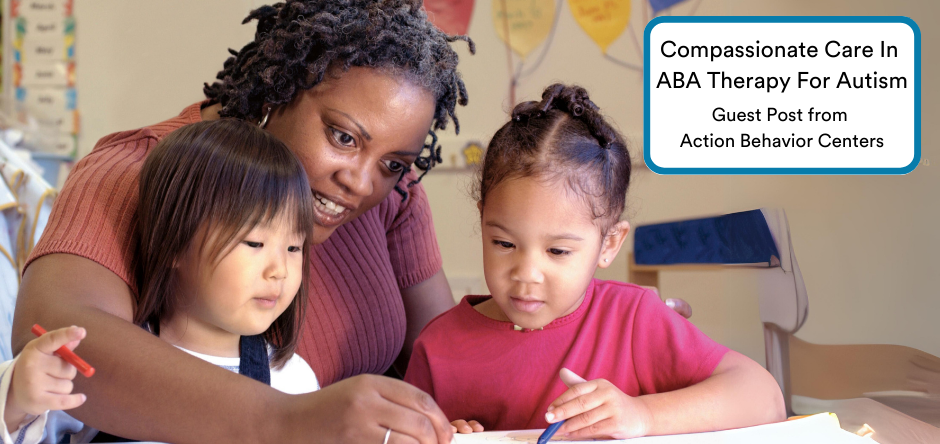
Applied Behavior Analysis therapy, most commonly known as ABA therapy, has grown to become the leading therapy for children with autism. Board Certified Behavior Analysts (BCBAs) primarily work with children on the autism spectrum and their families. As the field continues to grow, it is important to identify potential variables that will lead to a family choosing behavioral therapy (in this case ABA therapy) for their autistic child.
The therapy that BCBAs and RBTS (Registered Behavior Technicians) provide, when done effectively, creates a genuine relationship between each therapist and child. To better understand each child’s individual needs, it is important to recognize the child’s unique perspective. Vast majority of BCBAs are trained in educational programs that focus primarily on teaching technical and concept-based skills. However, to be able to successfully work with families of children with autism, we require skills beyond conceptual scenarios.
Critical interpersonal skills are essential when providing our families with the best, highest quality care possible. Amongst these skills, providing compassionate care is the most important stepping stone in building a relationship with the autistic child. This type of care also plays an important aiding factor in distressing families from any potential concerns. Compassionate care is vital to the success of ABA therapy as it builds the trust between the behavioral therapist and the child. This then helps strengthen the engagement and outcomes for each child. By providing compassionate care, a child is willing to move forward with the concept-based scenarios as if it is normal day-to-day activities, which ultimately results in the successful progression of positive skill development.
In simple terms, compassionate care refers to one being able to put themselves in the shoes of those they are working with by responding with sympathy, empathy, and compassion. By applying techniques of compassionate care, an ABA therapist can identify a family’s perspective and tactfully use their own personal experiences to provide the appropriate response to both the child and their parents. We understand that receiving an autism diagnosis for your child can be overwhelming. After receiving a diagnosis, parents have just as much to learn about autism as the child. By providing compassionate care, we are able to help alleviate the stress that these new situations can cause.
It is important to understand that being diagnosed with autism does not make your child less than. If anything, a child on the spectrum could be highly intelligent and extremely curious. Action Behavior Centers’ ABA therapist understands that providing compassionate care is understanding that your child may need a little extra support and attention. This extra support does not mean your child is lacking in ability. We believe in helping your child reach their full potential by believing in your child and helping them achieve new milestones.
Action Behavior Centers (ABC) is an organization committed to the treatment of children using empirically validated methods and strategies to assist each child in reaching his or her greatest potential and improving their quality of life.
Helping your child transition to a school sleep schedule can be a rewarding and empowering experience for parents of children on the autism spectrum. While it may initially seem challenging to adjust to the structured routine of the school year, especially after the more relaxed summer months, there are effective strategies that can make this process smoother. By implementing these 5 tips, parents can ensure their child is energized, refreshed, and fully prepared to embrace each school day with enthusiasm.
1) Create a Consistent Sleep Schedule
A consistent sleep schedule in a child’s routine is crucial for several reasons. Firstly, having a predictable routine can bring about positive effects by reducing anxiety and providing a comforting sense of stability. Secondly, a lack of sleep can exacerbate behavioral challenges and difficulties with attention and focus. It is recommended for children to aim for 8-12 hours of sleep each night. Ensuring a regular sleep schedule increases the likelihood of children being well-rested, which can positively impact their overall mood, behavior, and cognitive abilities.
2) Establish a Bedtime Routine
Establishing a consistent bedtime routine is essential for children. Following a predictable sequence of activities each night can help your child wind down and prepare for sleep. Begin by choosing calming activities, such as reading a book or a warm bath, to signal to your child that it’s time to relax.
3) Gradually Adjust Bedtime and Wake-Up Time
As you work to transition your child to a school sleep schedule, it’s important to do so gradually. Abruptly changing their bedtime and wake-up time can cause stress and resistance. Instead, make minor adjustments to their schedule each day, slowly shifting their bedtime and wake-up time closer to their school schedule. This will allow their body to adjust and make the transition smoother.
4) Create a Calming Sleep Environment
Creating a calming sleep environment is crucial for children to promote relaxation and restful sleep. Start by ensuring the bedroom is free from distractions, such as loud noises or bright lights. Use blackout curtains or a white noise machine to block out disruptive stimuli. Additionally, provide your child with a comfortable, cozy bed using soft blankets and pillows. Incorporating soothing elements like a nightlight or a weighted blanket (if appropriate for their age) can also help create a serene atmosphere.
5) Implement Visual Aids and Rewards System
Implementing visual aids and a rewards system can be beneficial when transitioning your child to a school sleep schedule. Visual aids, such as a visual schedule or a picture chart, can provide a clear and understandable visual representation of the bedtime routine. This can help your child understand and anticipate each step in the process. Additionally, a rewards system can motivate and positively reinforce bedtime routines and adherence to the sleep schedule. You can create a sticker chart or a token system where your child earns rewards for following the routine and going to bed on time. This can help make the transition more enjoyable and rewarding for your child, ultimately leading to a smoother adjustment to the school sleep schedule.
About BlueSprig
BlueSprig is on a mission to change the world for children with autism.
BlueSprig Is the Premier Provider with the Highest Standards in ABA Therapy Our mission is simple: we are focused on changing the world for children with autism.
The main question we seek the answer to is “what if?”
What if we focus on quality services? What if we are a leader in ABA research? What if we are strong advocates for the rights of all children with autism? Instead of choosing, we’re pursuing all three together – that’s the BlueSprig difference.