
A Look Inside The Clinician’s Toolbox: Rediscovering Compassionate ABA

Take a look inside the newest book from Autism Partnership. Reprinted with permission from the authors.

Foreward

By Dr. Ron Leaf

I was sure that Clinical Judgement would be my last book. It was intended to help the new generation of behaviorists learn about some of ABA’s pioneers that seemed to have been forgotten. Those that inspired us. How could I “retire” without people knowing about Joseph Wolpe, Sandra Harris and Don Baer? Recently, however, it became painfully clear that there is another area that has been sadly neglected.

Social media has been abuzz about a new movement: “compassionate behaviorism.” I was perplexed! First, this group of social media bullies were discussing “compassion.” Moreover, this small group of practitioners was acting as if old concepts such as “therapeutic alliance” and being “curious listeners” were new. They seemed unaware that Carl Rodgers discussed this in 1957 and, in 1999, Richard Fox shared his deep concern that behaviorists seemed to be neglecting the crucial need for becoming “behavioral artists.”

If the agenda was to rekindle this neglected area, I would have been thrilled. But it seems there is far more to their movement and that their agenda is creating tremendous collateral damage. For example, they argue that true “compassionate behaviorists” should not give corrective, or sometimes even positive, feedback. In their view, all feedback is coercion. Of course, when providing corrective feedback, one should be sensitive and thoughtful. But to avoid corrective feedback completely is absurd, and ironically, not compassionate. I wouldn’t be an effective baseball coach if I didn’t tell a baseball player that he needs to track the pitch and stop pulling his head. I wouldn’t be an effective teacher if I didn’t provide corrective feedback regarding class presentations. And I wouldn’t be a good partner if I resisted listening to my wife’s feedback.

These practitioners also suggest that behaviorists should completely acquiesce to the agenda of their clients. That is, only work on those issues that the clients feel are important to work on. Obviously, we need to carefully listen to our clients, but often it is necessary to help our clients understand that only focusing on their top priority is not in their best interests. For example, a client may want to fix a toxic relationship, even when it’s not possible and clearly not in their best interest. Or, a client may want you to help them convince their partner that it’s okay for them to continue with their heavy drinking! Or that it’s preferable for them not to have friends, even though the research shows this can lead to isolation, depression, suicidal ideation and suicide.

Perhaps the most disturbing aspect of this movement is that these “compassionate behaviorists” are providing guidance on how to treat trauma. In order to treat trauma, one must have extensive education, training and testing to ensure that one has the necessary skill set. Otherwise, treating someone with depression or post-traumatic stress disorder can lead to catastrophic consequences. Essentially, they are encouraging folks to practice psychology without a license which is not only a misdemeanor in many States, but it is extremely dangerous!

For me and my colleagues, it was imperative to write The Clinician’s Toolbox: Rediscovering Compassionate ABA, not only to set the record straight about behaviorist history, but to learn from the clinical pioneers, and most importantly, to share the skills necessary to become effective behaviorists. Our goal is to inspire the new generation of behaviorists to receive the necessary education and training so they can truly become talented clinicians. Our ultimate hope is for the leaders in the field of Applied Behavior Analysis to understand that clinical training must become part of educational curricula, credentialling task lists and testing. Otherwise, we are not being “compassionate behaviorists”!


About the Book

Compassion is the cornerstone of effective ABA therapy, especially for patients with autism spectrum disorder. Compassionate care, however, is a skill set that has dwindled from the field of ABA in recent years. The Clinician’s Toolbox: Rediscovering Compassionate ABA reminds practitioners just how important compassion is to their practice.

With tools for navigating the landscape of ABA as it exists today, The Clinician’s Toolbox explores the range of skill sets that make up compassionate care—with patients, parents, and other practitioners. Making compassion clear and actionable, The Clinician’s Toolbox is
a valuable guide for practitioners at any stage in their career seeking to expand their understanding and practice of compassionate care.


About the Authors

Dr. Ronald Leaf is a licensed psychologist with over 45 years of experience in the field of autism. Dr. Leaf began his career working with Professor Ivar Lovaas, while receiving his undergraduate degree at University of California, Los Angeles (UCLA). Subsequently, he received his doctorate under the direction of Prof. Lovaas. During his years at UCLA, he served as Clinic Supervisor, Research Psychologist, Lecturer and Interim Director of the Young Autism Project. He was extensively involved in several research investigations, contributed to The Me Book, and is a co-author of The Me Book Videotapes. Dr. Leaf has consulted to families, schools, and agencies on a national and international basis. He is the Co-founder and Director of Autism Partnership, which offers comprehensive services for families with children and adolescents diagnosed with autism spectrum disorder  (ASD). With offices in 10 countries, Ron and his team have developed the Autism Partnership Method, a progressive approach to implementing Applied Behavior Analysis (ABA) treatment.  He is co-author of A Work in Progress, Time for School, It Has to Be Said, Crafting Connections, A Work in Progress Companion Series, Clinical Judgment and Autism Partnership Method: Social Skill Group. He has co-authored over 75 articles in research journals and presented over 100 times at professional conferences. Dr. Leaf is also the co-founder of the Autism Partnership Foundation, a non-profit dedicated to advancing professional standards and treatment of individuals with autism through research and training.

Jamison Dayharsh is a licensed Marriage and Family Therapist.  Ms. Dayharsh began working with children with autism spectrum disorder  in the late 1970s at UCLA on the Young Autism Project, where she served as a Senior Therapist, Research Assistant, and Teaching Assistant. She earned her master’s degree in counseling psychology at Loyola Marymount University in 1983. Ms. Dayharsh is the Executive Director of Behavior Therapy and Learning Center.  Her work has included parent training and consulting nationally and internationally to parents, schools and mental health agencies. Ms. Dayharsh is an author of A Work in Progress, a book on behavioral treatment and a contributor to research publications. Ms. Dayharsh’s expertise includes counseling families of children with disabilities as well as providing psychotherapy to children and adolescents with autism spectrum disorders.

Jonathan Rafuse is a Board-Certified Behavior Analyst who graduated from UCLA in 1988 with a bachelor’s degree in psychology. In 1991, he received his master’s degree in clinical psychology from Antioch University. He furthered his graduate studies in 2017, completing coursework at the University of North Texas. During his master’s coursework he was the Clinical Director for 1736 Family Crisis Center’s Youth Shelter, overseeing the intense therapy and treatment provided to runaway and abused adolescents. In 1992, he began work at the May Institute running an off-campus group home serving students dramatically impacted with ASD. In 1995, he joined Autism Partnership, which offers comprehensive services for families with children and adolescents with autism spectrum disorder (ASD), and where he is a Clinical Director. He oversees the clinical and programmatic direction of therapy teams providing treatment to this highly individualized population. His responsibilities further include advanced training, mentoring, and consultation to ABA-service providers and teaching staff within school districts and private agencies across the country. He has presented both nationally and internationally at conferences on Applied Behavior Analysis, and consults throughout the United States, Australia and Asia. He wrote chapters in Crafting Connections and The Autism Partnership Method: Social Skills Groups and contributed to the video companion series to A Work in Progress.

John McEachin, a Licensed Psychologist, Licensed Behavior Analyst, and Progressive Behavior Analyst-Autism Professional, has been providing behavioral services and conducting research on autism for five decades. He received his graduate training under Professor Ivar Lovaas at UCLA on the Young Autism Project. During his 11 years at UCLA, Dr. McEachin served in various roles including Clinic Supervisor, Research and Teaching Assistant, and Instructor. His research has included the long-term follow-up study of young autistic children who received intensive behavioral treatment, which was published in 1993. In 1994 he joined with Ron Leaf in forming Autism Partnership, which they co-direct. In 1999 they published A Work in Progress, a widely used behavioral treatment manual and curriculum for children with ASD. Dr. McEachin has lectured throughout the world and co-authored several books and more than 100 research articles published in peer reviewed journals. Besides his clinical and research work, he is currently President of the Progressive Behavior Analyst Autism Council and an instructor in the Psychology department at Long Beach State University.

Justin Leaf, Ph.D., is the Executive Director for Autism Partnership Foundation and the Progressive Behavior Analyst Autism Council, the Associate Director for ABA Doctoral Studies at Endicott College, and the Executive Director for Contemporary Behavior Consultants. Dr. Leaf received his doctorate degree in Behavioral Psychology from the Department of Applied Behavioral Science at the University of Kansas. His research interests include Progressive ABA, improving behavioral intervention, social behavior, and methodologies to improve the lives of autistic/individuals diagnosed with ASD. He has over 140 publications in either peer reviewed journals, books, or book chapters and has presented at both national and international professional conferences and invited events. He has served on numerous editorial boards for behavior analytic and autism journals. Justin career has been dedicated to improving the field of Applied Behavior Analysis and lives of individuals with autism.

Posted in ABA

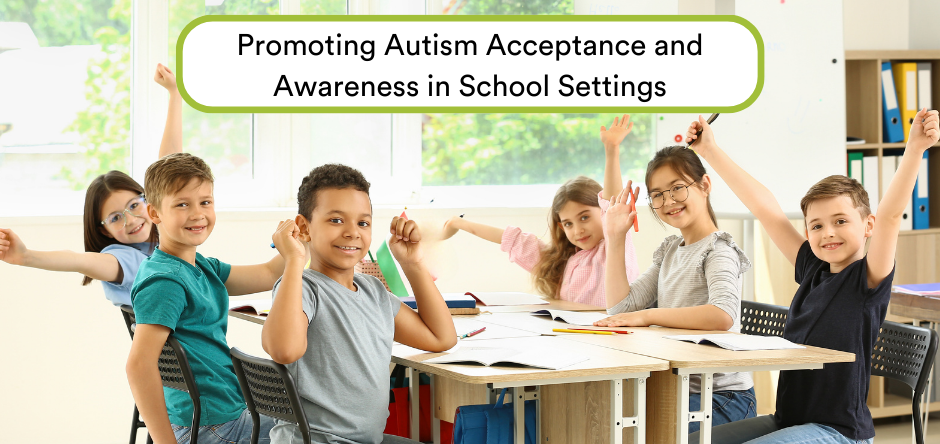
Promoting Autism Acceptance and Awareness in School Settings

This month’s ASAT feature comes to us from Simon Celiberti-Byam and Julia Weiss, High School Externs with the Association for Science in Autism Treatment. To learn more about ASAT, please visit their website at www.asatonline.org. You can also sign up for ASAT’s free newsletter, Science in Autism Treatment, and like them on Facebook!

Increasingly, individuals with autism are included in regular educational settings. This is a huge improvement, as many were formerly taught in segregated settings and had reduced access to social, recreational, and educational activities. Still, these students may have visible and invisible challenges that make their school experience difficult or unpleasant. As peers in these settings, fellow students can do much to improve their experience and to lessen their challenges. As allies, peers can take the time to get to know autistic students, and to understand how to best connect with and support them. It is not just a positive experience for your autistic classmates; getting to know someone with autism expands our understanding of difference, exposes us to their unique qualities, and enriches our lives with friendship.

It is our hope that these reflections and suggestions can raise awareness of autism, increase acceptance of autistic individuals, and make our environments more inclusive and comfortable for all. We want to share some quick advice based on some things we have learned from this writing project about autism awareness and acceptance and from our own experiences getting to know some autistic classmates. There are probably more things, but we are still learning too!

Promoting Awareness

  1. One thing that our parents have taught us over the years is that, “If you know one kid with autism, you really only know one kid with autism.” Even if you know a kid with autism, it does not mean you understand all kids with autism. Kids with autism vary a lot in their abilities, challenges, likes, and dislikes. Don’t ever forget that!
  2. You will see kids with autism in classes throughout the school. Some may be in regular education, some in special education, and some may be in both. Keep in mind that some kids with autism may be in your classes, some may be in school with you but primarily are in special education classes. Still other kids with autism may require a lot more help and attend special schools altogether. There may also be classmates who are autistic, and you and the rest of your class may not know. This is why they say autism falls along a spectrum.
  3. Many kids with autism may express themselves or act in different ways than what you might be used to – and that is ok. You can still adapt and learn strategies to interact with them better. For example, you can avoid things that may upset them, learn more about what they like to talk about, or you can learn to not take things personally if they don’t respond to you when you strike up a conversation.
  4. Some people think it is better to say “kid with autism” than “autistic kid” because when you say it the second way it suggests that being autistic is the most important thing about them because you say it first. Many people with autism prefer to be called autistic and we should respect that preference. The good news is that you can just call your classmate by their first names and leave the differing views to other people to sort out.
  5. It is OK to respectfully ask questions about autism. There is a difference between being nosey and really wanting to understand more, and learn how to be a better friend to a kid with autism.
  6. If you want to learn more about autism or develop a deeper understanding, encourage administrators or teachers to invite a special presenter/speaker who can speak about autism. This could be a person with autism, a family member with autism, or someone working in the field.
  7. Consider holding a fundraiser for an autism organization. Some students in years past have hosted a fundraiser for ASAT. What follows are two examples showcasing a class effort (Calvary Christian School) and an individual’s effort (See page 42 for a story about Vaugh, age 13).

Promoting Acceptance

  1. Be a role model. For kids with autism, you can model what the right thing to do is – from shooting a basket to using better words when expressing yourself, and everything in between.
  2. For the rest of your classmates, don’t forget that you can be a role model of acceptance, patience, and kindness too!
  3. There are many things that kids can do to help classmates with autism feel welcomed in school (like sitting with them during lunch, helping them if they get stuck, or picking them to be on your team in PE). Do those things! Do them often!
  4. Find ways to include autistic classmates in extracurricular activities or outside experiences that match their areas of strength and interest (e.g., a school sport, robotics, or the performing arts). Perhaps they would be more willing to check it out if they had a buddy to help them feel welcomed.
  5. Be patient because it may take kids with autism a little longer to respond.
  6. Taking the time to get to know them is worth it and you will see their gifts and strengths. You may learn that you have a lot of things in common.
  7. Also appreciate the unique qualities of your autistic classmates. They are likely much better than you are at a bunch of things; it is good to notice and appreciate that.
  8. We have learned that kids with autism may be more likely to be teased, harassed, and bullied. If you see something, speak up or say something to a teacher or another adult. We know this can be hard but, in the end, you may be helping the bully learn from his or her mistakes.
  9. There are a couple of initiatives that are occurring nationally that show how to include kids with autism in a fun and meaningful way. Here are a few examples: Best Buddies International,Unified Sports and Lunch Bunch.
    • Best Buddies International is a nonprofit organization committed to creating a global volunteer team that aims to create opportunities for one-on-one friendships, employment, leadership, and inclusive living for those with intellectual and developmental disabilities. Many schools have created opportunities in schools for classmates to come together. This may involve matching up classmates who can then participate in activities inside and/or outside of school.
    • It’s too often that young people with disabilities do not get a chance to play on their school sports teams. More and more U.S. states are adopting the Unified Sports approach that the Special Olympics pioneered. Special Olympics Unified Champion Schools® programming is in more than 8,300 schools across the United States at the time of this article, with a goal of existing in 10,000 schools by 2024.
    • A Lunch Bunch is program where a group of kids come together regularly with one or more classmates with special needs, often over lunch. Simply Special Ed offers some tips on how to start a Lunch Bunch on their website.
  10. If none of these programs exist in your school, perhaps you can be the one to help make it happen! In the meantime, talk to your principal or guidance counselor about how you may be able to help a classmate through reverse mainstreaming. Simply, reverse mainstreaming is a concept where kids can visit the classrooms of kids with special needs and join in on activities (such as playing a game or practicing social skills). There may be a few ways you use these experiences toward your service learning. If not, it would still be a great thing to do!
  11. One final note about promoting acceptance is to simply accept your classmates with autism. It sounds simple, but you do not need to always think of ways to help them to be different, or better, or fit in. Simply accepting them for who they are as you want others to accept you for who you are with all of your skills, deficits, strengths, weaknesses, quirks, interests, etc. is important for all individuals we come into contact with – regardless of whether they have autism or not!

Mahatma Gandhi is quoted as saying, “Be the change you want to see in the world.” We end with this quote to encourage young people to help their schools become a more inclusive and kind setting for students with autism and other special needs. Every small step you take, can go a long way in changing the climate of your school and making school a better experience for classmates with autism.

Citation for this article

Celiberti-Byam, S., & Weiss, J. (2023). Promoting autism acceptance and awareness in school settings. Science in Autism Treatment, 20(4).

About the Authors

Simon Celiberti-Byam and Julia Weiss are High School Externs with the Association for Science in Autism Treatment

How to Teach Children to Wait

Reposted with permission from How To ABA

All kids have trouble waiting for things that they want. They even have trouble waiting in line at the grocery store. Waiting is a huge skill. So once our learners have mastered some early instructions, like come here or sit down, then we typically start working on the skill of responding to waiting. Today’s topic is all about how to teach children to wait. 

When my children were young and they started learning how to ride their bikes, they felt a huge sense of independence. I stayed way behind them while they rode their bikes so fast that they were about 20-30 feet in front of me. I needed them to stop at the curb because they were too young to cross the street safely. So something that we worked on was my kids listening to me saying “wait” from 20 feet behind them. They knew to wait for me and stop at the curb before crossing. 

How to Teach a Child with Autism to Wait

Waiting is a huge safety skill and a huge life skill. You don’t always get what you want right away. Being able to wait a little bit of time to get what you want is really important. We also want our learners to stay safe and not run and dart away from adults. So we developed a program about teaching kids to respond to the verbal instruction of “wait,” with the response of waiting quietly.

We want to start really small and with an amount of time that the student can be successful doing. Don’t expect a student to wait for 5 or 10 minutes when they’re used to not waiting at all. Start by having a preferred item that you know that this student wants and then support them in being able to wait. 

Possibly initially say the word “wait” and also hold up your hands and count aloud with the student. Starting with three seconds is a great amount of time and it’s highly supported. Be there with them and help them wait. If they could do that successfully, then you can fade the hands up, and then eventually not count with them. Do all of this while sticking with three seconds. 

Once you fade the signal, you fade the counting, and you’re just saying “wait,” then you would start to slowly increase the amount of time that the student is expected to wait before accessing the preferred item. 

Waiting Program for an Early Learner

Here is an example of the program that we would use for a very early learner. This is a learner who has really only started mastering some basic one-step instructions. Start by teaching the highly supported “wait” with your hands up and counting. You can make it really fun. Sometimes we’ll play red light green light or have a race and tell the student to stop and wait. It doesn’t have to be done just at the table. 

Do 10 trials of the first teaching step and graph it. They can be in a row or they can be spread out over time. They can also be done naturally. As soon as they are able to show mastery (80% over two consecutive sessions) you increase the amount of time the learner waits and so on. 

Waiting Program for an Older Student

A waiting program for an older student who needs to learn to wait before accessing something that they really, really want isn’t as highly supported. 

The first step would be to have the learner sit and wait for something that they want. We’d start with five seconds before giving them the reinforcement. As soon as they’re successful for two intervals in a row over two days, then we increase the time. 

Go at the pace of the student and if the student shows that 10 seconds is too long, go back to five seconds. 

Check out the How To ABA website for additional resources and free downloads.

About the Authors

Shayna Gaunt, MA, BCBA | With over 20 years in the field of ABA, Shayna is a master program developer. She has a unique knack for finding the practical application of ABA to real-life so that the interventions are doable and successful!

Shayna has been practicing Applied Behavior Analysis (ABA) since 1997. In 2005, after graduating with a Masters Degree in ABA from the University of Nevada Reno (UNR), she was one of the first in Ontario, Canada to obtain her BCBA. She is the Founder and Executive Director of Kid Mechanix, Inc. in Toronto, Canada, where she met Shira Karpel.

Shayna also has international experience, providing clinical expertise and training workshops to clients in Canada, United States, Costa Rica, England, Egypt and Qatar.

Because of her extensive training in a wide variety of interventions over the years, Shayna has a knack for developing unique, practical programs that teach across operants. She seriously thinks in data sheets!!!!

Shayna’s super-power is her ability to explain complex ABA principles in practical, relatable terms. She is a master program-developer and most of what you see in The Bx Resource is her ABA-mind put down on paper.  As a member of The Bx Resource, you get the privilege of learning from her and leveraging all that ABA knowledge for your own practice!

Shira Karpel, M.ED, BCBA | As a former teacher, Shira is passionate about spreading the benefits of ABA to more children.  She envisions a world where ABA is the go-to, accepted intervention in classrooms and homes everywhere!  She is the co-founder of How to ABA which was started to create a community where all BCBAs and ABA professionals can get support and resources so that clients can get the best treatment possible.

Shira has a Masters in Special Education and then went on to pursue her BCBA.  With extensive supervision and training (ahem, thanks Shayna!!), she has been working in the field of ABA since 2011.  Together with Shayna, they trained, and taught many therapists, clients, and parents and collected a massive bank of ABA programs and resources.  One day, the light bulb went off and Shira said, “We should be sharing all of this!” Hence, How to ABA was born!

Her passion is in creating positive, comprehensive learning environments for all students.  She loves that with her knowledge in ABA, she can now support teachers in their classrooms.  She is the Director of Behavioural Services at a private school in Toronto and is loving getting to make a difference in the lives of children and families daily. She is passionate about making the principles of ABA practical and doable and relevant to every child in any situation.

6 Green Flags in ABA Providers

Reposted with permission from Ashleigh Evans, MS, BCBA, www.evansbehavioralservices.com/.

My article on red flags in ABA providers generated a great deal of interest from caregivers and clinicians in the ABA field. Those red flags include potentially harmful practices that parents, caregivers, and providers should be aware of.

Through my 13 years in the field, I have seen firsthand the tremendous things that ABA can do for the clients we serve. Even more in the last few years, as clinicians have listened to the voices of those we serve and subsequently made changes in their practices. ABA has incredible potential for positive change. As such, I want to highlight the amazing work many practitioners in the field are doing.

As you pursue an ABA provider for your child or for employment, consider these GREEN flags! These signs indicate ethical and effective practices.

1. Individualization

Each individual we work with is unique in their strengths, needs, and interests. Programming straight from an assessment or based on a cookie-cutter curriculum does not benefit the learner. To teach socially significant skills, we should be creating each goal unique to exactly what the learner needs. If a provider values individualization, that’s a green flag in my book!

2. Honoring Assent Withdrawl

Since our learners typically are not able to provide consent, we gain consent from parents and caregivers. However, we should still be ensuring that our learners are providing assent for therapy. I encourage everyone to seek employment or therapy with providers who understand assent and honor assent withdrawal. Does the provider force follow through or allow modifications when assent is withdrawn? Furthermore, does the agency train its employees on assent and assent withdrawal? If so, green flag!

3. Balanced BCBA Caseloads

The size of a BCBAs caseload is likely to depend on many factors including the number of direct hours they’re supervising for each case, the complexity of each case, and other responsibilities. BCBAs who have caseloads that are well balanced may be more likely to provide effective case oversight. BCBAs who are overworked with high caseloads are more likely to become burnt out and unable to provide adequate supervision, thus resulting in poor outcomes for both clients and RBTs whom they supervise.

I can’t necessarily provide an exact “acceptable” caseload size for everyone, as it will greatly depend on the BCBAs experience, other non-billable responsibilities, the complexity of cases, hours, and more. My recommendation, however, is to ask a potential provider what the BCBA caseload is like and consider the overall expectations of the position to determine if the BCBA is likely to provide adequate supervision and oversight with the caseload size.

Consider that funding sources often require 10-20% BCBA oversight, so if a child is receiving 30 hours/week, a BCBA needs to provide 3-6 hours of supervision. This does not include parent training or re-assessment. Providers who ensure appropriately sized caseloads are a definite green flag!

4. Parent Training and Support

ABA is most effective when skills and behaviors generalize to the people that matter most for the individual-Family! Teaching caregivers to implement strategies that have proven effective during therapy sessions is vital in a child’s ongoing improvement. Providers who value parent training and support their staff in the development of training caregivers are another green flag!

5. Naturalistic Teaching

There is nothing innately wrong with sessions that are DTT-based, especially when provided with children who thrive in that setup. However, naturalistic teaching provides so many opportunities for generalization and facilitates an enriched and enjoyable therapeutic setting. For that reason, providers who prioritize naturalistic teaching strategies are a green flag! This goes back to point #1 though-Individualization! There should never be a one-size-fits-all approach. If a child learns better through discrete-trial training, that is a-okay!

6. BCBA-Owned

I consider BCBA-owned agencies a green flag! BCBAs are ethically obligated to abide by the Code of Ethics set forth by the BACB. Therefore, the policies they create and enforce should (in a perfect world) align with ethical and effective practices. I don’t intend to claim that ABA companies not owned by BCBAs are unethical or less likely to provide effective care. However, I do believe that an agency owned by a BCBA is more likely to advocate for and train their employees on best practices, with a stronger focus on quality of care, as opposed to increasing revenue.

This is not an all-exhaustive list. There are so many amazing clinicians out there doing great work in the ABA world. Keep advocating for effective and ethical care!

About the Author

Ashleigh Evans, MS, is a Board Certified Behavior Analyst. She has been practicing in the behavior analysis field for over 13 years and opened her own independent practice in early 2022. Her experience has been vast across different age groups, diagnoses, and needs. She is passionate about improving the field through education, reformative action, and better supervisory practices, leading her to create content and resources for families and ABA professionals which can be found on her website, www.evansbehavioralservices.com/.

Posted in ABA