By Morgan van Diepen, M.Ed., BCBA, Co-owner of ABA Visualized
Developing and disseminating Behavior Intervention Plans (BIPs) is a crucial and common approach for providing effective support for individuals who exhibit challenging behaviors. These individualized plans are designed to decrease these behaviors that impede learning and pose safety risks. However, despite their significance, several barriers hinder the realization of desired outcomes. Chances are, you’ve encountered some of these barriers firsthand and perhaps have even experienced feelings of burnout or imposter syndrome as a result. In a recent pilot study, we interviewed and surveyed more than 200 people responsible for writing or implementing BIPs. One theme from our findings was alarming: many of us are quietly struggling.
When we asked behavior experts to complete this sentence, “When I first was expected to write behavior plans independently, I felt _____________,” the answers were troubling: like I was thrown in, completely overwhelmed, like I had to learn through trial and error, terrified, unsure, stressed, lost, nervous, so much pressure of being a brand new BCBA & parents are looking to you with desperation.
When we asked parents and teachers about their experiences with BIPs, many expressed sentiments such as “not understanding it,” “having only seen it once,” or “not believing it’s helping.” Considering that this carefully curated plan is intended to help support neurodiverse individuals to lead safe and meaningful lives, these shared experiences highlight the critical need for enhanced support in creating and implementing BIPs. In this article, we’ll reveal the four main barriers we identified through our research and propose a solution!
Barriers Impacting Effective BIPs
Effective Training While it is a crucial skill set for behavior experts and is part of their required coursework, our research has revealed that these professionals lack confidence in their ability to develop and teach BIPs. In our survey of over 200 individuals responsible for developing BIPs, only 43% reported feeling confident choosing strategies to fit individual learner needs. In this same survey, 79.4% reported initially not feeling prepared to independently develop a BIP and only 35% of respondents reported currently feeling effective at disseminating their plan to their staff & stakeholders.
Technical Jargon The complexity and confusion associated with commonly used, technical behavior terminology contributes to the abandonment of potentially beneficial BIPs. This abandonment leaves stakeholders feeling under-supported and service providers feeling ineffective. Technical language negatively affects comprehension and acceptability of evidence-based strategies, particularly for individuals with little or no training in Applied Behavior Analysis (ABA) principles. In our own survey, we found that 90% of stakeholders expressed a greater likelihood of using behavior strategies if they were presented in a more understandable manner. This difficulty in understanding likely contributes to published research findings indicating that team members implement fewer than 60% of the strategies outlined in a BIP, with an average accuracy rate of only 68% when implemented.
Time Constraints In our pilot study, we discovered that the average time spent developing a BIP was 3.6 hours. While BCBAs have genuine intentions to develop an individualized support plan that considers the learner’s preferences, strengths, and needs, as well as the practicalities for the team, the demanding nature of this process consumes a considerable amount of time and effort. In fact, “time” was the number one barrier reported by behavior experts in our pilot study interviews. Many BCBAs face constraints on their time, limiting their ability to dedicate the necessary resources for creating comprehensive and tailored BIPs. This time limitation may compromise the thoroughness and quality of BIPs, impacting their overall effectiveness in supporting individuals with behavioral needs.
Traditional Teaching Methods After a behavior expert has developed a BIP, the traditional method of teaching this plan to the team involves providing them with a multi-page text document and reviewing it together. However, our surveys and research indicate that this method is not effective for optimal learning and retention, and it does not adequately support those who could benefit from the plan. In our pilot study, the average number of strategies included in a BIP was 26 (ranging from 4 to 45), while those responsible for implementation were only able to recall an average of 3 strategies (ranging from 0 to 5). This discrepancy aligns with established research on memory retention, which indicates that information presented in dense text is prone to being forgotten. The brain quickly loses information, tends to overlook the middle portions of lengthy texts, and may become overwhelmed by dense material.
Finding a Solution
In addressing the barriers to effective Behavior Intervention Plans (BIPs), one solution shines bright: the transformative impact of visuals!
Whether utilizing resources like the ABA Visualized Guidebook or making your own illustrated scenarios of the recommended behavior strategies, integrating visual elements into coaching sessions improves retention, understanding, and engagement.
Also, because you can leave the visual resource with the parent, teacher, or behavior staff, visuals provide a tangible reference point between your sessions, ensuring continuity in implementation. By embracing the power of visuals, you can feel more confident when explaining behavior strategies and your team can feel more prepared to support their learners.
Ready to learn more about the impact of using visuals in Behavior Intervention Plans? Download our free The Power of Visuals infographic!
About the Author
Our mission at ABA Visualized is to make behavioral expertise approachable, accessible, and relatable. This has been our mission since our first publication in 2018 and continues to guide decisions in everything we do.
As a BCBA working abroad and then with the vibrant international community in Los Angeles, Morgan quickly developed a passion for supporting under-serviced families. She realized the recurring barriers affecting these communities and limiting their access to effective behavioral expertise: long waitlists to learn from expert service providers and an abundance of technical jargon-filled texts. Morgan began to refine her approach to better disseminate behavior strategies to those who truly need it: families and educators.
As an infographic designer, Morgan’s husband, Boudewijn (Bou), naturally understands how visual storytelling can make the unclear, clear and the unknown, known. In a true collaboration between Morgan and Bou’s skillset, their flagship product, the ABA Visualized Guidebook, was created utilizing step-by-step visuals and approachable language to accomplish that sought-after accessible behavior expertise.
Since this publication, ABA Visualized as a company has grown to offer a collection of books and trainings available worldwide. We aim to continue empowering others through approachable education on strategies that can make truly meaningful impacts on individuals’ lives.
Using Routines and Pre-Correction in the Classroom for Autistic Students
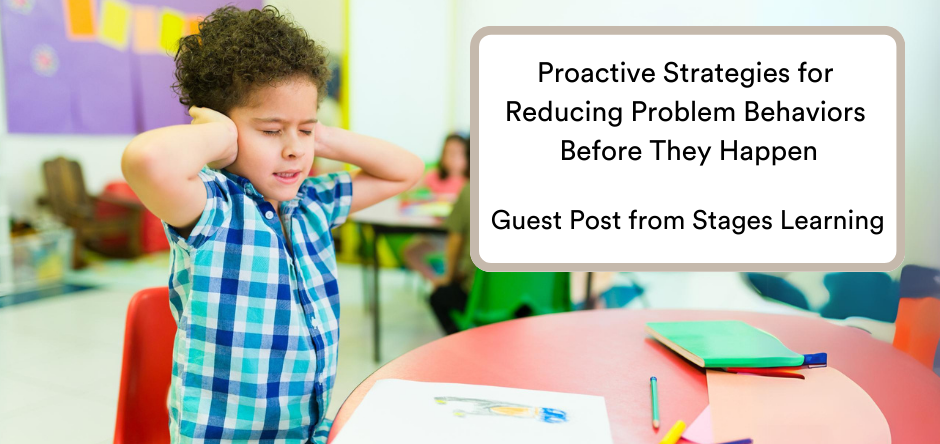
What is the best way to address a problem behavior? Before it happens! Procedures and routines paired with pre-correction strategies are evidence-based interventions for supporting autistic students. Instead of waiting for a challenge to arise and reacting to it, use proactive strategies to reduce opportunities for negative behaviors to occur. When you front-load lessons by pre-teaching expectations, students know exactly how to behave in the setting—and through repetition, they will be more likely to perform the skill without additional prompting or support.
Procedures and Routines
What is a routine?
A routine is simply a set of procedures for handling things such as attendance, turning in assignments, or starting a class period. It could also outline what students should do when there are minor interruptions to instruction such as how to ask to use the bathroom or when transitioning to different areas of the classroom. These procedures are not necessarily only for students, but can also be for staff. Staff members often have procedures for things like getting attention, passing out papers, and posting lesson objectives.
Why do it?
Routines and procedures help make the classroom setting predictable and safe, which can help reduce anxiety in what is already a complex environment for autistic students. The classroom especially can be incredibly overwhelming when it comes to navigating the space, social situations, and sensory inputs, all while trying to learn! Established routines let students know what to expect and what is expected from them—as a result, they are more likely to follow the procedures. What’s more, adding structure to your setting increases students’ feeling of safety. As we know through Maslow’s hierarchy, students must have their basic needs met before they are ready to engage with learning.
How should I do it?
The key to teaching a procedure is to have a plan. There are multiple routines throughout a school day to consider. There are transition routines between activities in and out of the classroom, transition to free-time activities when work is completed, bathroom routines, leaving within the setting (for things like throwing away trash, sharpening pencils, and getting supplies), and emergency transitions like a fire drill. There are also routines meant only for the teacher and routines that only students perform.
1. Have a plan:
It’s helpful to start thinking of a step-by-step list of what you would want the behavior to look like. Think about where you want them to stand or put things and if certain times are appropriate or inappropriate to follow the routine. For example, I realized I needed to teach a pencil-sharpening routine only after I found students were sharpening during lessons, causing constant interruptions!
2. Practice:
Next, make a plan to teach the class the routine and practice, practice, practice. Depending on the routine and needs of the students, you could develop visual supports with the steps included for student reference such as using the Language Builder cards. If you’re not sure what procedure to start with, consider where students are having the most challenging behaviors—sometimes the reason is that there are no clear procedures.
Precorrection
What is precorrection?
Precorrecting is a proactive strategy that involves providing a verbal, gestural, or visual prompt shortly before an anticipated problem behavior. It can be given to a whole class, a small group, or to an individual student. It focuses on using positive language so the autistic student knows what they should be doing and, just like routines and procedures, it allows staff to reduce the likelihood of a negative behavior occurring in the first place.
Why do it?
Addressing the problem before it occurs allows you to focus on teaching the expected rather than responding to negative behaviors. If data indicates that the autistic student is struggling in a particular setting, routine, or activity, pre-correcting can be paired with other interventions like using social stories. This can be a positive way to teach a skill rather than playing catch-up after the negative behavior has already occurred.
How should I do it?
The best part about precorrection is that you can do it at any point in time. If I am getting ready to ask the whole class a question, I might raise my hand as my prompt and say, “If you know the answer, raise your hand.” However, there may be moments in your classroom when you need a more explicit teaching model.
1. Identify key times:
Start by looking for periods in the day when problem behavior is more likely to occur, even after you’ve already adjusted a routine or procedure and taught it to the class.
2. State expectations:
Processing a lot of steps can be overwhelming for autistic students. When stating the expectations, keep directions concise. Pairing the direction with some kind of a gestural or visual cue could also help ensure the students understand what is expected. This might sound like, “Before we line up, remember to walk in a straight line, with voices off and hands to self.”
3. Roleplay:
One strategy to consider in precorrection is to teach the “super student” model. Research shows that autistic students respond more effectively to imitating neurotypical peers. After stating the expectation, you might say, “Before we line up, we’re all going to have Johnny show us how.” If a peer model is not available and the autistic student is struggling with a particular skill, you could practice with them one-on-one and then pair them with a neurotypical student to model for the class, or they may be able to do it independently.
When using either of these strategies to proactively address behavior in your classroom, it is critical to reinforce students positively. That will help to increase the likelihood that students will continue to use the skill. Whether it be a formal, positive behavioral support system or behavior-specific praise such as, “I like how you waited to sharpen your pencil until after the lesson was done,” giving some kind of recognition is key to helping make your classroom run successfully.
About the Author
Frankie Kietzman is a Sales Development Associate for STAGES Learning with experience teaching as an elementary teacher, self-contained autism teacher for elementary and secondary students, autism specialist and coach for teachers dealing with challenging behaviors. Frankie’s passion for supporting children and adults with autism originates from growing up with her brother who is deaf and has autism. As one of her brother’s legal guardians, she continues to learn about post-graduate opportunities and outcomes for people with autism. Frankie has a Bachelor’s degree from Kansas State University in Elementary Education, a Master’s degree in high and low incidence disabilities from Pittsburg State University and in 2021, completed another Master’s degree in Advanced Leadership in Special Education from Pittsburg State University.
About Stages
Angela Nelson, a UCLA trained ABA Therapist, founded Stages Learning in 1997 when autism diagnoses first began to rise. The top-selling autism education product, the Language Builder Picture Cards, was designed to specifically meet the learning needs of children with autism. The research-based Language Builder Series has become a staple in home and school programs around the world and Stages Learning is now the premier developer of learning tools for children with autism.
When it comes to Autism Spectrum Disorder (ASD), Applied Behavior Analysis (ABA) has proven to be a transformative approach, offering individuals with autism the tools they need to reach their full potential. As ABA therapists and clinicians dedicate themselves to improving the lives of their patients, it’s possible to overlook their own well-being in the process. The demanding nature of the profession, combined with the emotionally rewarding yet occasionally draining day-to-day operations highlights the undeniable importance of self-care for ABA therapists. Due to the nature of this field, it is essential for ABA therapists to prioritize self-care to make sure they can manage stress and prevent burnout.
For an ABA therapist, stress and burnout can manifest in various ways. They might experience heightened anxiety and emotional exhaustion due to the demanding nature of their role. The constant need to maintain a structured and controlled environment, manage challenging behaviors, and meet individualized goals can lead to feelings of being overwhelmed and frustrated. At Action Behavior Centers, our commitment to the well-being of our employees is unwavering, which is why we are dedicated to offering our teammates and all other ABA therapists a valuable resource of self-care tips designed to address the unique challenges of ABA therapists in autism therapy.
Prioritize Work-Life Balance
Balancing the demands of a rewarding yet demanding job with a personal life can be challenging. Establish clear boundaries between work and personal time. When you’re off the clock, focus on activities that rejuvenate your energy and allow you to disconnect from work-related stressors.
Engage in Mentor Sessions
ABA therapists should not underestimate the importance of regular support from their mentors. These sessions can provide a platform to discuss concerns, share experiences, and seek guidance, which can contribute to reducing burnout and promoting professional growth.
Practice Mindfulness and Stress Reduction
At ABC, we offer a free subscription to the Calm app. The Calm app provides users with guided meditation sessions, breathing exercises, sounds to aid sleep, and relaxation techniques to promote mindfulness, reduce stress, and improve overall mental well-being. Dedicate a few minutes each day to practicing mindfulness to center yourself and reduce feelings of being overwhelmed.
Build a Supportive Network
Connecting with colleagues who understand the unique challenges of ABA therapy can create a supportive network where you can share experiences, exchange advice, and find camaraderie. Attend professional events, conferences, or online forums to expand your network.
Pursue Continuous Learning
Stay engaged by continuously expanding your knowledge and skills. Attend workshops, webinars, and training sessions that not only enhance your abilities but also remind you of your commitment to personal growth within the field.
Set Realistic Goals
It’s important to set achievable goals both in your professional and personal life. Break down large goals into smaller, more manageable steps. This not only prevents burnout but also provides a sense of accomplishment along the way.
Find Creative Outlets
Engaging in creative activities outside of work can be therapeutic. Whether it’s painting, writing, playing a musical instrument, or gardening, having a creative outlet can provide an emotional release and foster a sense of accomplishment.
Practice Self-Compassion
Acknowledge that you’re only human and will have good and challenging days. Treat yourself with the same kindness and patience that you extend to your clients. Remember, self-care isn’t selfish; it’s a necessity.
Unplug and Reconnect
In the digital age, it’s easy to be constantly connected. Make a conscious effort to unplug from technology during your free time. Spend quality time with loved ones, engage in outdoor activities, or simply enjoy moments of solitude.
Effectively Communicate Boundaries
Effective communication of boundaries is crucial for self-care among ABA therapists. By clearly articulating their limits and expectations, therapists can safeguard their mental and emotional well-being. This not only helps prevent burnout and exhaustion but also maintains the quality of care provided to patients. Additionally, setting boundaries ensures ethical practice and professionalism, reducing the risk of blurred lines in therapeutic relationships. Transparent communication also fosters mutual respect and understanding with patients and their families, ultimately enhancing the overall effectiveness and sustainability of ABA therapy.
At Action Behavior Centers, the well-being of our teammates is at the forefront of our minds. We understand that a healthy and supportive work environment is essential for productivity and overall job satisfaction. To that end, we offer resources, support, and initiatives aimed at promoting mental wellness. As a part of the medical benefits we offer, teammates have access to virtual counseling sessions through First Stop Health for free. We also offer 3 free mental health sessions each year. Our commitment to our employees’ mental health underscores our dedication to their growth and success within the company. Teammates can find out more about the self-care resources and initiatives we offer by reaching out to your teammate ambassador for Action Behavior Centers Self-Care Resources.
As ABA therapists pour their hearts into empowering individuals with autism, they must remember that nurturing their well-being is essential. By implementing these self-care tips, ABA therapists can find a balance between providing exceptional care and safeguarding their own mental, emotional, and physical health. As ABA therapists learn to care for themselves, they become better equipped to continue making a difference in the lives of those they serve.
About Action Behavior Centers
Action Behavior Centers (ABC) is an organization committed to the treatment of children using empirically validated methods and strategies to assist each child in reaching his or her greatest potential and improving their quality of life.
On more than one occasion, I’ve been in the situation that a student will only demonstrate a skill in my presence. And I’ve heard from other colleagues that they have had similar experiences. This is highly problematic. When it happens with one of my students, there is only one person I can blame: myself. A skill that a student can only demonstrate in my presence is a pretty useless skill and does nothing to promote independence.
So what do you do when you find yourself in this situation? You reteach, with a focus on generalization. This means that, from the very beginning, you are teaching with a wide variety of materials, varying your instructions, asking other adults to help teach the skill, and demonstrating its use in a variety of environments. Preparing activities takes more time on the front-end for the teacher, but saves a ton of time later because your student is more likely to actually master the skill. (Generalization, after all, does show true mastery.)
Hopefully, you don’t have to do this, though. Hopefully, you’ve focused on generalization from the first time you taught the skill. You may see generalization built into materials you already use.
Another commonly cited issue teachers of children with autism encounter is failure to maintain a skill. In my mind, generalization and maintenance go hand-in-hand, in that they require you to plan ahead and consider how, when, and where you will practice acquired skills. Here are a few tips that may help you with maintenance of skills:
Create notecards of all mastered skills. During the course of a session, go through the notecards and set aside any missed questions or activities. You might need to do booster sessions on these. (This can also be an opportunity for extending generalization by presenting the questions with different materials, phrases, environments, or people.)
Set an alert on your phone to remind you to do a maintenance test two weeks, four weeks, and eight weeks after the student has mastered the skill.
Create a space on your data sheets for maintenance tasks to help you remember not only to build maintenance into your programs, but also to take data on maintenance.
Considering generalization and maintenance from the outset of any teaching procedure is incredibly important. Often, when working with students with special needs, we are working with students who are already one or more grade levels behind their typically developing peers. Failing to teach generalization and maintenance, then having to reteach, is a waste of your students’ time.
Sam Blanco, PhD, LBA, BCBA is an ABA provider for students ages 3-15 in NYC. Working in education for sixteen years with students with Autism Spectrum Disorders and other developmental delays, Sam utilizes strategies for achieving a multitude of academic, behavior, and social goals. She is also an assistant professor in the ABA program at The Sage Colleges, and she is the Senior Clinical Strategist at Chorus Software Solutions.
This article was originally an ASAT feature. It comes to us from Alan Schnee, PhD, BCBA-D. To learn more about ASAT, please visit their website at www.asatonline.org. You can also sign up for ASAT’s free newsletter, Science in Autism Treatment, and like them on Facebook!
I’ve been teaching children with ASD for many years. Often my attempts to teach WH questions are unsuccessful. While children learn some rote responses, once I attempt to generalize to new situations, children seem to confuse questions. For example, if I ask a child, “Where did you eat?” the child might say, “Pizza.” Do you have any idea why the child gets confused, and do you have any suggestions to address this?
Answered by Alan Schnee, PhD, BCBA-D Nexus Autism Intervention Services, Cherry Hill, NJ
This is an excellent question. Children with autism often confuse WH questions. They often respond to a given WH question as though a different question were asked. For example, a child may answer a, “what” question when a, “where” question is asked. It is sometimes suggested that children confuse WH questions because of an auditory “discrimination problem,” which is to say that children don’t differentiate the words. However, it’s been our experience that children who can match words in verbal imitation still confuse WH questions. So, what else can it be? It is important to consider that children simply don’t know what these terms mean. To say that someone knows the meaning of a word is based on behavioral criteria and what a word means is determined by convention. To say that someone doesn’t know what a word means is to say they do not use and respond to it according to the rules for its use (Hacker 2013, p. 115).
So, what does this mean for us? It means we need to consider what it would take for children to learn how to use and respond to given words. This means that children need to learn what a word is used for. It means that we need to consider how to engineer intervention so that children learn compatible words to which target words are linked. It means that we need to contrive circumstances, situations and transactions in which progressive mastery is achieved within a normative structure and ultimately, it means that much more goes into teaching children to answer WH questions than relying exclusively on rote responses to long lists of arbitrary WH questions.
Considerations for Preparing Children to Answer “Where” Questions
When we ask a, “where” question, our uncertainty concerns locations and destinations. Thus, to ask, “where” is to ask, “At which place or from which place.” To such questions we expect answers that reference some place in conjunction with a preposition (e.g., from the kitchen, on the table). Therefore, in order to be able to answer rudimentary, “where” questions, children need to learn the names of things (couch, table, rooms, stores, etc.) and prepositions (close, to, at, near, from, under, on, beside, etc.) used in relation to a place, as well as non-specific spatial referents (here, there) – which requires that children are able to follow/use a point, eye gaze, or other gestures.
When we begin teaching children to answer, “where” questions, it is common to start with basic ‘table-top’ spatial relations. For example, when we arrange on a table, a red block on a cup and a green block next to a cup we might ask, “Where is the red block?” (Frazier, 2018; Leaf & McEachin,1999; Lund & Schnee, 2018; Taylor & McDonough, 1996). Once these rudimentary relations are in place, children will need to go places and report on where they went, came from, and where they are going (declaring destinations). They will need to be stationed in places (self-positioned) and report where they are so to be able to learn and link destinations and locations using “at,” “to,” ”from,” “in,” etc.
Additionally, it is important to keep in mind that uses of, “where’’ extend beyond spatial relations. Thus, to ask, “Where are you?” can in one sense be used to ask for an opinion, or in another to ask about progress within a process (e.g., “I’m in the middle.” “I’m at the beginning.”) or to ask about a state of attention (e.g., “Sorry, I was in ‘In La-La Land”). These examples also illustrate that responses to, “where” questions may rely on metaphoric or idiomatic uses of prepositional terms, as when we say we are standing, “on line,” even though we are not standing on anything.
It should also be pointed out, when answering, “where” questions, pragmatic considerations come into play (Lund, 2015). So, when asked, “Where are my keys?” answering factually that, “They are in New Jersey” may not be particularly helpful if both the person asking and the person answering are in the same kitchen in New Jersey. However, if the same question were asked in Chicago, that same answer would be suitable. Similarly, history needs to be taken into account. Thus, if I’m in Chicago, and my wife is in our kitchen in New Jersey and she asks where the keys are and I say “In the can.” then our shared history makes my response both understandable and useful. However, the same answer would not be suitable to a new guest staying in our house who asks the same question. Given these considerations, hopefully this section illustrates some different ways the word, “where” is used, what it would take for children to respond appropriately to, “where” questions and how learning to memorize responses from item lists cannot prepare children for such a task.
Considerations for Preparing Children to Answer “Why” Questions
When teaching children to answer, “why” questions, there is also a tendency to teach children rote responses from item lists. This section should clarify why doing so will not advance children’s abilities in this area. In language, to ask a, “why” question is to say, “Give me a reason.” In the, “why” language game, any number of reasons could be offered to a question. For example, to the question, “Why did you wash your hands?” there is an indeterminate number of appropriate answers:
“Mommy told me to.”
“My M&M melted in my hand.”
“We always wash before prayer.”
“I hate when my hands are dirty.”
The possible reasons follow from an unpredictable number of factors and situations. One may state their reason/s for why they did or didn’t do something, say or didn’t say something, felt one way or another, believed, desired, needed or hoped for something, etc. based on whim, preference, need, demands, fear, shame, misinformation, new information, etc.
Before we begin to teach children to answer or use, “why,” it is important that other abilities are in place. Children need to learn to do things, make things, go places, give and get things, look for things, etc. The use of, “why” and responding to, “why” questions often hangs on circumstances which often fall out of activity. Once children are doing things, they should be able to (at a minimum) report on what they are doing, using, or where they are going. We find it especially helpful, before we introduce, “why” questions, that children learn to use tools (for making art, eating, building things, cleaning or cooking, etc.) and to ask for things they need.
One early strategy we employ for introducing, “why” questions is ‘piggybacking’ off of interrupted chains; sabotaging an activity so that it can’t be completed without the child seeking assistance in some way. For example, once a child can make things using tools (e.g., in order to make a face, a child can use tape or some other tool to attach googly eyes to the paper), we make sure the tool is unavailable. This assumes the child has learned to ask for things she needs in order to complete a task. Thus, when a needed tool is unavailable (by design) and when the child asks for it, we can ask the child, “Why do you need it?” to which we prompt the child to say something like, “I need it to attach the eyes to the paper.” Working like this has the added benefit of providing a platform for introducing or strengthening concepts such as, in this case, “attach.” Additionally, arranging things in this way is important for teaching ‘functions’ since in such scenarios, children are actually learning to use the tools they need, to ask for them when it’s appropriate and to explain why they need them, all in real time. We do this as opposed to teaching children to answer rote questions out of context. Working this way addresses several dimensions of skill acquisition simultaneously and illustrates considerations related to careful planning for the construction of ‘advanced’ abilities.
Considerations for Preparing Children to Answer “When” Questions
The concept, “when” denotes time. To ask a, “when” question is to ask, “At which time?” Answers to when questions take the form, “When x,” such as to the question, “When are you coming for dinner?” to which the answer has the form, “When I finish work.” The answers also take a form combined with prepositions so the answers could look like, “At 5:00,” “On Tuesday,” or, “In a minute.” Thus, the word, “when” is bound up with prepositions (before, after, on, in, at, next, etc.) in relation to standard time markers such as calendar events (days, weeks, months, years, holidays, seasons), or clocked times (minutes, hours, seconds). “When” is also linked to commonly used, non-specific time related concepts, “soon,” “later,” and, “now.”
We need to be mindful of the fact that prepositional terms (before, after, on, in, at, next, etc.) used to mark time are also used to refer to spatial relations. Teaching children to use them when learning to answer one WH question (e.g., when) will not likely translate or ‘generalize’ to use in others (e.g., where). For example, saying, “In a minute.” and, “In the cup.” each require different teaching arrangements if children are to learn their varied applications.
Finally, it is important to point out that the concept, “when” is bound up with rule following. While ‘when rules’ may be based on standard time markers, it is probably more common in everyday linguistic practice that they do not. Rather, rules for some future event are often linked to arbitrary, idiosyncratic events such as, “You start running when the gun sounds.” or, “You can watch your video when Mommy comes home.” Hopefully, pointing out these considerations illustrates that more needs to be considered than teaching children only rote responses if they are to be able to answer, “when” questions.
Considerations for Preparing Children to Answer “Who” Questions
The concept, “who” is a pronoun that is used to stand in for persons or personified objects such as dolls or play animals. When a “who” question is asked, we are asking, “Which person?” Thus, “who” is linked to persons’ names, personal pronouns (I, you, my, your, me, my, mine, we, they, us, his, her, etc.) and to things personified.
We often introduce the concept, “who” by asking children to identify persons in pictures (e.g., “Who is it?”). Once this basic ability is in place, we will combine, “who” questions with other concepts:
Actions (Who is acting?)
Prepositions (Who is under, on, in etc.?)
Possession (Who has ‘x’ ?)
Gender (Who is that boy?)
Role (Who is that teacher?)
Attribute (Who is that tall person?)
The difficulty in responding to, “who” questions increases significantly as the requirement to answer them involves using other subject pronouns (e.g., I, you, he, she, we, they) or objective pronouns (e.g., me, him, her, us, them).
Considerations for Preparing Children to Answer “What” Questions
When we ask, “what,” we expect answers that point to things, actions, events/experiences. Early in intervention, children learn to answer, “what” questions related to colors, shapes, functions, actions, size, naming objects, etc. (Frazier, 2018, Leaf & McEachin,1999: Lund & Schnee, 2018; Taylor & McDonough,1996). Learning to respond to, “what” questions as addressed in introductory manuals also includes learning to answer rudimentary ‘what-action’ questions such as, “What are you doing?” or “What did you do?” This offers a good start, but more than naming current or past actions is required when considering ‘what-action’ questions. For example, when teaching progressive actions, children’s answers are based on the intended outcome (Lund & Schnee, 2018). So, if children are building a tower with colored blocks, the response to the question, “What are you doing?” is not, “Putting the red square on top of the green cylinder.” but “Building a tower.” Therefore, teaching children to state their intentions related to future activities also needs to be considered.
There will be times when it is important to teach children to memorize responses to factually based WH questions, as long as there are good reasons for doing so. Very often, memorized responses will be needed for the construction of other abilities. For example, being able to answer questions like, “What color is an apple?” and “What are the parts of a car?” will later be needed for teaching children to make comparisons (similarities and differences). Beyond this, children will need to learn to answer non-factual, “what” questions for which memorized answers are not possible. Such questions include queries about emotional, sensory or perceptual experiences, as well as questions involving psychological predicates, “thinking,” “believing,” “wishing,” etc.
Solidifying Rules for Answering WH Questions
Once basic abilities are in place concerning WH terms, a next step is vital and requires that we systematically intersperse WH terms. When doing so, children will have to pay close attention, as there are more moving parts, more possible moves since several ‘games’ are rotated in and out of play, in quick succession. Interspersing terms should help solidify the rules for responding to these terms (when/time, where/place, what/ things-actions, who/persons, why/reasons), at least at a rudimentary level. Below is a example, modified from Lund and Schnee, (2018, p.107) which intersperses, “who” in the context of, “where” and, “what.”
In this exercise, two-to-three (or more) persons are situated around a room or are seated in a circle. Familiar objects are placed around the room and questions are randomized. For example:(a) “What is over there?”
(b) “Where is the [object]?”
(c) “Where is [person]?” followed by, “What does (person) have?”
(d) “Who has the [object]?” followed by, “Where is she?”
(e) Add the question: “Where is the [object]?” when someone is holding the object. The child should answer, “[person] has [it]” rather than, “over there.” Randomize questions about objects in someone’s possession (“[person] has it”) and not in someone’s possession (“over there”).
Introducing Use Of WH Terms
When children learn to appropriately use and respond to WH terms, we can say with greater confidence that children possess the concepts, “where,” “why,” “when,” “who” and “what”. Introductory exercises for learning to ask some WH questions can be found in Leaf and McEachin,1999; Lund and Schnee, 2018; Taylor and McDonough,1996. To enhance learning beyond what is found in introductory manuals, we take advantage of ‘everyday occurrences’ and manipulate their frequencies in order to increase practice opportunities. For example, we can, as we begin to leave a room, grab our coats or briefcases and make statements that invite a question by saying something like, “See ya later.” or, “I’m going out.” Such statements pull for the question, “Where are you going?” An example of how we begin to get asking, “when” off the ground, might involve telling a child that they will have access to an activity in the near future by saying something like, “We’re going to the park later.” Such statements naturally pull for a, ‘when’ question. A variety of strategies can be then employed to help children situate the upcoming event in relation to a current activity. If we simply pay attention to situations that call for the use of these terms and find ways to systematically arrange for their occurrences at greater frequencies, children will have corresponding opportunities to learn to ask appropriate questions given those situations. In these ways, we can do much to help children learn to use these terms appropriately and to strengthen their overall abilities concerning them.
A Final Note
I hope I was able to shed light on some of what is involved in preparing children to be able to answer WH questions. I further hope that I was able to illustrate why it is important to move beyond the practice of only teaching children to memorize responses to WH questions and why doing so may help children learn to answer them masterfully. While there are times it is useful to teach children to memorize responses (for constructional considerations), the general practice of teaching children to memorize responses does not inform what we, as teachers, need to consider as we begin to support children in developing abilities related to answering or asking WH questions. Teaching children to memorize responses to different WH questions ignores considerations involving compatibilities and combinatorial possibilities between terms and the complicated engineering required to link them in use. It ignores the different uses of some of the terms. It ignores the need to ensure that prerequisite abilities are reliably demonstrated and ready for uploading into the many possible situations, circumstances or transactions in which they may be put to use. Ultimately, it ignores the considerations that will prepare children to participate in the practices, activities, actions and reactions in characteristic contexts in which the rule-governed use of these words is integrated (Hacker, 1999). There is much to consider (not all of which could possibly be accounted for here) as intervention is developed toward progressive mastery of these terms within a normative structure.
References
Frazier, T. J. (2018). ABBLLS-R skill acquisition program manual set. DRL Books.
Hacker, P. M. S. (1999). Wittgenstein (the great philosophers series). Rutledge.
Leaf, R. B., & McEachin, J. (1999). A work in progress: Behavior management strategies and curriculum for intensive behavioral treatment of autism. DRL Books.
Lund, S. K. (2015). Untitled. Unpublished manuscript.
Lund, S. K., & Schnee, A. (2018). Early intervention for children with ASD: Considerations. Infinity.
Taylor B. A., & McDonough, K. A. (1996). Selecting teaching programs. In C. Maurice, G. Green, & S. C. Luce (Eds.), Behavioral intervention for young children with autism: A manual for parents and professionals. (pp. 63–177). Pro Ed.
Citation for this article
Schnee, A. (2020). Clinical corner: What goes into teaching WH questions?, Science in Autism Treatment, 17(5).
About The Author
Alan Schnee, Ph.D., BCBA-D consults domestically and internationally to families, agencies and schools that are committed to providing Early Intensive Behavior Intervention. He has been involved in autism intervention for almost 30 years. He is the founder of Nexus Language Builders, a center-based, full-day, intensive learning program for school age children, formally in Verona, NJ. Dr. Schnee is the co-author of the book, Early Intervention for Children with ASD: Considerations and he continues to lecture and write on topics related to the intricacies of teaching language and the conceptual foundations of language. He has also written on topics concerning the enhancement of memory, attention, executive function, social awareness and social acuity in children with ASD. Dr. Schnee earned a Ph.D. in clinical psychology from Georgia State University and has been board certified as a behavior analyst, doctoral level since 2010. He is based in New Jersey.