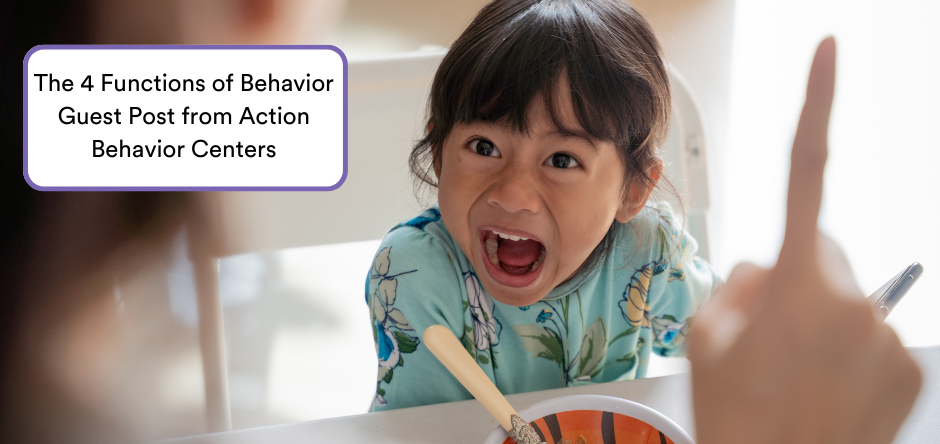
The 4 Functions of Behavior

Reposted with permission from Action Behavior Centers

What are the four functions of behavior? 

In the Applied Behavioral Analysis (ABA) field, it is believed that there is always an underlying reason for all behavior. Our behavior serves a purpose, even though it may not always be clear. All behavior can be narrowed down to one (or more) of four reasons, also known as functions. The 4 functions of behavior are categorized as attention, escape, tangible, and sensory. Trying to understand why an adult or child is engaging in a target behavior may be challenging, but determining the specific function of behavior that is being exhibited can assist in guiding a treatment plan to help decrease or increase a specific behavior. 

  1. Attention (Connection) – This function can be described as when someone engages in a behavior in an effort to gain attention. Children may behave negatively to get attention even if it isn’t positive attention. However, It is important to remember that not all attention seeking behavior should be perceived negatively. For example, raising your hand to be called on and screaming for someone to come over are both attention seeking behaviors, but one of the two is more socially acceptable.
  2. Escape (Avoidance) – Escape is one of the most common functions. This occurs when people engage in certain behaviors in order to avoid or end an unpleasant experience. A child may behave in a certain way that is unacceptable to get out of doing something they don’t want to do. Examples of this could be sleeping in class to avoid working or taking a different route home to avoid traffic.
  3. Tangible (Attaining) – This can be described as someone engaging in a behavior for access to something. In order to obtain an object or take part in an activity in which a person is particularly interested, a person may behave in a particular manner. A child screaming to get a toy or finishing their homework for tv time are both examples of a tangible function of behavior.
  4. Sensory (Automatic) – This behavior occurs when people engage in certain behaviors because they physically feel good or to relieve negative feelings. It is referring to stimulating the senses. An example of this would be itching an ant bite or fanning yourself on a hot day. 

Understanding Positive and Negative Reinforcements 

In general, behavioral outcomes can serve one of two purposes. The reasoning behind these behaviors is to either acquire something or remove from something. When a child behaves in a way to acquire something, it’s called positive reinforcement. On the other hand, negative reinforcement is the removal of something unpleasant to the child.

To help with further understanding, both positive and negative reinforcements can be better understood through attention and sensory reinforcement. Attention positive reinforcement occurs when a child receives something as a result of someone else’s actions. For example, a child might ask their father for a blanket. To positively reinforce the child’s communication of asking, the father will provide the blanket. Whereas, negative reinforcement might be where the father removes the blanket because the child no longer wants to use it.

A third concept is that of automatic reinforcement. In this circumstance, the reinforcement happens without the help of anyone else. The child is able to meet their needs on one’s own. Using the same scenario, a child getting their own blanket is positive reinforcement. As far as negative reinforcement, this would result in the child pushing the blanket off of themself. 

How can we help? 

A child’s motivation behind specific actions or behaviors can be pinpointed by understanding the four functions of behavior, but it is important to remember that a single behavior can hold two or more functions. In addition, it is important to comprehend both positive and negative reinforcements in order to fully grasp why a behavior is occurring. By identifying these functions, we can teach kids to meet their needs in a positive way. In ABA therapy, our staff will observe your child in their element. We will pay close attention to what is happening before and after the targeted behavior to identify the key function. After being assessed, we will teach replacement behaviors. The goal is to decrease target behaviors and increase desired behavior to ensure behavioral consistency in all environments to achieve success on the spectrum. 

About Action Behavior Centers

Action Behavior Centers (ABC) is an organization committed to the treatment of children using empirically validated methods and strategies to assist each child in reaching his or her greatest potential and improving their quality of life.

Learn more at their website: https://www.actionbehavior.com/
Posted in ABA

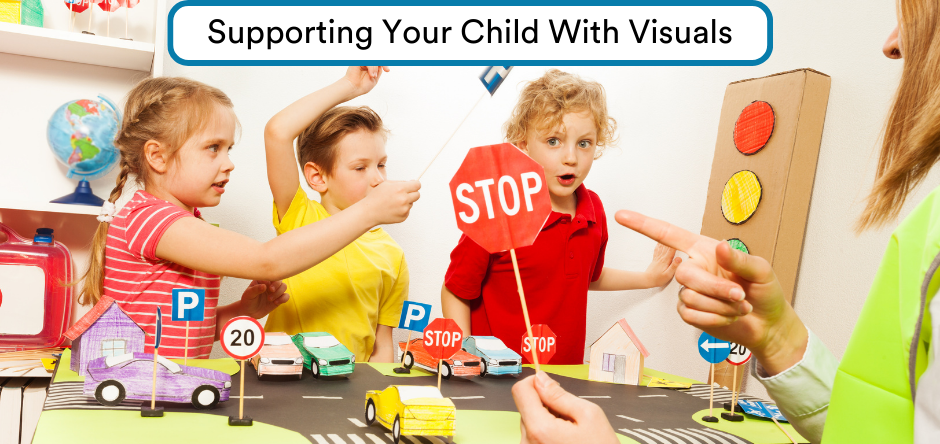
Supporting Your Child With Visuals

Reposted with permission from Ashleigh Evans, MS, BCBA

Visual supports are items used as prompts/cues to help guide one toward the expected behavior. Visual supports are not exclusive to children with autism. Even as adults, we all use visual supports, from our planners to organization apps and more.

Visual supports can be beneficial in reminding children of the expectations and guiding them through adaptive behaviors.

We’ll review a few common visual supports. If your child is receiving treatment, chat with their care team about implementing the most appropriate visual supports for your child. It’s easy to get carried away with all the visuals, but that can get overstimulating for many kids. Try one thing at a time to get a good idea of what is most helpful and build from there.

First-Then Visual

This is a tool that is simple to create and implement. The purpose is to help your child understand what’s to come next. You can create this in a simple way with a paper labeled first on the left side and then on the right side. You can use words or visuals to show your child what the current task is and what will come next.

Typically, the “first” side will have a non-preferred task such as “clean your room” and the “then” side will have a preferred item or activity such as “play outside.” So, first clean your room, then play outside.

Stop Signs

Ensuring your child’s safety is everyone’s number 1 priority. Teaching your child to respond to stop signs can be a great visual prompt as a reminder of locations they can and cannot go around the home.

Place a laminated stop sign on the doors leading outside (or any other areas in the home that are unsafe for your child). This can serve as a reminder to your child to pause and not go out that door if they are unaccompanied by an adult. This will take practice, but once they have the idea down, stop signs can be an excellent prompt!

Visual Schedules

The first-then visual is a simplified visual schedule showing two activities. A full visual schedule can be created to help your child understand several upcoming events. There are many ways to set this up. For example, you could set this up as a schedule of their full day. Or you may create one to support them through a portion of their day, such as the bedtime routine consisting of brush teeth, put on pajamas, bedtime story, etc.

Again, there are many ways you can go about creating this including using pictures or words. You could go about creating one yourself or purchasing one.

Visual Timers

Visual timers can be a really helpful way to help a child who doesn’t quite understand the concept of time, comprehend how much time is left of an activity. The red on the clock visually displays how much time is remaining for an activity or until an upcoming transition.

Visuals can be so valuable in prompting us through our daily lives. Finding effective visual supports for your child can make a huge difference.

About the Author

Ashleigh Evans, MS, is a Board Certified Behavior Analyst. She has been practicing in the behavior analysis field for over 13 years and opened her own independent practice in early 2022. Her experience has been vast across different age groups, diagnoses, and needs. She is passionate about improving the field through education, reformative action, and better supervisory practices, leading her to create content and resources for families and ABA professionals which can be found on her website, https://www.abaresourcecenter.com/.

Posted in ABA

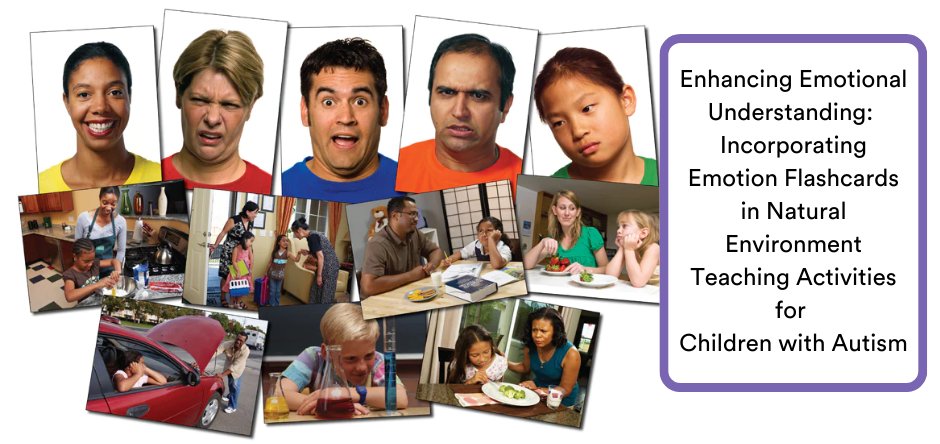
Enhancing Emotional Understanding: Incorporating Emotion Flashcards in Natural Environment Teaching Activities for Children with Autism

By: Nicole Gorden, M.S., BCBA, LBA

Helping children with autism understand and express emotions is beneficial for their social and emotional development. One effective way to support this is by incorporating emotion flashcards into natural environment teaching (NET) activities. Below, we will explore the benefits of using emotion flashcards, provide guidance on incorporating them into everyday activities, and highlight their impact on promoting emotional understanding in children with autism. Whether you’re a parent, clinician, or teacher, this resource will empower you to create engaging and effective learning experiences for children with autism.

Understanding Emotion Flashcards

Emotion flashcards are visual aids that depict various emotions through pictures or illustrations. These cards provide a concrete representation of emotions, making them accessible and easily understandable for children with autism. By using emotion flashcards, we can teach children to identify, label, and understand their own emotions, as well as recognize and empathize with the emotions of others.

Benefits of Emotion Flashcards in NET Activities

  1. Visual Supports: Emotion flashcards offer visual supports that enhance communication and comprehension for children with autism. The visual nature of the cards helps bridge the gap between verbal and nonverbal communication, enabling children to better grasp and express emotions.
  2. Generalization: Incorporating emotion flashcards into naturally occurring activities allows children to practice recognizing and understanding emotions in various contexts. This promotes generalization of skills, helping children transfer their knowledge of emotions from flashcards to real-life situations.
  3. Personalization: Emotion flashcards can be customized to reflect the individual experiences and preferences of each child. Personalized cards featuring familiar faces or specific situations can help children relate to the emotions depicted and make the learning experience more meaningful and relevant.

Incorporating Emotion Flashcards in NET Activities

  1. Start with Basic Emotions: Begin by introducing a small set of basic emotions, such as happy, sad, angry, and surprised. Use the emotion flashcards during play activities that naturally evoke these emotions. For example, during playtime, show the happy card when the child is engaged in an enjoyable activity.
  2. Emotion Charades: Engage the child in a game of emotion charades using the flashcards. Take turns acting out an emotion while the other person guesses which emotion is being depicted. This activity promotes perspective-taking and understanding of nonverbal cues.
  3. Emotion Identification: Show the child a flashcard and ask them to identify the corresponding emotion. Provide reinforcement and praise for correct responses. Gradually increase the complexity by introducing more nuanced emotions, such as excited, frustrated, or worried.
  4. Emotion Role-Play: Use the flashcards to create role-play scenarios. Assign different emotions to the child and yourself, and act out how each emotion might be expressed in various situations. Encourage the child to mimic the facial expressions, body language, and tone of voice associated with each emotion.
  5. Emotion Matching: Create a matching game using emotion flashcards and corresponding facial expression cards. Have the child match the emotion flashcards with pictures of people displaying the corresponding emotions. This activity helps reinforce recognition and understanding of emotions in different contexts.
  6. Emotion Sorting: Provide a variety of flashcards representing different emotions and ask the child to sort them into categories based on positive and negative emotions or high-intensity and low-intensity emotions. This activity encourages categorization and differentiation of emotions.
  7. Emotion Journaling: Incorporate the use of emotion flashcards in a journaling activity. Have the child select a flashcard that represents how they are feeling at different times of the day and encourage them to write or draw their experiences and reflections.

Incorporating emotion flashcards into natural environment teaching activities can be a powerful tool for promoting emotional understanding in children with autism. By using visual supports, personalized experiences, and engaging activities, we can help children identify and understand emotions, enhance their social interactions, and develop important skills for lifelong emotional well-being. Whether you’re a parent, clinician, or teacher, incorporating emotion flashcards into everyday activities can create meaningful learning experiences that support the emotional growth of children with autism.

About the Author

Nicole Gorden, M.S., BCBA, LBA has over 14 years of experience implementing Applied Behavior Analysis principles with the Autism Population. She currently works for Comprehensive Behavior Supports in Brooklyn, NY.

Posted in ABA