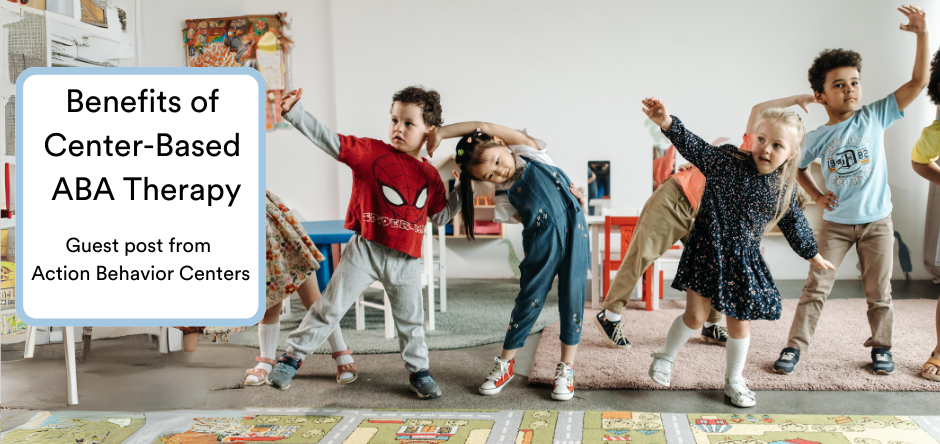
Benefits of Center-Based ABA Therapy

Reposted with permission from Action Behavior Centers

Applied Behavior Analysis (ABA) therapy is an evidence-based approach to treating children with Autism Spectrum Disorder (ASD). When ABA therapy is implemented in a center-based environment, it takes place in a clinical or therapy center to provide structure. This allows for the environment to be controlled. It involves a consistent approach to therapy, provided by a team of trained professionals like Board Certified Behavior Analysts (BCBA) and Registered Behavior Technicians (RBT).

The goal of center-based ABA therapy is to teach children on the autism spectrum new skills and behaviors while reducing unwanted behaviors. This is accomplished through a process of breaking down complex skills into smaller, more manageable steps and using positive reinforcement to motivate and encourage progress. At Action Behavior Centers, center-based ABA therapy sessions run from Monday to Friday at 8AM to 5PM. During each therapy session, the child may engage in a variety of activities designed by our therapist to help them develop new skills and behaviors. This form of therapy includes a variety of activities, such as play-based activities, structured teaching activities, and social skills training. For example, they may work on communication skills, social skills, and daily living skills. While working on a one-to-one therapist to child ratio, our therapist will evaluate each autistic child to implement a specific treatment plan. These plans will be designed to address the individual’s unique needs and goals. 

Center-based ABA therapy offers several advantages over the at-home alternative. Therapy centers offer an environment that is designed to be structured and predictable to allow ABA therapists the ability to conduct in a consistent and supportive manner. However, the benefits of center-based ABA therapy go beyond a controlled environment. Benefits of center-based Applied Behavior Analysis (ABA) therapy for children with autism include:

  1. Peer Play, Social Imitation, and Social Interaction: One of the most significant benefits to in-center ABA therapy is the opportunity for children to connect with others their age. At Action Behavior Centers, our compassionate therapists supervise and guide child-to-child engagement. This gives ABA therapists the opportunity to teach children social skills such as how to greet others, initiate conversations, and join in on activities. This then translates into the development of other important skills like sharing and turn-taking. These skills can help children feel more comfortable and confident when interacting with peers and most importantly, it allows for peers to build friendships.
  2. Increased Supervision: Being in a center-based ABA therapy program allows for your child’s therapist to connect to a larger body of professionals, ensuring your child is getting the best possible care and attention. Not only will your child be surrounded by a team of experts, but they’ll have access to more resources as well. Having a consistent team of clinical experts nearby creates a safe space for your child to explore and interact with their environment. At Action Behavior Centers, we employ trained professionals who have experience in working with children with autism. These professionals can provide individualized treatment plans and tailor therapy to the specific needs of the child. We make sure that our Board Certified Behavior Analysts (BCBAs), Registered Behavior Technicians (RBTs), and other therapists have had specialized training and experience in working with children with autism so that they can provide the most up-to-date form of ABA therapy possible. 
  3. School Readiness: Children who attend ABA therapy in-center will be practicing school-readiness skills such as participating in group activities, imitation, matching, and categorizing. Children will begin to familiarize themselves with the drop-off and pick-up process, alleviating some of the transitional stress associated with entering the school environment. ABA therapists help autistic children develop communication skills such as expressing themselves effectively, asking for help, and following directions as these skills are essential for effective communication with teachers and classmates.
  4. State of the Art Facilities: Each of our ABA therapy centers is created with your child’s specific needs in mind. From the big-picture ideas to the minute details, our New Center’s Team focuses on creating the perfect place for children to learn & grow – while making our therapists feel relaxed, happy, and engaged. The village build-outs are perfect for pretend play – creating a unique, imaginative experience for our children to engage with. Our centers have a variety of therapy spaces to accommodate different activities and interventions, such as individual therapy rooms, group therapy spaces, and play areas. With safety in mind, our autism clinics  are accessible for all clients, including those with physical disabilities or mobility impairments.
  5. Structured Learning Environment: As previously stated, center-based settings provide a structured and controlled environment for ABA therapy to be implemented. This allows therapists to create a consistent and predictable routine for the child, which can aid in the child’s learning and behavioral management. Center-based ABA therapy provides a structured and consistent environment that is designed to support the learning and development of children with autism. This can be especially important for children who struggle with routine and structure in other areas of their lives.
  6. Specialized Equipment: Centers often have specialized equipment and resources that can be used to aid in the therapy process. For example, therapy rooms may be equipped with toys and other materials that are specifically designed to help with skill development. For example, our ABC centers have access to specialized resources and materials, such as sensory equipment, communication devices, and other technology that is used to support learning and development. Our centers even have access to a wide range of resources that include educational resources. This can help to support the learning and development of children with autism.

Overall, center-based ABA therapy can provide the structure needed for a child with autism to learn and grow. It is important to note that while center-based ABA therapy can be beneficial for many children with autism, it may not be the best fit for every child. Center-based ABA therapy can provide valuable resources and support for parents and other caregivers that In-home ABA therapy can lack in. Each child has unique needs, strengths, and challenges, and families should work with their healthcare providers to determine the best approach for their child’s individual needs. 

About Action Behavior Centers

Action Behavior Centers (ABC) is an organization committed to the treatment of children using empirically validated methods and strategies to assist each child in reaching his or her greatest potential and improving their quality of life.

Learn more at their website: https://www.actionbehavior.com/
Posted in ABA

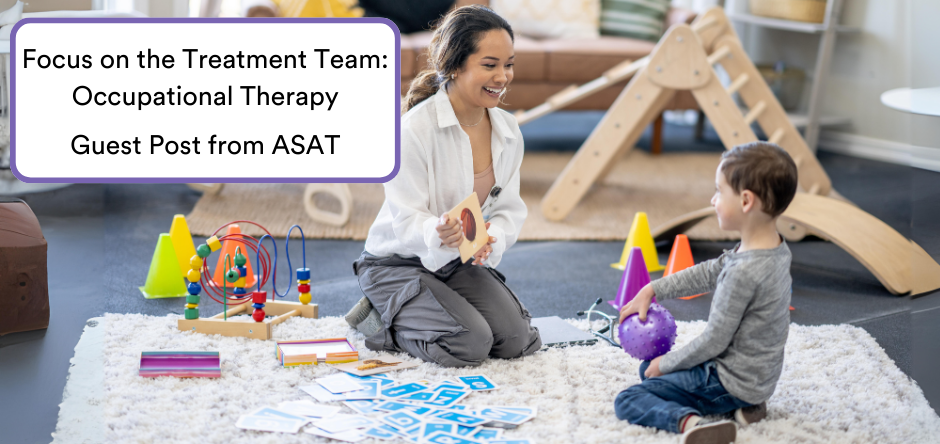
Focus on the Treatment Team: Occupational Therapy

This month’s ASAT feature comes to us from Kate McKenna, MEd, MSEd, MS, BCBA, and Kristina Gasiewski, MEd, MOTR/L, BCBA, Association for Science in Autism Treatment. To learn more about ASAT, please visit their website at www.asatonline.org. You can also sign up for ASAT’s free newsletter, Science in Autism Treatment, and like them on Facebook!

This is part of the Description of the Treatment Team series.

History

Occupational therapy (OT) was established in 1917 by six founders of the National Society for the Promotion of Occupational Therapy (NSPOT). This Society was later renamed in 1923 and is currently known as the American Occupational Therapy Association (AOTA) (Paterson, 2011). The founders were from a variety of professional backgrounds and disciplines (i.e., psychiatrists, architects, welfare workers, teachers, nurses, and medical doctors) who came together with one strong belief that occupations hold a therapeutic value. The values and beliefs that most OTs hold today were created and shaped by the 19th and early 20th-century historical events such as industrialization, women’s rights, World War I, healthcare legislation, and technology (Christiansen & Haertl, 2019).

As a discipline, OT rose to prominence following WW1 as the medical professionals working with shell-shocked and wounded veterans. In their efforts to rehabilitate those suffering the effects of combat, the original practitioners of OT based their profession on the idea that real work would aid in creating a healthy body and mind (Christiansen & Haertl, 2019). As a result of their success, OT came to be recognized as a medical discipline in its own right.

By the 1960s, there were two distinct practice areas including treating those with physical disabilities and those with psychological dysfunction. Some key events that influenced the OT profession stemmed from the civil rights movement and its influence on health care and social justice, and large mental institutions closing (which affected the number of OT professionals working in longer-term mental health settings). The American Occupational Therapy Foundation (AOTF) was founded in 1965 to promote scientific development in the field of OT. At this time, there was also increased emphasis on sensorimotor therapies and neurodevelopmental theories (Christiansen & Haertl, 2019).

In the 1970s, OT was again influenced by the medical rehabilitation and treatment of war veterans. This created a shift from a holistic and occupation-based approach to a more medical, bottom-up approach with an emphasis on the source of the problem. This was a shift from the root of OT as of a top-down approach and utilizing occupations and crafts in a therapeutic manner. OT practitioners began focusing more on theory and research. Mechanical approaches were being applied to interventions such as the neuromotor and musculoskeletal systems and their relation to occupational function (Christiansen & Haertl, 2019).

With advances in science, technology, education, and health care during the 1980s and 1990s, the OT profession continued to evolve. There was a greater emphasis on research, efficacy, and defining the scope of practice. In 1986, AOTA created the American Occupational Therapy Certification Board (AOTCB), which, in 1996, was later named the National Board for Certification in Occupational Therapy (NBCOT) (Christiansen & Haertl, 2019). Regulations requiring licensure for OT became effective on July 1, 1998. Additionally, in 1999, the first edition of the American Journal of Occupational Therapy (AJOT) was published. Also, in 1997, the Individuals with Disabilities Education Act (IDEA) was passed, which ensures specialized services, including OT, are provided for children with disabilities in schools in order to improve education. This led to an increase in the number of OT practitioners working in school systems increased (Christiansen & Haertl, 2019).

Legislation and policies continue to change and heavily influence the OT profession such as increasing the quality of practice through measurable outcomes, creating goals that contain cost, and providing evidence-based research that demonstrates the effectiveness and efficacy of OT practice (Christiansen & Haertl, 2019).

Education

Occupational Therapy professionals acquire their degrees from an ACOTE (Accreditation Council for Occupational Therapy Education) accredited occupational therapy program. There are two degrees: occupational therapy assistant (OTA) and occupational therapist (OT).

An OTA may practice with an associates degree under the supervision of a licensed OT. An OT must obtain a Masters level degree to practice. However, those who acquired and have been practicing prior to 1990 may continue to practice with a bachelor’s degree. There are both post-professional master’s programs for those that hold an approved bachelor’s degree in a related field, and entry-level master’s degree programs. Additionally, there are entry-level occupational therapy doctorate (OTD) programs. At this time, the profession runs under a dual-entry point. There was a proposal to mandate a doctorate-level requirement; however, in 2019, after much debate, AOTA, who presides over ACOTE, upheld the dual point of entry policy.

Some typical courses of study may include anatomy and physiology, kinesiology, movement analysis, neuroscience, adult rehabilitation, assistive technology, occupations across the lifespan, and assessing occupational performance. Additionally, OTA and OT students must complete fieldwork consisting of two levels. Level I fieldwork typically consists of observations and shadowing OTs in multiple settings; however, there has been a bigger push to allow more hands-on opportunities during these practicums. Level II fieldwork requires a minimum of 16 weeks for OTA students and at least 24 weeks for OT students. This must occur across two different settings and requires the OT student to work directly with clients under the supervision of a licensed OT.

Standards of Practice & Guiding Documents

Once graduated, OTs and OTAs must pass the National Board for Certification in Occupational Therapy (NBCOT) exam in order to practice. Currently, all 50 states, Guam, Puerto Rico, and the District of Columbia require the NBCOT initial certification. For OTs, this test is comprised of 3 clinical simulation test items and 170 multiple-choice single-response questions. The OTA exam consists of 200 questions of both multiple-choice, single-response questions and six option multi-select questions. Passing the exam, therapists become certified and assume the following credential: OTR – Occupational Therapist Registered, or COTA – Certified Occupational Therapy Assistant. The NBCOT requires 36 units of continuing education during a three-year renewal cycle to be in good standing with the OTR NBCOT Practice Standards, the COTA NBCOT Practice Standards, and the NBCOT Code of Conduct. A list of renewal activities can be found here: NBCOT® Certification Renewal Activities.

OT professionals must be licensed per the state they work in, and state licensing requirements vary per state. It should be noted that while each state requires the initial passing of the NBCOT exam and to be registered with NBCOT, it may not be a requirement to continue this certification. Therefore, you may see two different credentials: Occupational Therapist Registered/Licensed (OTR/L) or Occupational Therapist/Licensed (OT/L).

Additionally, COTAs practice under the ongoing supervision of a licensed OT. The amount and level of supervision is guided per state regulations as well as the type of setting and insurance protocols.

As licensed professionals, OTs practice under a set of guiding documents created to guide OTs in effective and ethical provision of services, to protect consumers, and to establish a common understanding of the basic principles of the profession. Guiding OT documents include the Occupational Therapy Practice Framework (OTPF)-4 (2020), the Occupational Therapy Scope of Practice (2021), the Standards of Practice for Occupational Therapy (2021), and the Occupational Therapy Code of Ethics (2020).

Professional Organizations

There are a number of professional organizations open to membership by OTs, including the American Occupational Therapy Association (AOTA), the American Occupational Therapy Foundations (AOTF), the Canadian Association of Occupational Therapists, and the World Federation of Occupational Therapists (WFOT). Benefits of membership in these organizations include on-site access to peer-reviewed journals, attendance at conferences and webinars for professional development, and the organization’s legislative advocacy for both practitioners and clients.

Scope of Practice

A glance through the titles of some of the peer-reviewed journals published in the field of OT gives us a sense of the areas in which OTs practice. The specificity makes clear that OT is a broad field that impacts the lives of people with a range of support needs, in a variety of settings.

Published by AOTA:

AOTA members also have access to the following external journals:

Some additional occupational therapy-based journals include:

Areas of focus in OT can be categorized into two domains: Activities of Daily Living (ADLs), which include supporting competency and independence in areas such as feeding, dressing, and grooming, and Instrumental Activities of Daily Living (IADLs). IADLs are activities that bring people in contact with their environments such as shopping, managing money, traveling, work, and leisure activities. Other activities that come under the heading of IADLs revolve around independent living. Meal preparation, household chores, health management, education, and personal safety are examples (OT Scope of Practice, 2021; OTPF-4, 2020). Supporting progress in these activities may involve adapting or modifying the environment and conducting an activity analysis to pinpoint the specific skills that require work.

OTs are employed in a variety of settings such as schools, hospitals, both long-term care facilities for those with memory loss or extensive care needs and outpatient clinics, and in the home or other community settings. OT practitioners work on refining fine motor manipulation (i.e., finger dexterity, in-hand manipulation, bilateral coordination, etc.) in order to improve the overall function of skill (i.e., self-care skill, handwriting, keyboarding, etc.). OTs also have the expertise to assess core strength and develop an intervention plan for postural control that may include providing adaptive seating equipment. OT practitioners may work with an individual to improve processing skills such as organizational skills and work on improving visual perceptual and motor planning skills (Schell & Gillen, 2019).

“Occupational Therapy has a long history that is steeped in cultural and historical events. Professionals who practice OT engage in rigorous coursework and clinical practice prior to passing a certification exam and have established many professional organizations and peer-reviewed journals to form a solid foundation of scientific evidence regarding their treatments. At the heart of OT is the goal of promoting participation in meaningful occupations, which are defined by OT practitioners as any activity in which an individual engages throughout their day. The field of OT focuses on teaching individuals, across the lifespan, the skills needed to promote independence and participation in daily life activities. (Schell & Gillen, 2019).

References

American Occupational Therapy Association (2021). Occupational Therapy Scope [KG1] of Practice. The American Journal of Occupational Therapy: Official Publication of the American Occupational Therapy Association, 75(Supplement_3), 7513410020. https://doi.org/10.5014/ajot.2021.75S3005

American Occupational Therapy Association. (2020). AOTA 2020 occupational therapy code of ethics. American Journal of Occupational Therapy, 74(Suppl. 3), 7413410005. https://doi.org/10.5014/ajot.2020.74S3006

American Occupational Therapy Association. (2021). Standards of practice for occupational therapy. American Journal of Occupational Therapy, 75(Suppl. 3), 7513410030. https://doi.org/10.5014/ajot.2021.75S3004

American Occupational Therapy Association. (2020). Occupational therapy practice framework: Domain and process (4th ed.). American Journal of Occupational Therapy, 74(Suppl. 2), 7412410010. https://doi.org/10.5014/ajot.2020.74S2001

Christiansen, C. H., & Haertl, K. L. (2019). A contextual history of occupational therapy. In Schell, B. A. & Gillen, G. (Eds.), Willard & Spackman’s Occupational Therapy (13th ed.). Williams & Wilkins.

Paterson, C. F. (2011). A short history of occupational therapy in psychiatry. In Cree, J. & Lougher, L. (Eds.), Occupational Therapy and Mental Health (4th ed.). Elsevier Health Sciences UK.

Schell, B. A., & Gillen, G. (2019). Willard & Spackman’s Occupational Therapy (13th ed.). Williams & Wilkins.

Citation for this article:

McKenna, K., & Gasiewski, K. (2022). Focus on the treatment team: Occupational therapy. Science in Autism Treatment, 19(12).

Other articles in this series

  1. Description of the Treatment Team
  2. Focus on the Treatment Team: Speech-Language Therapy

About the Authors

Kate McKenna, MEd, MSEd, MS, BCBA, LBA, received a Masters in Child Study from the Eliot-Pearson Department of Child Study at Tufts University, a Masters in Special Education from Pace University, and a Masters in ABA from Hunter College.  In addition to New York state certifications in general and special education from Birth to Grade 2 and Grades 1-6, she holds a New York State Annotated Certification in Severe/Multiple Disabilities. Kate is currently completing a Masters degree in Children’s Literature at Eastern Michigan University.  She was an extern at the Association for Science in Autism Treatment before joining the Board of Directors in 2020.

Kristina Gasiewski, MOTR/L, MEd, BCBA received her Bachelor of Science in psychology and her Master of Occupational Therapy from University of the Sciences in Philadelphia. She went on to receive her Master of Education in autism and applied behavior analysis from Endicott College. Kristina works at Melmark PA, and recently has transitioned into her new role as the behavior analysist/QIDP in adult clinical services. Previously she worked as a school-based occupational therapist. Being dually credentialed, her research interests include collaboration between occupational therapists and behavior analysts and bridging the gap in order to best serve individuals with autism and developmental disabilities. Kristina is a member of the American Occupational Therapy Association (AOTA) as well as the Association for Behavior Analysis International (ABAI), and has had the opportunity to present at both organizations’ annual conferences. Additionally, Kristina is a Board member of the Association for Science in Autism Treatment (ASAT). 

Posted in ABA

4 Tips for Developing Healthy Self Esteem in Your Child with Autism

Reposted with permission from BlueSprig

A healthy child with autism often has a harder time developing self-esteem than their typical peers. They struggle to find their value and self-identity and may have a hard time understanding their own internal worth, especially when they don’t always understand their own emotions.

Here are a few tips for helping your child on this journey to self-esteem.

Find Their Passion

Help your child find something that catches their interest and have the whole family support it. This can be a great help when they are feeling down about something they aren’t good at or have failed at and you can shift their focus to something they are great at and enjoy

It should help them identify things about themselves to be proud of and things they can share with other members of their family and peers to start conversations and develop a feeling of importance in their social space. Whether it’s a love of space and playing chess or an affinity for dinosaurs and facts about past presidents, let them find their niche and shine! 

Remind Them That Bad Days Happen to Everyone

Having a bad day doesn’t mean you’re a bad person. It’s important to remind your child that even though they will have days they are struggling, those days are only 24 hours long and the next day is a chance to start over.

This will also help them learn forgiveness of other people’s bad days – when mom is yelling for seemingly no reason and grandpa is grumpy at dinner – those people deserve their bad days too and it doesn’t mean they aren’t as valuable a person because of it. 

Point Out Differences in Others and Celebrate Them

Talk about how some of the best people in their lives are different and how those differences help make them who they are. Celebrate the little quirks in each person in your family and focus on how being different is something to be proud of.

Talk about people’s unique personality traits and compare them to their own. Have each family member describe their favorite things about others. Write them down and review them when your child is having a bad day or feeling low. Different does not mean less!

Model Healthy Self Esteem

If your child constantly hears you down on yourself, they will think this is normal behavior and follow suit. You want to show your child that while it is important to set goals and work towards them, failure is a part of life and it does not change who you are as a person. 

Express your disappointment in a healthy way by verbalizing it but also focusing on how you will try something different next time or change your goals to something else you want to accomplish. Show pride for trying and the important thing is not to give up. 

About BlueSprig

BlueSprig is on a mission to change the world for children with autism.

BlueSprig Is the Premier Provider with the Highest Standards in ABA Therapy
Our mission is simple: we are focused on changing the world for children with autism.

The main question we seek the answer to is “what if?”

What if we focus on quality services? What if we are a leader in ABA research? What if we are strong advocates for the rights of all children with autism? Instead of choosing, we’re pursuing all three together – that’s the BlueSprig difference.

Learn more at https://www.bluesprigautism.com/

Posted in ABA

How To Effectively Collaborate With Teachers

Reposted with permission from the Behavioral Collective

If you’re a helping professional working with kids, such as a child psychologist, clinical counselor, behavior analyst, occupational therapist, or speech and language pathologist, you may find yourself working with your client’s teacher. Learning to effectively collaborate with teachers is a critical skill to have.

Teacher collaboration can be an important part of your job if you’re a helping professional working with kids.

Sometimes this relationship may be a brief interaction, and others it might be frequent contact, depending on the situation.

Ideally, you’re able to build a relationship with a teacher you’re working with in which you can share ideas, collaborate on interventions, and truly feel like team members. After all, the goal of effective collaboration with teachers and outside professionals is better student outcomes.

As a teacher and behavior analyst, I’ve been on both sides of this relationship. As school starts back this fall, I’ve been reflecting on my experiences over the years and thinking about lessons learned. I wanted to share it with other helping professionals who find themselves going into schools to support clients this year. 

Here are some things I think all professionals collaborating with school teams can consider going into this school year, boiled down from my personal experience. 

The purpose is to share some ideas that can help build a foundation for deeply effective collaborative work.

  1. Teachers have REALLY hard jobs
  2. Communication is key
  3. Teachers are professionals
  4. Schools and school boards have policies and procedures. There’s no way around this.
  5. A little kindness can go a long way
  6. A classroom is like a teacher’s home
  7. Going out of your way to help can make all the difference. 

Teachers Have REALLY Hard Jobs

It is no easy task to be the one responsible for planning, implementing, teaching, evaluating, and reporting on the learning, development and overall student achievement of anywhere from 20-40 children with very little paid planning time.

Furthermore, there are few breaks. During instructional time, you’re on. Time between lessons is usually spent going to the bathroom, eating a snack since you coached a team or hosted a club at lunch, and tidying in the classroom before the kids return and you move on with your lesson.

Teachers just never have enough time in the day to get done what they need to get done. Not to mention, they often put in a lot of unpaid time for professional development, trying to stay on top of best practices.

Teachers put an incredible amount of unpaid time into their jobs to see their students succeed. I highlight this because I remember the times that a helping professional would show up in my room and then want to chat with me during my preparation time which I had planned to use to get my next class ready. 

If you’re working in schools as an OT, SLP, PT, BCBA, psychologist or counselor, consider this harried context when scheduling time to work with teachers. 

Always let them know you are coming and, if possible, coordinate a time convenient for them. You may even consider requesting from school leaders that coverage be provided for the teacher should you need to meet outside of the classroom during instructional time.

You will learn that school culture and school leadership have a lot to do with whether teachers are released for meetings with outside professionals. Sometimes teacher teams may provide coverage for each other

Lastly, even just a simple recognition of the work they’re doing, the effort they’re putting in, and thanking them for having you into their classroom can really help build rapport. Building this rapport through empathy of the position they are in can build a solid foundation to effectively collaborate with teachers.

Communication Is Key

As a teacher, I always appreciated when outside professionals were open with communication, being ready and willing to provide updates, reach out with questions, and check in with the school team. It really felt like we were creating strong partnerships.

Try starting out by giving them the benefit of the doubt that they want to work with you and are capable and willing partners. Sometimes this will not be the case and the administrator has asked you as an outside professional to come in, resulting in a less-than-willing colleague. However, beginning with the benefit of the doubt until proven otherwise is a great place to start. 

It only serves your client better to be open and transparent with the school team, sharing things that have worked for you, offering help and communicating and changes on your end. 

However, the tone of your communication is also really important. Recognizing the challenges and constraints of the school environment and getting their input on a client sets a respectful tone.

One key area for this is with observations. If you’re asked to go observe a student, discuss ahead of time with the classroom teacher about how they should introduce you and what they would prefer from you during the observation. For example, do they want to you interact with students or not?

Some will want you to sit quietly in one spot and observe. Others may prefer you to mingle in the classroom and interact with students as you observe your client. 

Discussing these details before the observation helps avoid awkward or frustrating situations during the observation. This may differ based on grade-level or whether this is a high school or elementary classroom. 

The bottom line is, simply asking the teacher about their preferences is a great starting point. Taking the time to communicate can be a great way to set a positive and respectful tone and effectively collaborate with teachers.

Teachers Are Professionals

Regardless of whether teachers have completed a degree beyond their teacher training and undergraduate degree, teachers are professionals and should be treated as such. 

They’re experts in their curriculum, assessment and, most importantly, their students. Teachers work incredibly hard to do well for their students and (in my opinion) are the backbone of our society, so should be treated with a commensurate level of respect. 

Teachers participate in professional learning communities (PLCs) that involve professional development around specific topics.

This can mean delving into best teaching practices as found in educational research, problem-solving current issues in education, using educational research to plan for student success or school improvement, giving feedback to each other on lesson plans, or other learning experiences based on relevant educational topics. 

PLCs are ways for teachers to stay current in best practices and improve their pedagogy and instructional practices through teamwork in a small group setting.

Teachers want to see their students do well, and are always looking for ways to improve students learning and overall well-being at school. The job of a teacher is never done. 

There is constant reflection and response to student learning that drives teachers to seek out ways to be an increasingly effective teacher. Teachers are lifelong learners and try to instill the same in their students.

To effectively collaborate with teachers, come in with a respectful tone that shows admiration for the work they do, listen to their insights, and actually integrate this into your work. This builds a successful collaborative relationship.

Schools And Boards Have Policies That Can’t Be Avoided

Part of being respectful when entering a school as an invited professional is adhering to school (and classroom) rules. Knowing what policies are relevant to you ahead of time is best. An initial call to the Office Administrator or Principal can help set common expectations at the outset. 

My recommendation is to not try to haggle for exceptions, instead be flexible and work around their policies and procedures. Being accommodating and toeing the line can help you effectively collaborate with teachers becuase it shows respect and doesn’t ruffle any feathers before you even set foot in the school.

Examples of policies to be aware of are:

  • Forms to be signed ahead of time
  • Certain school staff being notified of your visit
  • Not wearing scented products
  • Adhering to set times for visiting the school
  • Signing in upon arrival
  • Wearing a ‘Visitor’ tag and signing out when you leave. 
  • Covid pandemic-related protocols.

Asking about school policies at the outset can help show respect without having to be asked.

A Little Kindness Can Go A Long Way

This relates to point #1 about a teacher’s job being hard. After spending some time in the classroom, you’ll get a good idea of how you can help out and what the teacher might appreciate. 

To effectively collaborate with the teachers you are working with, I guarantee extending some simple acts of kindness can really help.

Going out of your way to help a teacher by making materials for a strategy you’ve suggested, bringing a treat to a meeting, volunteering some time in the classroom, being really flexible to suit the teacher’s schedule, or helping to tidy the classroom at the end of the day are all ways that you can show kindness to a teacher you are working with.

A Classroom Is Much Like A Teacher’s Home

Most teachers spend a lot of time and effort intentionally designing their classroom environment. Respecting this by asking about classroom rules or procedures ahead of time can help start your relationship with the classroom teacher off on the right foot.

You are entering a teacher’s personal space that they have carefully curated. Take their cues, and show respect by treating it as if you are going into someone’s living room. 

You never want it to seem like you’re coming into their space and critiquing their home. This is especially true as, when outside professionals are observing, it’s not your role to critique their teaching but rather just observe your client in the context of the classroom.

Be cognizant of not leaving any garbage in the classroom like empty coffee cups, tucking in your chair when you leave, or helping with other classroom chores.

Some special education classrooms have no-hot-drink policies due to risk of spilling. Consider not bringing any food or drink into the classroom just to be safe. The last thing you want is to be that person who spills something on student work! 

Think about the little things like stacking your chair after an observation. All of this adds up.

Don’t Take Yourself Too Seriously

Schools are full of kids. Kids like fun. Teachers (generally speaking!) also are lighthearted and accustomed to having fun with their students. Being too serious can make it harder to build rapport.

That being said, read the room. You’ll get a good sense of classroom culture and teacher personality by spending some time in a classroom. If invited, participate in what the class is doing and have fun participating and interacting with students. 

After spending some time in the school, you’ll also get an idea of its culture. Participating in activities, buying some cookies at a bake sale, or eating your lunch in the staff room (if welcome to do so) are all ways to get to know staff in a laid back manner.

The Bottom Line on How to Effectively Collaborate with Teachers

It’s common for outside professionals like psychologists, BCBAs, OT, PTs, SLPs or counselors to be invited into a classroom to collaborate with a school team. 

There are some basic things to keep in mind about school culture and collaborative practices before heading in to help.

It’s a privilege to be invited into a teacher’s domain, their classroom. Keeping these few tips in mind can go a really long way to building rapport. If you start out on the right foot, you’re likely to get where you are going faster: better success for the client/learner you are both there to serve.

About Behavioral Collective

The Behavioral Health Collective is a multi-disciplinary behavioral health resource for clinicians, families and educators. We believe that only through working together, listening and learning from each other and our clients can behavioral health professionals truly create meaningful change.

This is a community for allied behavioral health professionals who are passionate about working together across disciplines to improve client outcomes by valuing collaboration, connection, humility and best-practices.

We want to empower caregivers and educators with the knowledge you need to make informed decisions around promoting behavioral health with the children and young people you work with.

Learn more at https://behavioralcollective.com/

Posted in ABA

The Role of Culture and Diversity in ABA Treatment Plans: Creating Culturally Sensitive and Ethical Interventions Part 2

By: Nicole Gorden, M.S., BCBA, LBA

Read Part 1

As clinicians, it is our ethical responsibility to provide effective and culturally sensitive treatment for individuals with autism. Addressing diversity in treatment plans is essential to ensure that we meet the unique needs of each individual and create interventions that are respectful, inclusive, and meaningful. Cultural competence plays a crucial role in understanding the influence of culture, ethnicity, language, and other aspects of diversity on an individual’s development and behavior. By embracing diversity and actively incorporating cultural considerations into our treatment plans, we can enhance the effectiveness and social validity of our interventions. This post aims to provide practical strategies to use when creating treatment plans with a culturally sensitive approach. By doing so, we can foster better outcomes and promote equity, inclusion, and respect for all individuals and their families.

Addressing Diversity in Treatment Plans

When considering the social significance of behavior interventions, diversity and culture must be discussed. A comprehensive understanding of the individual’s culture allows us to make ethically sound decisions for treatment. By taking into account the cultural context, we can develop interventions that are relevant, meaningful, and promote the individual’s overall well-being.

Strategies to Incorporate Diversity and Culture when Creating your Treatment Goals

  1. Culturally Relevant Materials: Incorporate materials, resources, and activities that reflect the diversity of the individual’s cultural background. For example, if the child comes from a bilingual or multilingual family, provide materials in their native language to promote engagement and understanding.
  2. Collaborate with Families: Involve the family in the treatment planning process and seek their input regarding their cultural values, traditions, and goals for their child. Respect and incorporate their perspectives to create a collaborative and culturally responsive treatment plan.
  3. Cultural Contextualization of Goals: Tailor behavior change goals to be culturally meaningful and relevant. For instance, if the child comes from a culture where extended family support is highly valued, consider incorporating goals that foster social interactions and connections with extended family members.
  4. Understanding Social Norms: Familiarize yourself with the social norms, customs, and traditions of the individual’s culture. This knowledge can help guide treatment decisions and ensure that interventions align with the cultural expectations and values of the child and their family.
  5. Culturally Responsive Strategies: Adapt behavior change strategies to accommodate cultural differences. For instance, if the child comes from a culture that values communal decision-making, involve the extended family or community members in the treatment process and decision-making.
  6. Sensitivity to Religious Practices: Respect and accommodate religious practices within the treatment plan. Consider scheduling therapy sessions to avoid conflicts with religious obligations or incorporating religious rituals into the session if appropriate and desired by the family. You may even create goals on how to improve participation in religious environments that are significant to the child’s culture.
  7. Training and Professional Development: Continuously engage in cultural competency training and professional development to enhance your understanding of diverse cultures and build your skills in providing culturally sensitive treatment. Stay informed about current research and best practices in the field of cultural competence. Most importantly, if you do not feel competent to serve the client and address your potential cultural biases, it is vital to recognize your own difficulties and provide the family with another clinician that can better suit their needs, whenever possible.

By actively addressing diversity in treatment plans, we can create interventions that are respectful, inclusive, and effective for children with autism from diverse cultural backgrounds. It is essential to approach each child as an individual and tailor treatment plans to their unique needs, cultural values, and experiences.

About the Author

Nicole Gorden, M.S., BCBA, LBA has over 14 years of experience implementing Applied Behavior Analysis principles with the Autism Population. She currently works for Comprehensive Behavior Supports in Brooklyn, NY.

Posted in ABA