Yesterday, we introduced you to Sam Blanco, BCBA-extraordinaire and Different Roads’ wonderful new consultant. Today, we’re thrilled to commence her new weekly segment, the “Tip of the Week.” We’re sure you’ll find them to be as interesting and insightful as we do.
 Always Be Pairing
If you are familiar with ABA, you have probably heard of the term pairing. The idea behind pairing is that you will establish and maintain a positive relationship with the child by pairing yourself with preferred items or activities. Pairing is important not only in establishing a relationship with a learner; but also in maintaining the relationship, preventing boredom, and increasing motivation throughout your relationship with the child.
Below we address four common misconceptions with pairing.
Common misconception #1: Pairing only takes place when you are building a relationship with the child.
Many therapists I’ve supervised tell me that they pair for the first 1-4 weeks, then start teaching. But pairing shouldn’t end there (nor should it necessarily take so long as we’ll see with common misconception 2.)
Before each session, you should engage in “pre-session” pairing. This means that you are providing free reinforcers without placing demands. For early learners you might start off a session with blowing bubbles or playing with a parachute. For older learners you might start off a session with a game or sharing a book the child enjoys. Usually, it’s a good idea to present the learner with options during pre-session pairing. Involving choice frequently increases motivation, and it also increases the likelihood of delivering a more highly reinforcing item.
Some people feel that pairing every session eats up valuable instructional time. However, pre-session pairing increases motivation and cuts down on maladaptive behavior, which actually increases the amount and the quality of your instructional time for a given session.
Common misconception #2: Pairing takes a long time, and a provider or teacher should not start placing demands until the pairing process is complete.
In some cases, pairing may take a long time. However, in many cases, you are able to start placing demands during the first session. This does not mean that you’ll necessarily start doing discrete trials on the first day, but you can begin placing simple demands to build instructional control while you are pairing. It’s helpful for gaining instructional control to incrementally increase the number of demands placed across sessions, while always starting with a pre-session pairing session.
Unfortunately, pairing is not an activity that can be measured, and it’s important to recognize that the pairing process is never complete.
Common misconception #3: Pairing should involve sensory toys because all children with autism are highly motivated by such toys.
For some learners, sensory toys are highly motivating. However, a common error is using the same pre-session pairing with every learner. What you believe is reinforcing in general may not be reinforcing for your learner in particular. If the learner is not engaging with the item, ignoring it, putting it down, or displaying maladaptive behaviors when the item is presented; then the item is not reinforcing.
Another consideration is that big aspect of pairing is that the learner associates these motivating items and activities with you. While it is beneficial to be the purveyor of fun sensory items; it may be even more beneficial to engage in activities with the learner, such as cause and effect toys or games or physical activity that requires your involvement.
Common misconception #4: A learner will always be motivated by the same items.
Several times when a provider calls me to come in and assist with behavior problems, I discover that there is not enough novelty within their pairing sessions. A learner may love a marble run one session (which happens to be one of my all-time favorite toys) then have no interest the next session. Or, what I see much more often, is that the learner loves the marble run for two months, then suddenly has no interest in it. The provider or teacher is uncertain about what happened and depended too heavily on that reinforcer. Then, without a powerful reinforcer to use throughout the session, the learner displays a drop in motivation and sometimes an increase in maladaptive behaviors.
There’s a word for this: satiation. Learners display a wide range of satiation levels. Some learners you work with may satiate on reinforcers within minutes, while other may prefer to see the same items over and over from session to session. A learner’s satiation can vary based on many different variables, so you should be prepared to address it.
One way to address this is to choose not to bring the same reinforcers to each session. This way, if a battery dies, you forget to bring a favorite toy, or something breaks you have not set yourself and your learner up for failure. A second way to address satiation is to remove the item while the child is still motivated to engage with it, instead of waiting until he/she has lost interest before introducing other choices.
When pairing is consistent, specific to the child’s interests, and involves a variety of items and activities learners will maintain motivation and you will be more easily able to maintain instructional control.

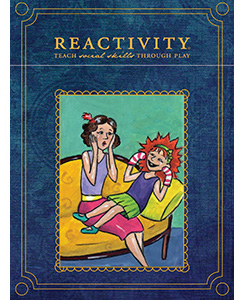
 Suitable for children in preschool and kindergarten, these cards include photographs of everyday objects and people with guided questions and encouraging prompts on the back of each card to help teach effective communication skills and improve critical thinking.
 Almost everyone who calls our office has talked to Abigail at some point over the last 13 years. She’s our go to person for all questions big and small. If you’ve had a question about a product, if for some reason something went wrong with your order, or if you created a something new and fabulous, you’ve probably spoken to her.
 As the first comprehensive, empirically tested intervention specifically designed for toddlers and preschoolers with autism, the Early Start Denver Model (ESDM) is an early intervention approach for toddlers ages 12-36 months and continuing until ages 48-60 months. The model does not require a particular setting for implementation and can be used by parents, teachers, therapists, at home, in preschool or in a clinical setting. To help you get started with this early intervention model developed by Sally Rogers, Ph.D., and Geraldine Dawson, Ph.D., we are offering a 15% discount on the

 Do you believe in fate? Many years ago, after a particularly grueling day, Stacy thought, maybe it would be nice to have a 9-5 job. On a whim, she contacted Different Roads inquiring about job opportunities. When we saw her resume and credentials, we nearly jumped out of our seats with excitement. Of course, luckily for all of us, Stacy realized her calling was in the field working directly with children but she’s been consulting with us ever since.
 At Different Roads to Learning, connecting with all of you is what drives us and keeps us moving forward. We sometimes long for the old days when we knew so many of you by first name, when you would call in your orders and we would have the chance to get to know you and your children. After 18 years in business and with so much activity shifting to the web, we still want to maintain our connection to all of you. We so appreciate it when you take the time to share with us, be it via email or on Facebook, Twitter, and Pinterest. We figured now is a good time to say hello to old friends and let you know a bit about what we’ve been up to and introduce ourselves to those of you who we haven’t had the pleasure of getting to know yet. Over the next few weeks, we’ll be introducing you to our small but incredibly dedicated and wonderful team. Keep an eye out for upcoming posts!
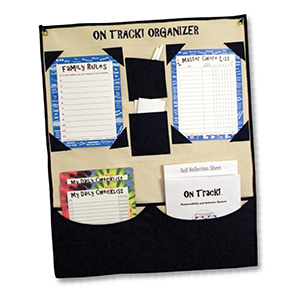
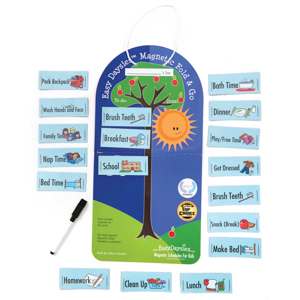
 Summer is winding down and for most it’s time to get back to a routine. For many of our students and children that means getting a handle on a busy new schedule of self-care, school, therapy sessions, extra-curricular activities, play dates and special occasions. A visual schedule or an activity schedule can help pull all of the parts of a hectic day together for a child and increase independence, build organizational skills as well as improve comprehension skills. A visual schedule provides clear expectations, utilizes a child’s visual learning strengths, can reduce anxiety or difficulty with transitions, and can increase flexibility.