Back to School Savings: New Low Price on Sign to Talk Nouns and Verbs!

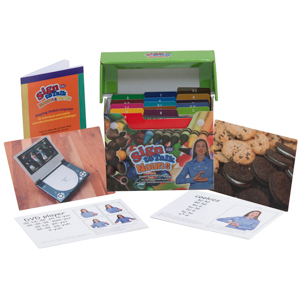
DRC_479_Sign_toTalk_NounsThe K&K Sign to Talk Nouns and Sign to Talk Verbs are a trusted resource designed to shape verbal language specifically for individuals with autism and other developmental challenges. It’s back to school time and we’re dropping the price of the cards by $20! The Sign to Talk Nouns are now $139 and the Verbs are $119!

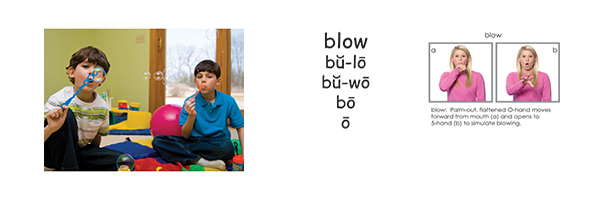
The front of each card has a large 5″x7″, full-color, glossy photo of the target item. The reverse side contains a photo of the ASL sign, a written description of the hand shapes, and a series of Kaufman Speech to Language “word shells,” which are highly effective for shaping intelligible articulation.

The Sign to Talk Nouns include a variety of everyday objects (nouns) that children frequently request and that double as excellent reinforcers. The Kit contains 150 noun cards and the accompanying 40-page manual fully explains the approach. The Sign to Talk Verbs include 80 everyday actions that children frequently request  as well as the accompanying 40-page manual.

SigntoTalkVerbsTake advantage of the new low price on these excellent teaching tools while you can!


Introducing The NEW ABA Program Companion: What’s Next for YOUR ABA Program?

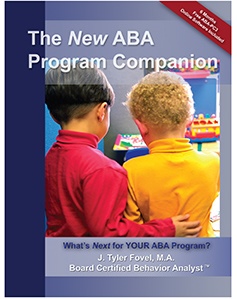
New ABA Program Companion Cover.inddWe’re thrilled to introduce The NEW ABA Program Companion: What’s Next for YOUR ABA Program? by J. Tyler Fovel, M.A., BCBA. This is an expansive brand new edition of the bestselling ABA Program Companion, completely updated with a new online software package, the ABA-PC3. Designed for practitioners who need to solve educational problems through analysis and creation of technically powerful solutions, this brand new book is sure to be at the top of your go-to references. The New ABA Program Companion offers important information and ideas on how to design, document, implement, evaluate and offer the best skill acquisition programs you can create for your students.

Managing a complex, multidimensional ABA Program involves vision, teamwork and infinite coordination. This book will help you choose and attain your next steps, wherever you may be in the process.

With school back in full swing and new cases starting up, now is the perfect time to utilize this powerful resource to create and organize your ABA programs. For a limited time, we’re offering The NEW ABA Program Companion at the introductory low price of $35. This offer will only be valid until September 17, 2013 so be sure to order your copy today!

CHAPTERS (for full chapter listings, click here)

Chapter 1: Attributes of an Effective ABA Program
Chapter 2: Introduction to Instructional Program Writing
Chapter 3: Managing the Setting and Materials
Chapter 4: Attention and Engagement
Chapter 5: Prompts and Prompt Hierarchies
Chapter 6: Developing a Solid Reinforcement Strategy
Chapter 7: Errors and Error Correction
Chapter 8: Generalization and Incorporation
Chapter 9: Data-Based Decision Making
Chapter 10: The Big Picture: ABA Project Management

About the ABA Program Companion 3.0 (ABA-PC3) Online Software

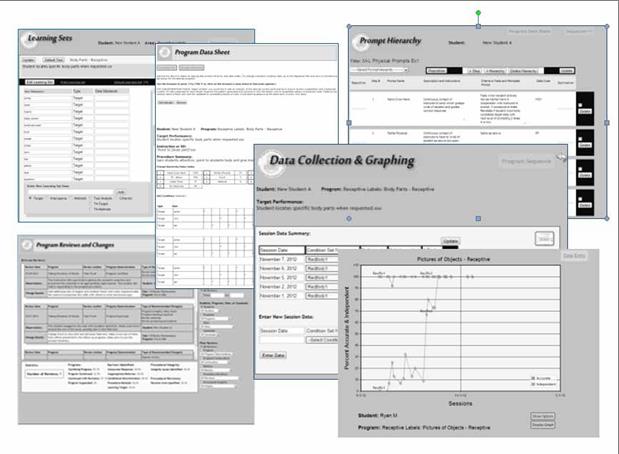
The ABA-PC3 software offers an online curriculum development environment for ABA teams. This is the newest version of a curriculum development tool specifically designed for ABA programs that helps with nearly every phase of the program creation process from selecting individual target performances to writing detailed step-by-step procedures to generating data sheets, entering data, and producing graphs. There’s also a program review module that structures the process of revising procedures based on observation and student performance measures.

ABA software

The unique software has a built-in library of 650 programs and over 4000 individual learning targets, all fully customizable by the user for their particular circumstances. Users can quickly search the library using keywords and select appropriate programs or write their own, rapidly building a comprehensive set of student programs. The set can be implemented or used to quickly create multistep sequences of programs for a variety of settings and instructional purposes.

The software helps focus and streamline the process of building an individualized comprehensive curriculum for students in an ABA program and provides a common workspace to enhance collaboration among different service providers on the special education team. In addition to the program library and learning targets, a variety of easy to use tools are included that help accomplish essential ABA implementation tasks including:

•      Automatically-generated data sheets customized for each student
•      Simple data entry screens for skill acquisition and behavior reduction programs
•      2-click graphing that automatically labels changing conditions
•      Reports of active and mastered programs
•      A structured workspace to assemble clear and well-defined prompt hierarchies and error correction strategies
•      A centralized area to organize the goal performance specifications and individual targets, record mastery dates, flag targets for implementers, and construct subsets of the comprehensive target list (condition sets) for presentation to the student
•      Clinical review and progress determination area that allows a user to enter information from observations and provides summary statistics on the progress of individuals or groups of students

**NOTE: Limited introductory price of $35.00 valid through 9/17/13 at 11:59 pm EST. All purchases made after that date will be at the regular retail price of $42.95.

Product Review: Sandwich Stacking Game

We recently came across a wonderful review of the popular Sandwich Stacking Game by Melissa & Doug on TeachThrough. Here is everything you have ever wanted and need to know about the Sandwich Stacking Game and how a parent or educator would incorporate it into lessons for his or her child:

Age level: Preschool, Early Elementary

Description: This silly game come with two sets of bread-shaped gloves and fourteen sandwich fillings that attach with velcro to the bread. Add twenty sandwich cards and a booklet with ten different games you can play with the materials, and you have a recipe for a great game.

Skills & Modifications: First of all, I should mention that I love any game that comes with instructions for multiple games. The fact that this comes with instructions for TEN games makes it that much more valuable to me, and it makes my job easier! I can find games that meet the skill level of my student, and then modify them as needed. Also, while I have listed below many ways in which I focus on target skills with these materials, I always end the activity by allowing the student to choose a game or to have free play with the materials for a couple of minutes.

Expressive Language – Students are usually highly motivated by these materials, so I use them to create opportunities for expressive language. Sometimes I’ll have the student create any sandwich they want and then describe it to me. Other times I will create sandwiches with the goal of targeting specific words or phrases that I am working on with the student.
Alike & Different – Sometimes I’ll have the student make two sandwiches, then describe how the two are alike and different. This provides and opportunity to talk about different ingredients, but also to discuss order of ingredients using words such as top, middle, and bottom.
Block Imitation – This is another game that, while it does not use blocks, can be used to test for generalization of block imitation skills. You can use the pictures included with the game, but those are all limited to four ingredients on each sandwich. For some students I take pictures of bigger sandwiches I have made with the game materials and have them recreate it based on the picture.
Scanning – I use this frequently to practice scanning skills. I lay out all of the ingredients on the floor (though be careful if the floor is carpeted, the velcro pieces may stick!) The student has to look at the picture card or listen to my instructions and find the correct piece. If we are playing with a peer, scanning may be more challenging because the peer may pick up the piece first, causing your student to have to scan once more to find the piece needed.
Peer Play – This is another great game for peer or sibling play. Students are highly motivated by the materials, and are frequently interested to see what other people are making as well.

Pros: This is one of those games that consistently causes giggle-fits with my students. It’s silly, challenging, active, and fun. Oh, and it’s machine-washable.

Cons: I have no cons for this game. It is a little pricey compared to most games and toys I purchase, but the materials are high-quality (which is usually the case with Melissa & Doug products.)

Cost: $29.99 You should invest in this game if: your student or child is highly motivated by active games, you are looking for materials to increase potential for peer play, or you are working with a range of ages at the same time.

ABLLS: B6, B12, B20, C41, K5, K9, K14, L2, L12, L22

VB-MAPP: VP-MTS 6, VP-MTS 13

Written by Sam Armstrong, MSEd, BCBA

Pick of the Week: What? How? Question Set

Our pick this week is the What? How? Question Set! This set of cards teaches children to label and identify actions while learning how to ask and answer “what” and “how” questions.

This week only, save 15% on your order of the What? How? Question Set by using our promotional code BLOGWHQ3 at checkout!

Each of the “what” questions in the set requires a one-sentence answer; each of the “how” questions have 3 possible answers. If the answer to “What are they doing?” is “hugging,” then the answer to “How do you hug a friend?” is “open your arms,” “put them around your friend,” and “give a gentle squeeze”.

Each card measures 5 x 3.5 inches. Each concept presented in this photographic deck of 40 cards relates to a child’s everyday experiences, such as reading a book, blowing bubbles, playing t-ball, hugging a friend, cooking, and feeding ducks.

Remember, this week only, take 15% off your online order of the What? How? Question Set by entering in the promo code BLOGWHQ3 at checkout!

*This offer is valid until August 20th, 2013 at 11:59 pm EST. Not compatible with any other offer. Be sure there are no spaces in the promo code at check out!

Pick of the Week: VibraLite MINI Watch

Our pick this week is the VibraLite MINI Watch, our updated version of the popular VibraLITE Watch made specifically for children’s small wrists. This personalized vibrating watch is ideal for reminding children to engage in any variety of situations. This week only, save 15% on your order of the Vibralite MINI Watch by applying the promotional code BLOGVIBW5 at check out!

The VibraLite MINI Watch has a vibration alarm that won’t disturb others and can also be set to audibly beep when time is up. It can accommodate 12 different alarm setting and has an Auto-Reload Countdown Timer that automatically reloads to a preset time that can be set for seconds, minutes, or hours. The alert duration lasts 20 seconds, but can be stopped manually by pushing any button. The VibraLite MINI also offers a new lock feature and easy-to-read time digits. This watch is water resistant up to 50 meters and also features an electroluminescent backlight for viewing at night.

The VibraLite MINI will fit wrist sizes of 5.50″ to 7.20″ in circumference.

Remember, this week only, take 15% off your order of the VibraLite MINI Watch by entering in BLOGVIBW5 in the promo code box at check out!*

*This offer is valid until August 13, 2013 at 11:59 pm EST. Not compatible with other offers. Be sure there are no spaces in the code at check out!

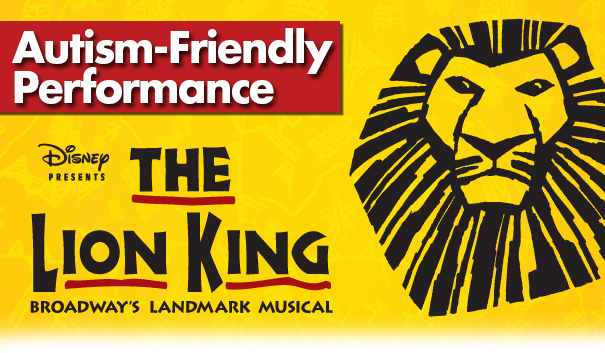
Volunteer for Autism-friendly performances of The Lion King and The Nutcracker in Pittsburgh

The Pittsburgh Cultural Trust and Pittsburgh Ballet Theatre, with support from ABOARD’s Autism Connection of PA, is bringing autism-friendly performances of The Lion King and The Nutcracker to Pittsburgh.

These presentations will be sensory-friendly performances that allow families with members on the Autism spectrum to experience a regular Broadway production with several alterations that meet the needs of the audience. Pittsburgh will be the third city to offer this type of program.

The Lion King performance is on Saturday, September 21, 2013 at 2:00 PM
The Nutcracker is on Friday, December 27, 2013 at 2:00 PM

Autism Connection is currently seeking professionals who work in the field, to volunteer for both of these performances. They will be needing assistance on numerous tasks, including guidance from the parking garage to the theater, quiet room and activity room aides, and in-theater support.

Interested professionals and individuals with experience in the field should fill out their Volunteer Questionnaire. Accepted volunteers will be contacted to attend an orientation session.

For more information about volunteering, please contact ABOARD’s Autism Connection of PA at support@autismofpa.org, or call (800) 827-9385.

Pick of the Week: Answering “Wh” Questions

This week’s Pick of the Week is our Answering “Wh” Questions cards set! Answering “Wh” Questions contains 23 full-color photographic learning cards that will inspire conversation and speculation in young learners. This week only, take 15% off your online order of the Answering “Wh” Questions cards by applying the promotional code BLOGWHQ6 at checkout!

DRC 536 Answering Wh Questions

Each photo in this set of cards includes children engaged in various indoor and outdoor activities that encourage language development, emotional awareness, and critical thinking when answering who, what, when, where, why, and how questions.

The cards in this set depict children interacting with their peers and with adults in various settings, including theDRC 536 Answering Wh Questions 2 classroom, playground, kitchen, and many more. Answering “Wh” Questions also comes with word lists and a resource guide in English, Spanish, as well as French, to suggest different methods of asking and answering “wh” questions.

The Answering “Wh” Questions set is a wonderful way to reinforce basic principles, lessons, and skills. Recommended for pre-K to 2nd grade learners.

Remember, this week only, save 15% on your purchase of Answer “Wh” Questions by applying the promo code BLOGWHQ6 at checkout!

*This offer is valid until July 29th, 2013 at 11:59 pm EST. Not compatible with any other offer. Be sure there are no spaces in the promo code at check out!

Autism & Applied Behavior Analysis: 10 ABA Myths Debunked

We came across this great post on ABA and Autism by our friend Brenda Kosky Deskin over at AutismBeacon.com and wanted to share it with you. It’s a good read!

autism and aba, autism, autism treatment

Applied Behavior Analysis, or ABA, has been around for years, helping people of all ages on the Autism Spectrum learn and thrive. Some, however, frown upon its use with autistic individuals but I suspect that those who don’t like ABA might not know what ABA really is and is not. I hope that by clearing up some widely held misconceptions about this evidence-based intervention for Autism, that more individuals will embrace ABA as their treatment of choice for their students and loved ones on the Autism Spectrum.

1) Myth: ABA is not effective

FACT: Of all treatments associated with Autism, ABA is the one that has the most peer-reviewed scientific research behind it to support its efficacy. If you would like to learn more about the importance of evidence-based practice with respect to Autism, The Association For Science in Autism Treatment (ASAT) features an excellent article on its website about this very topic.

2) Myth: ABA is punishing and unpleasant

FACT: While it is most unfortunate that some of the pioneers of ABA back in the late ’50s used physical punishment in their teaching procedures, today’s ABA programs depend primarily on praise and preferred items as a means of rewarding a learner for a job well done. Technically speaking, a “punishment” in the world of ABA today would be considered using the word “no” or sometimes if necessary, perhaps withdrawing a preferred object. Even these punishments procedures are used rarely and only when absolutely necessary in any of the quality programs of which I am aware. Certainly any physical or verbal punishers that are abusive in nature should not be tolerated nor considered acceptable. In fact, the importance of using methodologies that focus on reinforcement rather than punishment are written right into the Code of Ethics of the Behavior Analysis Certification Board (BACB).

As I state often, a good ABA program is a fun ABA program. My son, Michael, is very fond of his ABA therapists and has a great time with them. His therapy program includes visits to the book store, walks in the forest, swimming, go-karting and countless other activities that he enjoys. A talented and knowledgeable ABA therapist takes an activity his or her learner likes and turns it into a teaching opportunity that his learner will enjoy.

3) Myth: ABA means hours of sitting knee-to-knee at a table doing drills

FACT: This is a very common misconception. What is being described here is a teaching methodology called “Discrete Trial Teaching” or “Discrete Trial Training.” It is only one of many different teaching methodologies used in an ABA program and should never be relied upon as the only approach to teaching an individual on the Autism Spectrum. No one wants to nor should spend hours sitting at a table learning. Incidental Teaching, for example, is another ABA-based teaching approach that is extremely effective and can be used in many different environments and situations.

5) Myth: ABA is only appropriate and effective for young children

FACT: As we are all very well aware, people of all ages can and do learn. People on the Autism Spectrum are no exception. While the major, groundbreaking studies on the overall effectiveness of ABA in treating individuals on the Autism Spectrum all focused on children, there are numerous smaller studies which examine the use of ABA to address specific tasks including clothing selection, appropriate mealtime behaviors, vending machine use, non-disruptive bus riding, and the list goes on. Many of these studies’ participants are autistic adults and the results are promising indeed, proving that autistic individuals of all ages can make tremendous gains given ABA-based instruction.

States Dr. Bobby Newman, PhD, BCBA, on this topic, “Learning goes on throughout life. The principles of learning upon which ABA heavily relies are universal, as far as we know, going across species and CERTAINLY across the lifespan. A teenager or adult is nowhere near done. I would argue, in fact, that the need for good solid ABA-based instruction increases rather than decreases as the student ages toward adulthood. Many new demands will be placed (e.g., vocational, travel, independent living, etc.), and school/instruction hours often decrease. This increases the need for scientifically-based and efficient instruction; it doesn’t decrease that need.”

6) Myth: ABA is only for people who have Autism

FACT: ABA has proven to be effective in a wide variety of applications including rehabilitating stroke victims and individuals with acquired brain injuries. Whether many of us are aware or not, it has many other day-to-day applications within the general population as well. We use ABA strategies to train our dogs. Many good parenting practices have strong roots in ABA. (Have you ever given your toddler a sticker for using the potty?) ABA techniques can also be used to overcome different kinds of social or behavioral problems including dieting and quitting smoking. Do you ever reward yourself for hard work with say, a visit to the spa or by taking a vacation? Has your boss ever recognized your work endeavors with a compliment (otherwise known in the world of ABA as a “Social Reinforcement”) or a bonus or raise (a “Tangible Reinforcement”). These every-day principles are really no different than those used in an ABA program for an individual on the Autism Spectrum.

7) Myth: ABA is all about bribing people with food and toys

FACT: It is important to recognize that there is a major difference between a bribe and a reinforcement. A bribe is a type of negotiation before something occurs. It is stated or implied that “If you do this, you’ll get…”. On the other hand, a reinforcer is something favorable that a learner receives for a job well done after it occurs. In this way, it is allowing the learner – often subconsciously – to start pairing or making associations in his mind between the behavior that he has already done, with the reinforcer that he receives immediately after. With repeated practice, after these associations are firmly ingrained in the learner’s mind, the reinforcer can then often be removed all together as the newly learned behavior becomes habit.

With respect to what is actually used as a reinforcer in an ABA program, I again make reference to the Code of Ethics of the Behavior Analysis Certification Board (BACB):

“The behavior analyst minimizes the use of items as potential reinforcers that maybe harmful to the long-term health of the client or participant (e.g., cigarettes, sugar or fat-laden food)”

My son, for example, has never been rewarded with food. His therapists use whatever happens to be motivating to him at any particular moment and this could and does change all the time. Some of his reinforcers include swimming, looking through stacks of photographs, searching for YouTube videos, and therapists repeating lines from his favorite movies.

8) Myth: ABA only helps treat behaviors; it can’t help teach actual skills or language

FACT: While ABA-based interventions are certainly ideal for addressing problem behaviors like physical aggression, tantrumming and the like, they are equally effective in teaching new skills and promoting language development. Michael has learned how to fold laundry, prepare a snack and a myriad of other important life skills from his ABA therapists. Academics like reading, writing and math can also be taught successfully within the confines of an ABA program.

9) Myth: ABA is a one-size-fits-all treatment

FACT: While there are many excellent books and computer-based resources available for parents that can help educate them about ABA and even provide basic foundations and curriculums for an ABA program, in an ideal world, these should not be relied upon exclusively. Because every person with Autism is different, every ABA program must accordingly be customized to every learner’s unique set of circumstances, abilities and challenges. Furthermore, learners’ needs and behaviors can turn on a dime so expertise is needed in order to correctly analyse these changes and devise solutions that are based on years of education and training in the field. This experience can best be found in an ABA professional who is certified with the Behavior Analyst Certification Board.

10) Myth: ABA can or should only be done during “therapy time”

FACT: An effective ABA-based intervention, to a certain extent, runs 24-7. I’m by no means stating that a learner should be deluged with information or have demands put upon him during his every waking moment. What I’m talking about here is consistency.

I too often see kids who go to an ABA school and have great behaviors, toilet independently and thrive under these predictable learning environments. Then they go home where the same expectations are not upheld. Kids of all ages are going to “test” their parents and caregivers whether they are autistic or not. If we don’t maintain the same expectations of our kids at home that their teachers have of them in school, it is almost guaranteed that behaviors will worsen and anxiety levels will skyrocket. Conversely, some parents run great ABA programs at home which are then undone by teachers who don’t adhere to the same ABA principles in their classrooms where the child attends.

My advice to parents is to at very least learn the basic underlying principles of ABA and stay connected to your child’s teachers so that you can help your child generalize what he is learning at school in your home and community. In the case of parents who struggle with teacher non-compliance at school, advocate, advocate, advocate. Show your child’s teachers and principals exactly what your child is capable of at home by way of data and videos and provide them with or direct them to ABA-based resources that can help your child thrive both at home and at school.

AutismBeaconLogoReprinted with permission from AutismBeacon.com, a one-stop source for parents, caregivers, service providers, professionals, advocates and family members of people with Autism to learn, share and access vital resources around the corner and  around the world.
New Yorkers: Urge Governor Cuomo to Approve ABA Licensure Bills Today

As of Tuesday night,  the bill to license Behavior Analysts was passed by both the New York State Senate & Assembly. This bill requires insurers to cover Applied Behavior Anaylsis (ABA) for people with autism. We need your help NOW! We urge you all to call New York State Governor Andrew Cuomo and urge him to sign Bills A6963 and S4862. To contact Governor Andrew Cuomo, please call (518) 474-8390 and ask him to join us in supporting New York families raising kids with autism.

Many advocacy groups, including our friends at Elija and NYSABA, have been working to get the State of New York to recognize the Board Certified Behavior Analyst (BCBA) credential. This legislation will enable BCBAs to engage in professional behavior analytic activities independent of other licenses or certifications. Legislative members of NYSABA have met with numerous legislators and drafted recommendations to include a plan for the appropriate oversight and training in behavior analysis as part of the exemption of behavioral intervention practices from the psychology practice act. Currently, the Behavior Analyst Certification Board (BACB) has certified more than 12,000 behavior analysts in over 40 countries, 747 of which practice in New York. The BCBA credential requires a related academic degree, behavior-analytic coursework, supervised experience, passage of a psychometrically sound examination, compliance with disciplinary standards, continuing education, and ongoing supervision.

ABA professionals and supporters just need your continued support and efforts to push for the signing of the bill by Governor Cuomo and make it into a law! Please call Governor Cuomo at (518) 474-8390 and urge him to sign this important legislation.

ABA has been a validated evidence-based therapy for developmentally disabled and delayed children since the 1970s and continues to be the leading form of therapy for children with autism and other developmental disabilities today.

Pick of the Week: “Community Helpers” Series

Children are introduced early on to the workers in their community who make an important impact everyday in their daily lives. As they associate police officers, fire fighters, doctors, librarians, school bus drivers, postal workers, and other workers in our community with familiar objects in their surroundings, it is important to teach them the various occupations our community helpers engage in.

Our Pick of the Week this week features the “Community Helpers” series, which includes the Community Helpers Puzzle, Occupations Early Learning Skill Cards, People in My Neighborhood Cards, Occupations Cards from Stages, Community Workers Miniatures, and Community Helpers Listening Lotto. This series is designed to help build vocabulary and language development in young children and to promote understanding of the people they encounter in their communities.

This week only, save 15% on any item of our “Community Helpers” series in your online order by entering in the promotional code BLOGCHS2 at check out!

The Community Helpers Puzzle contains 20 different two-piece puzzles that are a great introduction to teaching occupations. Children will match the community helpers, which include a dentist, librarian, nurse, police officer, school bus driver, and more, with their tools of trade.


The Occupations Early Learning Skill Cards is a set of 64 full-color cards that focus on 16 occupations and the equipment that the workers use to do their jobs. The cards depict cheerful images that promote sorting, classifying, and an understanding of the people children meet in their communities. The cards also feature reproducible illustrations and labels in English and Spanish on the reverse side. A teacher’s guide with suggested activities is also included.


The Occupation Cards from Stages include 61 different occupations in a set of 115 photographic cards. These cards depict community workers in the natural setting with contextual clues, and also serve as a great tool for teaching gender labels, pronouns, and storytelling.


The People in My Neighborhood Cards is a wonderful set of 24 large-face flashcards for young learners. The cards depict community helpers that children commonly see in their daily lives, as well as a variety of their tools-of-trade. This set includes a businesswoman, dentist, baker, and more!

The Community Helpers Listening Lotto presents a creative and interactive way to teach young learners about the workers they encounter in their communities. The lotto contains 12 photographic game boards, 120 paper game tokens, and a CD-ROM with instructions in English, Spanish, and French.


The Community Workers miniatures present easily recognizable occupations to young learners. These figures can also be paired with flashcards for a full learning experience. This set includes a policeman, fire fighter, postal workers, construction worker, pilot, veterinarian, and chef.

This week only, take 15% off any one of these items in your online order by entering in the promotional code BLOGCHS2 at check out!*

*Offer expires on June 13, 2013 at 11:59 pm EST. Not compatible with any other offer. Be sure there are no spaces after the Promo Code when you enter it at checkout!

Posted in ABA