
Sometimes we get specific questions from teachers and parents about managing problem behaviors that are quite common. In these cases, we think it can be helpful to share the question and response, so that others in similar situations might benefit from the suggestions offered. Bed and pants-wetting can be an enormously challenging issue both at home and at school, so when we received the following question from a teacher in Australia about her student, we thought it was a great opportunity to offer some suggestions and strategies on how to address the behavior.
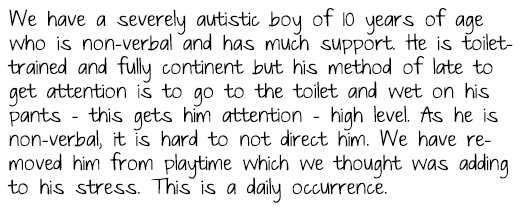
This is definitely a difficult behavior to address. It’s also challenging to provide accurate advice without directly observing the behavior, instead here are a few questions to consider and potential resources.
- First and foremost, this is a behavior in which you should consult with a Board Certified Behavior Analyst for assistance. You can find BCBAs in your area by going to this webpage: https://www.bacb.com/?page=100155. If possible, reach out to more than one to find the BCBA who is the best fit for you and your learner.
- Second, you should conduct a functional assessment to clearly determine the reason for the behavior. It may be for attention, but you may discover there is a different cause. It is best to perform a formal functional analysis, but if that is not possible, you may consider using the Functional Assessment Screening Tool (FAST). To get the best results from this, you should have more than one person fill it out, and, if possible, one person who observes the behavior but is unfamiliar with the child. Compare results to see if you are in agreement, then make a behavior intervention plan based on the function of the behavior. For more information about the FAST and its reliability compared to a formal functional assessment, you should refer to the study by Iwata, Deleon, & Roscoe (2013).
- If indeed the behavior is for attention, consider how to provide minimal attention for pants-wetting. You mention that he receives high-level attention right now. What qualifies as high-level for him? Is it eye contact? Physical touch? Proximity? There are ways to remove each of these types of attention while also making sure you address the behavior hygienically.
- While your son is continent, some of the strategies that are used in toilet training may prove helpful in intervening with this behavior. Take a look at this article by Kroeger & Sorenson-Burnworth (2009), which “reviews the current literature addressing toilet training individuals with autism and other developmental disabilities.” It may provide potential solutions that you have not attempted.
- Take a look at this Tip of the Week, How to Implement a Successful Behavioral Intervention, for additional information on implementing a successful behavior intervention.
I hope this information is helpful! And good luck as you plan and implement your intervention.
WRITTEN BY SAM BLANCO, MSED, BCBA
Sam is an ABA provider for students ages 3-12 in NYC. Working in education for ten years with students with Autism Spectrum Disorders and other developmental delays, Sam has developed strategies for achieving a multitude of academic, behavior, and social goals. Sam is currently pursuing her PhD in Applied Behavior Analysis at Endicott College.
 We’ve always believed in the importance of nurturing independence in our students. When we came across this
 A diagnosis of autism can be very challenging for a child and for his/her family. But one of the most difficult aspects of autism is that it is not clear cut what behaviors are related to autism, and what behaviors are related to just being a kid. Every child tantrums sometimes. Every child talks back sometimes. Every child engages in dangerous behavior sometimes.
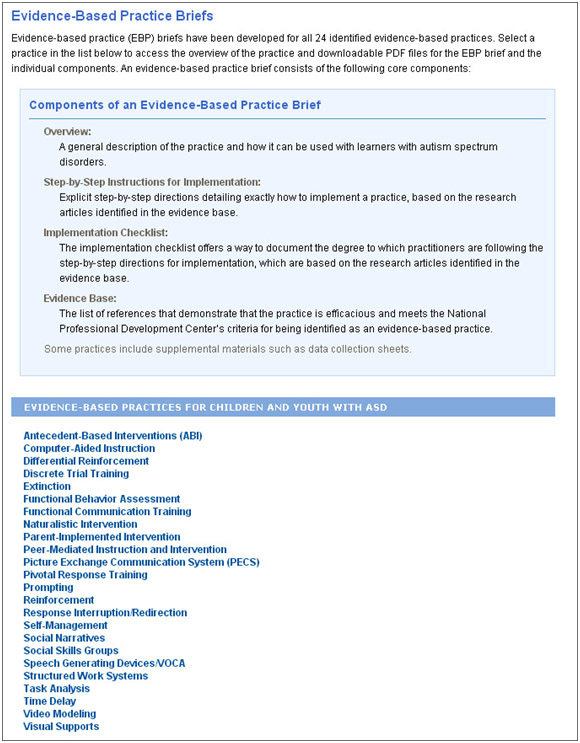
 These practical resources for parents, teachers, and therapists help high-functioning students with autism improve on these critical skills.

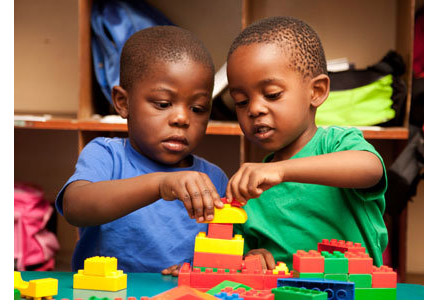 The best way to improve socialization in children with autism is to emphasize play. There are several strategies to teach play skills to children on the spectrum that can help them improve socialization and develop friendships.

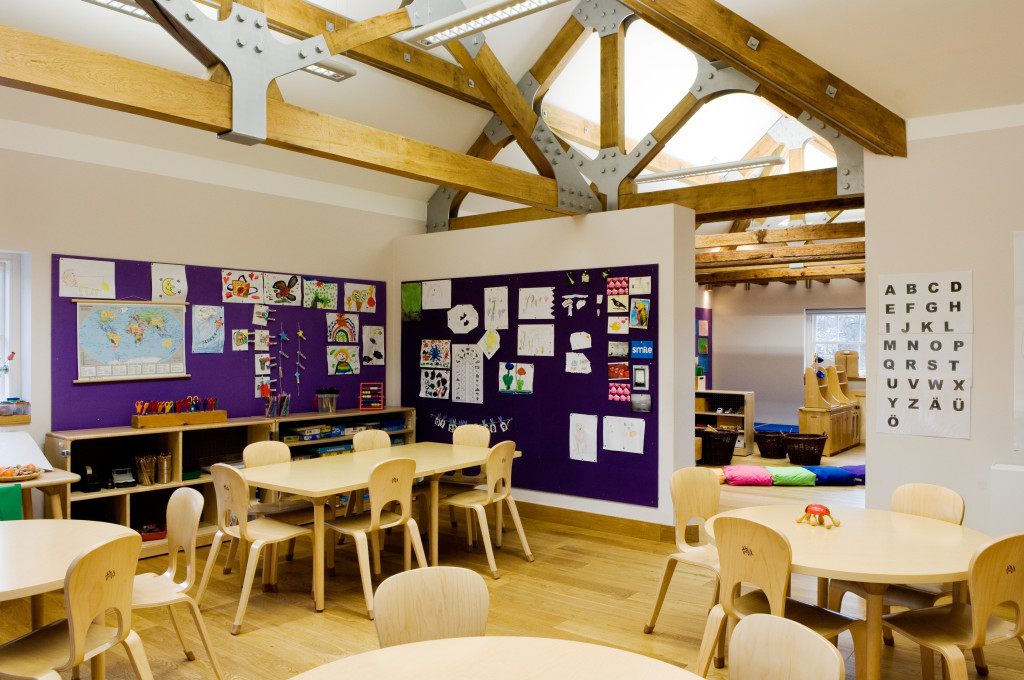 The first thing I noticed when I walked in to observe was that she did her entire session at a long wooden table, sitting side-by-side with her student. After watching for about ten minutes, I asked if we could change the seating arrangement. We moved her student to the end of the table, then had the therapist sit next to her, but on the perpendicular side. This way, eye contact was much easier as they were able to face each other. The student’s eye contact improved instantly with a small environmental change. (Of course, once we made the environmental change, we worked together to address other changes that could be made to encourage eye contact.)