
How can you help kids with autism be flexible, get organized, and work toward goals – not just in school but in everyday life? It’s all about executive function. This week, we’re offering 15% off* our newest books on teaching executive function: Unstuck & On Target: An Executive Function Curriculum and Solving Executive Function Challenges. Just use our promo code EXECFXN at check out to redeem these savings!
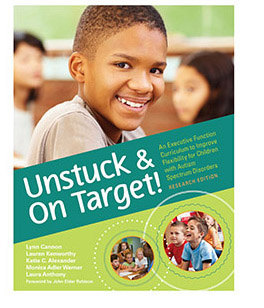 These practical resources for parents, teachers, and therapists help high-functioning students with autism improve on these critical skills.
Unstuck & On Target! is a robust classroom-based curriculum book that will help educators and service providers teach these executive function skills to high-functioning students with autism through ready-to-use lessons that promote cognitive and behavioral flexibility. This curriculum gives clear instructions, materials lists, modifications for each lesson, and intervention tips to reinforce lessons throughout the school day. Topics touched upon include flexibility vocabulary, coping strategies, setting goals, and flexibility in friendship, all introduced and reinforced with evidence-based lessons. Lessons will target specific skills, free up the instructor’s time, fit easily into any curriculum, ensure generalization to strengthen home-school connection, and best of all, make learning fun and engaging for students in the classroom.
Unstuck & On Target! also comes with an accompanying CD-ROM that contains printable game cards, student worksheets, and other materials for each lesson. The curriculum is targeted for students with cognitive ability and language skills ages 8-11.
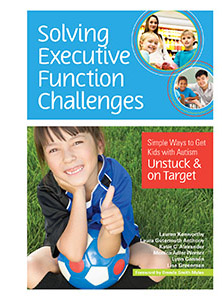 Solving Executive Function Challenges is a strategy guide that offers teachers and caretakers various ways to teach EF skills, including setting and achieving goals and being flexible, as well as ideas for accommodations and actions to address common problems (e.g. keeping positive, avoiding overload, coping, etc.).
To be used with or without the robust curriculum Unstuck and On Target!, this strategy guide aims to show how to embed executive function instruction in everyday scenarios with specific examples, samples IEP goals, and scripts and worksheets that break down tasks into manageable chunks. This guide is appropriate for learners in grades K–8.
Don’t forget – you can save 15%* this week only on these new executive function books by applying promo code EXECFXN at check out!
*Offer is valid until 11:59pm EDT on October 7th, 2014. Not compatible with any other offers. Be sure there are no spaces or dashes in your code at check out!
 The best way to improve socialization in children with autism is to emphasize play. There are several strategies to teach play skills to children on the spectrum that can help them improve socialization and develop friendships.
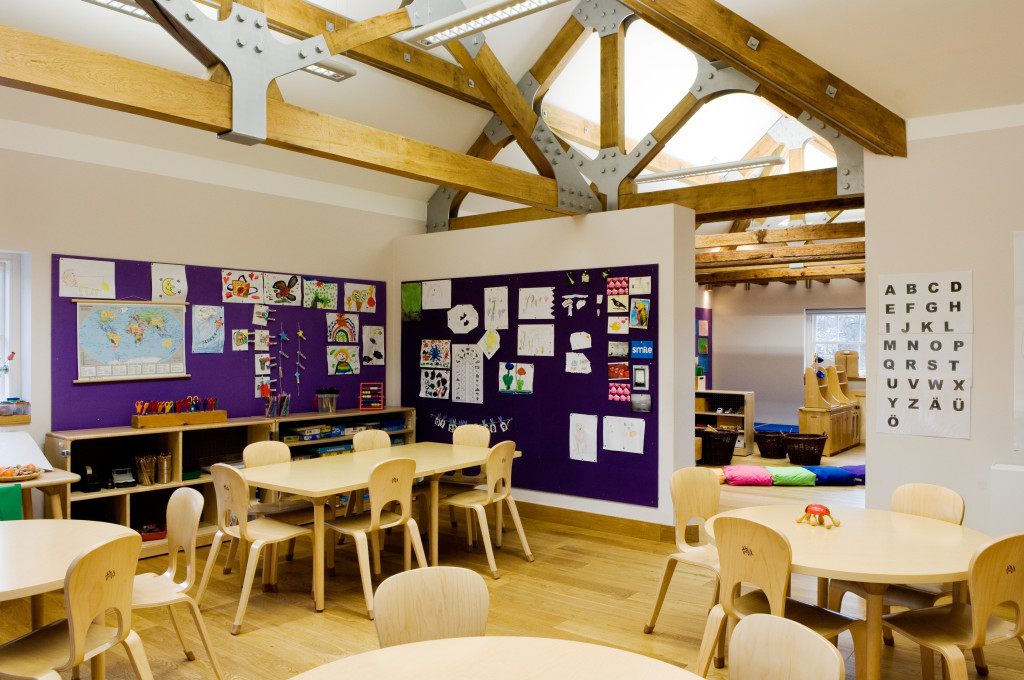 The first thing I noticed when I walked in to observe was that she did her entire session at a long wooden table, sitting side-by-side with her student. After watching for about ten minutes, I asked if we could change the seating arrangement. We moved her student to the end of the table, then had the therapist sit next to her, but on the perpendicular side. This way, eye contact was much easier as they were able to face each other. The student’s eye contact improved instantly with a small environmental change. (Of course, once we made the environmental change, we worked together to address other changes that could be made to encourage eye contact.)


 Federal Judge Michael H. Simon in Oregon ruled last week that insurance providers cannot deny coverage of Applied Behavior Analysis (ABA) therapy for children diagnosed on the autism spectrum. The ruling was in response to a lawsuit against Providence Health Plan, an insurance provider that denied coverage of ABA therapy for children diagnosed with autism, while simultaneously granting coverage for children without a diagnosis. ABA therapy, which can cost over $50,000 a year, involves a behavioral interventionist working with a child in the family’s home or in his school to address behavioral deficits for up to forty hours a week.

 Teaching language skills is one of the most frequent needs for children with autism, but also one of the most misunderstood skillsets amongst both parents and practitioners. The desire to hear your learner speak in full sentences can be overwhelming, making it especially difficult to take a step back and consider what it means to communicate and how communication skills develop in neurotypical children. Many times we get hung up on what a child should be capable of communicating at a certain age, rather than focusing on what they are capable of communicating at this stage of development.

 Recently I took a thirteen-year-old boy with autism grocery shopping for the first time. We had practiced all of the steps for paying: looking at the total on the register, taking out the necessary bills or coins, waiting for change, making sure we had correct change, returning the money to the wallet, etc. While I thought he was ready to do this in a natural environment, I did not expect what actually happened.
 Keep your wallet in your hand, do not lay it on the counter.

