Different Roads to Learning’s “Clean Up: Category Sorting” App is now available on Android!

Clean Up Cateogory Sorting AppWe’re extremely excited to announce that our very own sorting skills app Clean Up: Category Sorting is now available for Android devices*. Find it available now the Google Play Store, on Amazon, and in the Barnes & Noble Nook Store.

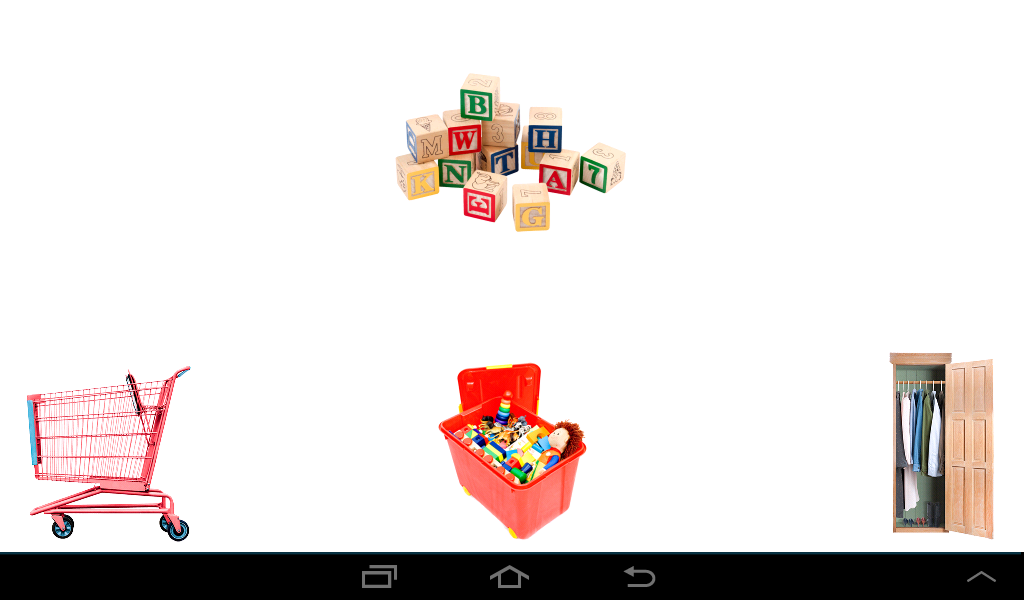
Clean Up: Category Sorting is an interactive game that develops language, reasoning, and sorting and classifying skills in young learners. Players of the game must “clean up” by putting 75 photographic images of toys, food, and clothing away in the correct shopping cart, refrigerator, or toy box. Each target is introduced by its label (“Where does the Apple go?”) in each round, where players see 15 unique images.

Screenshots captured from a 7-inch Samsung Galaxy Tablet.

Correct responses receive visual and auditory reinforcement while incorrect answers are corrected by a visual prompt of the correct answer flashing. After all targets have been seen once, they are reintroduced in a new, randomized order. The app takes data for the percentage answered correctly across rounds as well as sessions in which the app is in use. Clean Up: Category Sorting will help build foundational sorting skills for students just developing their sorting and classifying skills.

*Clean Up: Category Sorting runs an Android 2.2 platforms and up. This app is also available on the Apple iTunes Store. 

Tip of the Week: Communicating with Paraprofessionals to Support Your Learner

Many students with autism and other developmental disabilities have an IEP that mandates a 1:1 paraprofessional (called an instructional assistant or teaching assistant in some states, but referred to as paraprofessional for the purposes of this article). Recently, I had the opportunity to provide a workshop to a large group of paraprofessionals in New York City. I was surprised to hear how some felt disconnected from the families of their students, especially considering how deep their relationships are with their students.

My conversations during that workshop caused me to reflect upon my own experience as a classroom teacher. Fortunately, I always had wonderful paraprofessionals who were essential to making the classroom run smoothly and helping our students achieve success, but I recognize now that they often were working with less information and less contact with the families than the teachers were. As a parent/guardian, you can help bridge that gap.

  • Communicate directly with the teacher and the paraprofessional. If you have critical information about your child, don’t assume that the teacher will share it with the paraprofessional. This can be important for big issues, such as allergies or new medicines, as well as smaller issues, such as an impending vacation or a sleepless night.
  • Share important goals with the paraprofessional. In many schools, the paraprofessional may never have seen your child’s IEP, though they frequently see your child for more time during each day. The paraprofessional also will usually see your child at times when the teacher will not, such as lunch and/or recess. If there are specific concerns about social skills, the paraprofessional likely has more opportunities for implementing social skills interventions than the teacher.
  • When you go to parent teacher conferences, ask both the teacher and the paraprofessional about your child’s performance in school. Because the paraprofessional sees the student in more environments, they may have more specific observations about transitions, special classes such as gym or art, and social interactions outside of the classroom.
  • Sometimes a student responds better to the paraprofessional than the teacher. If they do, find out why. The paraprofessional may be doing things that you and/or the teacher can replicate to help your child’s learning outcomes.
  • Show your appreciation for the paraprofessional. The job of a paraprofessional is very challenging: no preps, the need to adjust to each teacher’s style throughout the day, and the fact that they often end up managing any behavioral challenges during the day. A note of thanks can go a long way. And if you are the type of parent who gives small gifts or handmade items to teachers, don’t leave the paraprofessional out!

WRITTEN BY SAM BLANCO, MSED, BCBA

Sam is an ABA provider for students ages 3-12 in NYC. Working in education for ten years with students with Autism Spectrum Disorders and other developmental delays, Sam has developed strategies for achieving a multitude of academic, behavior, and social goals. Sam is currently pursuing her PhD in Applied Behavior Analysis at Endicott College.

Just Added! Tiggly Counts – Learn math with fun, interactive apps

Tiggly Counts Feature

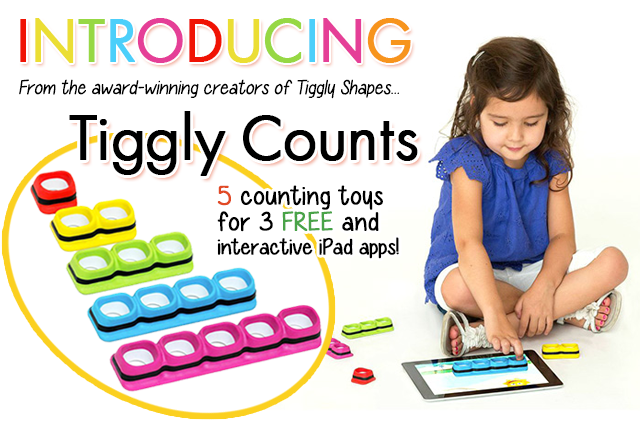
A playful world of math learning awaits in the all-new Tiggly Counts! From the award-winning makers of Tiggly Shapes, Tiggly Counts is a set of 5 counting toys that interact with 3 free iPad apps to connect children to a playful world of math learning. The apps and manipulatives work in tandem to develop a child’s number sense, counting skills, understanding of math operations, and more. The 3 free apps include Tiggly Chef, Tiggly Cardtoons, and Tiggly Addventure, and introduce children to a wonderful world of lovable characters that surprise and delight, as they learn essential early math abilities. Designed for children ages 3 and up.

Registration Open for Bridge Kids of NY’s Specialized Social Groups – Winter Session

If you’re in NYC, you must check out these Specialized Social Groups offered by the wonderful folks at Bridge Kids of NY. With a team of professionals who strive to improve the quality of everyday living for children and families, BKNY presents several fun and interactive social groups to support children in their social, communication, and behavioral growth. Below are two groups in which you can now enroll your child for the upcoming winter session:

Bridge Kids Social Circle
This fun and interactive group meets on Tuesdays or Thursdays, and is a 50-minute social skills group for children ages 2–5 years who experience difficulty in socializing with peers. Through play and group activities a qualified therapeutic team will focus on key social behaviors such as:

  • Eye-Contact
  • Taking Turns/Sharing
  • Understanding Personal Boundaries
  • Utilizing Appropriate Social Language
  • Initiating and Maintaining Social Interactions

Bridge Kids Happy Eaters Group
This group meets on Tuesdays or Thursdays, and is designed for our little ones who are “picky eaters”. If your child often refuses new foods, presents with a limited range of accepted foods, and/or engages in problematic behavior surrounding mealtimes, these skilled therapists can help! This group focuses on:

  • Creating Positive Mealtime
  • Experiences
  • Introducing New and Nutritious Foods
  • Healthy Exploration of Food
  • Simple Food Preparation
  • Supporting a Healthy Mind and Tummy

Register your child now in these specialized social groups for the upcoming winter session. Both groups meet for 10 sessions each at 4:00 PM on Tuesdays or Thursdays.

Come EAT, DRINK, and WIN as we launch the new ABA for the Common Core Kit!

CelebrateWormYou’re invited to our book release party
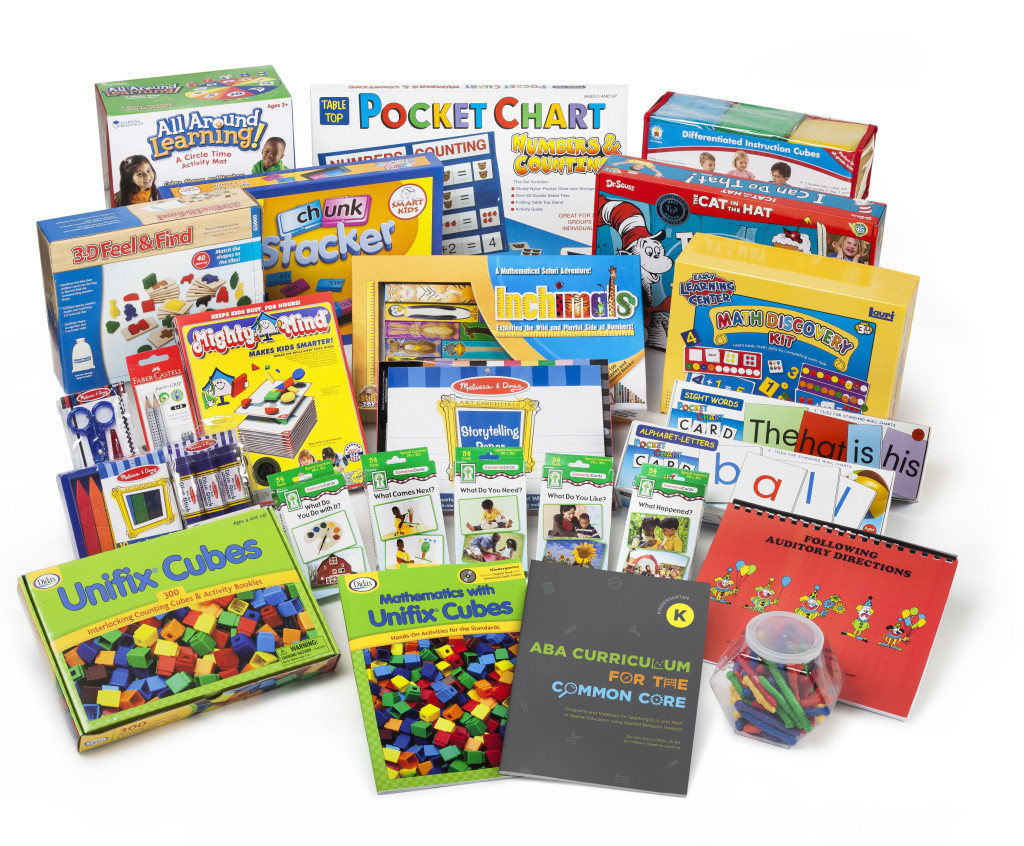
for the ABA Curriculum for the Common Core Kit for Kindergarten!

Join us on November 12 in NYC to meet author Sam Blanco, MSEd, BCBA and enjoy an evening with friends and colleagues. Cocktails and hors d’oeuvres will be served along with special giveaways. And one lucky attendee will win a FREE kit!

SamBlanco

Sam Blanco, BCBA, MSEd (www.samblanco.com)

We hope you’ll join us in launching this innovative and exciting new curriculum kit that presents ABA programs and targets for each of the Kindergarten Common Core State Standards.

Teachers, educators, consultants, behavioral therapists, and SLPs will love learning more about this groundbreaking curriculum kit. If you have a friend or colleague who is a teacher or behavioral consultant who might be interested in attending this event, please feel free to forward this invitation. All are welcome!

The event will be held in the Union Square neighborhood of New York City
Wednesday, November 12, 2014
6:30-8:30 pm

Space is limited so please RSVP as soon as possible to Abigail@difflearn.com.
A formal invitation with address details will be sent upon RSVP.

ABA Curriculum for the Common Core Kit - KindergartenIn order to present you with a great party, we need to know a few details so we can plan accordingly.

Please RSVP with the following information to Abigail@difflearn.com:

Name:

Organization or School:

Are you a teacher, therapist, consultant?

How old are your students?

Discipline (ABA, SLP, OT, etc.):

Increasing Play with Unit Blocks – Free Download

Blocks PileSymbolic play refers to a child’s ability to use one object or action to represent a different object or action within imaginary play. The symbolic play skill that involves object substitution typically begins to emerge around 18 months. For example, you might observe a child using an empty box for a “hat” or an overturned bucket for a “drum.” Blocks are a mainstay in early childhood classrooms because the benefits are innumerable. Block play can help to facilitate cooperation, visuo-spatial skills, problem solving ability, social skills, and language development, and is a good predictor of future mathematical abilities.
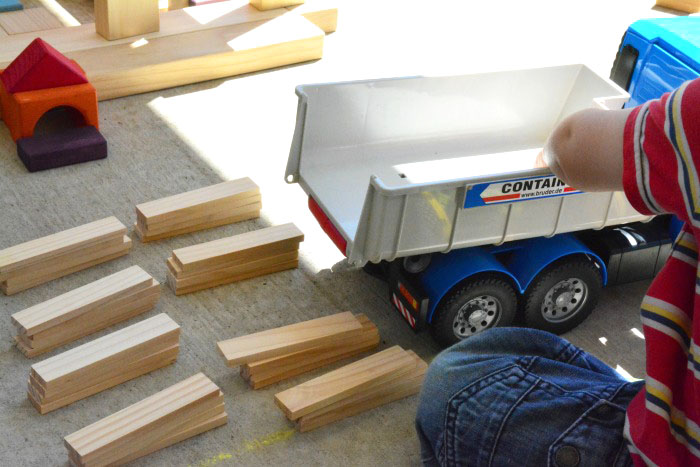
One hallmark of the diagnostic criteria for autism spectrum disorder is a presence of “persistent deficits in social communication and social interaction across multiple contexts, as manifested by difficulties in sharing imaginative play or in making friends.” Additionally, rigid thinking patterns may make symbolic play difficult for children with autism as they might view objects in a limited way that makes it difficult to pretend a block is something other than a block. Blocks on ShelfSince unit blocks are a huge component of early childhood classrooms everywhere one could imagine that exposure to them and some level of proficiency opens up huge social opportunities for learners with autism spectrum disorders with their mainstream peers in the classroom.

Some learners will require scaffolding in order to progress from the use of literal props within pretend play to object substitutions. Research suggests that systematic prompting is a common component of successful interventions used for teaching play.  Depending on the learner, various types of prompts will be used as you systematically move from most intrusive to least intrusive prompt levels. Sometimes, a learner begins to respond to natural cues before you have moved through each prompt level. However, for learners that require support froma visual prompt you can attach drawings of objects onto the blocks and then systematically fade them out. Once the learner begins to consistently use the blocks with the attached images you can use stimulus fading procedure to fade out the visual prompt. This can be done by photocopying the image and systematically changing the lightness until eventually the learner is presented with just the block.
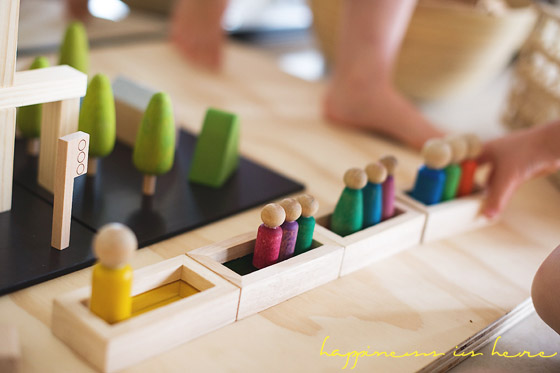

Below you will find downloadable images in the shape of unit blocks to help you facilitate symbolic play with a learner who requires visual prompts. The images are to scale and just the tip of the iceberg when it comes to all of the possibilities. It is important to teach various object substitutions for each block shape so that the skill is generalized. In a classroom where the curriculum is organized thematically, you could attach a few visuals to various blocks each time the theme changes to encourage symbolic play for the whole class.

Click here to download our Free Unit Blocks Template!

References

Cook, D. (1996). Mathematics sense making and role play in the nursery school. Early Childhood Development and Care, 121, 55-65.

Wolfgang, C., Stannard, L. & Jones, I. (2001). Block play performance among preschoolers as a predictor of later school achievement in mathematics. Journal of Research in Childhood Education, 15(20): 173-180.

Smilansky, S., & Shefatya, L. (1990). Facilitating play: A medium for promoting cognitive, socioemotional and academic development in young children. Gaithersburg, MD: Psychosocial & Educational Publications.

Christakis, D.A., Zimmerman F.J., & Garrison M.M. (2007). Effect of block play on language acquisition and attention in toddlers: a pilot randomized controlled trial. Arch Pediatr Adolesc Med. 161(10):967-71.

Pepler, D.J., & Ross, H.S. (1981(. The effects of play on convergent and divergent problem solving. Child Development, 52(4): 1202-1210.

Lang, R., O’Reilly, M., Rispoli, M., Shogren, K., et al. (2009). Review of interventions to increase functional and symbolic play in children with autism. Education and Training in Developmental Disabilities, 44(4), 481– 492.

Cooper, J. O., Heron, T. E., & Heward, W. L. (2007). Applied behavior analysis, 2nd ed. Upper Saddle River, N.J.: Pearson Prentice Hall.


Written by Stacy Asay, LMSW

Stacy is a licensed social worker, providing home and school based services to children and their families in the New York City area. With nearly 16 years of experience, her work with special needs children integrates a strengths-based, holistic approach to child and family augmented with the tools of Applied Behavior Analysis, a methodology that allows for reliable measurement, objective evaluation of behaviors, and the systematic teaching of language and learning skills.  This results in an individualized curriculum that equips children with the tools they need for learning and living while honoring their unique spirit.
Pick of the Week: Inference Card Decks – Learn to infer meanings through critical thinking and auditory comprehension

Oftentimes, people do not communicate a complete message; they assume their listeners are also interpreting important visual information. Help students learn how to determine the “true” meanings of messages and improve their critical thinking, auditory comprehension, and inferencing skills with our newly added inferencing card decks: Look, Listen & Infer and the Inferencing Big Deck. And this week only, take 15% off* your order of either or both of these inferencing decks, by using promo code INFER14 at check-out!

Look, Listen & Infer is a 56-card illustrated set that will teach students to infer the meaning of a message by both listening to a statement or question, and also looking at the picture for important visual cues. One side of each card shows a colorful illustration of the scene. The other side presents the scene and asks, “What should you do next?” followed by three possible answer choices, one of which is correct.


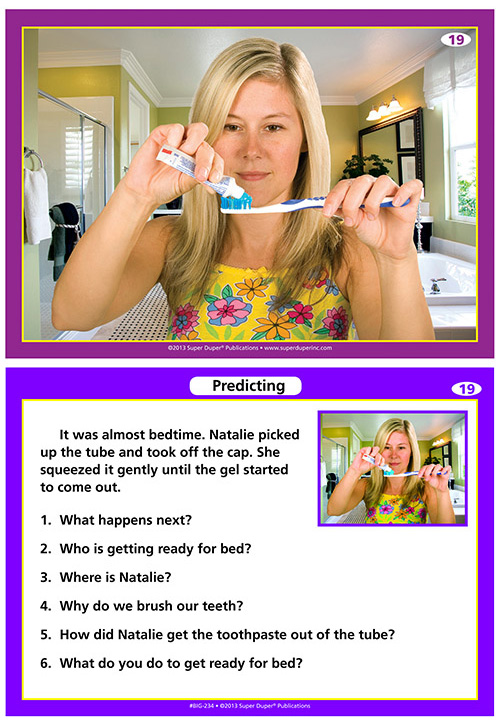
The Inferencing Big Deck features 100 large 5″ x 7″ photo cards that contain a short story along with with six follow-up questions to help children improve their ability to correctly inference. The color-coded topic areas include: Associations (These items belong to…); Identify the Setting (Where is this?); Part to Whole (What is it?); Predicting (What happens next?); and What Happened?

Don’t forget – you can save 15%* this week on your order of Look, Listen & Infer and/or the Inferencing Big Deck by using code INFER14 at check-out online or over the phone!

*Offer is valid until 11:59pm EDT on October 21st, 2014. Not compatible with any other offers. Be sure there are no spaces or dashes in your code at check out!

New Product Alert! Scrubba Dub, Carlos and Freda Says Please – More Titles in the “I See I Learn” Series

From the wonderful “I See, I Learn” series by Stuart J. Murphy, we’re thrilled to add Scrubba Dub, Carlos and Freda Says Please. These new titles will teach your student health and safety skills along with ways to be polite and courteous towards others. Utilizing kid-friendly language, cute and informative illustrations, and inset diagrams for each strategy touched upon, these storybooks teach young learners important social-emotional issues. Each book also includes activities and questions at the end to support educators and caregivers in further exploration of each topic.


It’s fun to draw with chalk and build with clay but the washing hands part, not so much. In Scrubba Dub, Carlos, Carlos’ friends help him learn the right way to wash and have fun doing it. 


Saying “please,” “thank you,” and “you’re welcome” shows respect for your others and helps children interact in a positive way. In Freda Says Please, it’s Freda’s friends that show her the importance of being polite.


Pick of the Week: Clue Cards – 5 Fun Games to Improve Social Communication

Clue Cards aims to help students who are struggling with interpreting social situations, reading facial expressions, noticing body language, and understanding idioms and other metaphorical forms of speech. This week, you can save 15%* on your set of Clue Cards by entering or mentioning promo code CLUE15 at check out!

Therapists, teachers and parents can uses the cards and games included in this set to help students perceive and understand the details of social presentation. Because the cards are flexible and adaptable, they can be used with both younger and older children, with mild or sever socio-emotional difficulties. There are instructions for 5 different games along with 100 reward chips, targeted for players ages 6-16.

Below are the 5 different games included in Clue Cards:

  • Get a Clue: Players find “clues” in social situations and make inferences based on those clues (using the 15 Social Situation Cards).
  • Faces and Feelings: Link expressions with associated emotions (using the 20 red Feeling Cards, 20 blue Faces Cards).
  • Body Language: Matching photos and captions, children explore body language for clues about thoughts and feelings (using the 24 turquoise Photo Cards, 24 pink Caption Cards).
  • The 5 W’s: Analyze 10 social scenes by asking “who-what-where-when-why” questions (using the 10 Social Scene Cards, 1 Spinner).
  • In Other Words: Learn the idioms and proverbs that often pop up in social conversation (using the 30 green Idiom Cards, 30 light green Idiom Definition Cards, 26 purple Proverb Cards, 26 light purple Proverb Definition Cards).

Don’t forget to redeem your 15% savings* on Clue Cards this week by using promo code CLUE15 when you check out online or over the phone with us!

*Offer is valid until 11:59pm EDT on October 14th, 2014. Not compatible with any other offers. Be sure there are no spaces or dashes in your code at check out!

+steps Program Cultivates Social and Executive Planning Skills in Students with Autism

Link

We’ve always believed in the importance of nurturing independence in our students. When we came across this article in the Lowell Sun, we found it a great opportunity to share how one school district is cultivating its autism curriculum to help their students towards achieving independence.

+steps (read: Positive Steps) is a program within the North Middlesex Regional School District in Pepperell, MA that helps over 600 students with autism and other developmental disabilities develop social and executive planning skills with various activities of daily living, from going out to local supermarkets to learn how to shop, to preparing meals for assisted living residents, and to creating podcasts to improve on public speaking skills.

Read the full article here